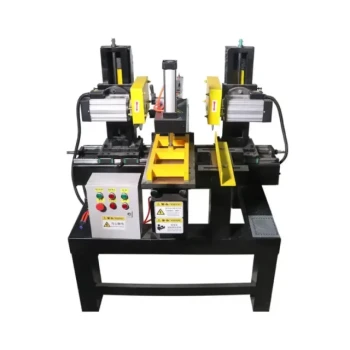
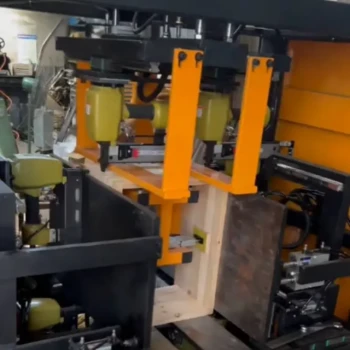
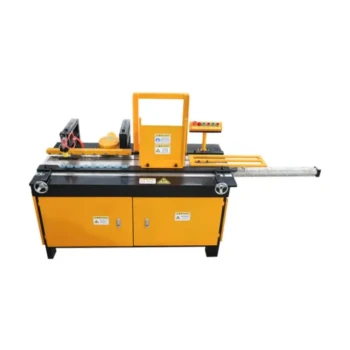
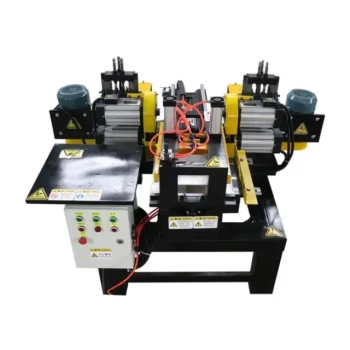
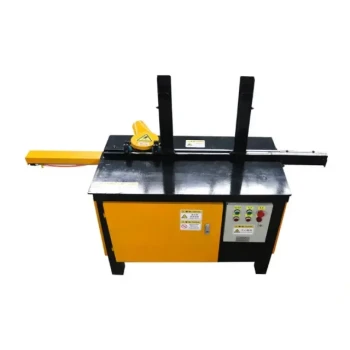
High-precision hive-making machinery serves as the technical foundation for establishing sustainable, large-scale apiaries. By enabling the standardized mass production of hive components, this technology ensures tight structural tolerances and uniform specifications. This consistency is the prerequisite for effective thermal management, mechanized honey harvesting, and the migratory logistics required to manage colonies across vast post-agricultural landscapes.
Core Insight: By moving from artisanal construction to industrial precision, apiaries achieve complete component interchangeability and structural integrity. This shift eliminates the bottlenecks of manual maintenance, allowing operations to focus on rapid biological expansion and efficient regional management.
The Operational Impact of Standardization
Ensuring Component Interchangeability
In large-scale operations, the inability to swap parts between hives creates logistical chaos. High-precision machinery ensures that every frame, box, and cover is identical.
This interchangeability dramatically reduces maintenance costs. Beekeepers can replace damaged parts instantly without customization, streamlining labor across thousands of colonies.
Facilitating Rapid Colony Expansion
Restoring pollination functions to large tracts of land requires the quick deployment of high volumes of hives. Manual production cannot keep pace with this demand.
Automated machinery provides the throughput necessary to expand colony counts rapidly. It creates the hardware infrastructure needed to support "clustered" beekeeping operations that cover extensive agricultural zones.
Optimizing Colony Health and Environment
Enhancing Thermal Insulation
The primary reference highlights that precision machining creates tight structures with no unintentional gaps. This structural integrity is critical for maintaining thermal insulation and ventilation.
Proper insulation is the deciding factor in successful bee overwintering. It reduces the energy load on the colony, ensuring higher survival rates during cold snaps common in open, post-agricultural terrains.
Supporting Subspecies-Specific Needs
Different bee subspecies require specific environmental conditions for optimal spring development. Standardized production allows for the consistent replication of these precise hive environments.
By eliminating manual variance, operators ensure that every colony experiences the same optimal conditions. This uniformity stabilizes the biological development of the apiary as a whole.
Streamlining Logistics and Harvesting
Enabling Mechanized Harvesting
Modern commercial beekeeping relies on automation to process honey efficiently. Mechanized uncapping and extraction equipment requires hives with exact dimensions to function correctly.
Precision-made components prevent jamming and equipment damage. This compatibility is what allows an apiary to transition from traditional labor-intensive methods to efficient, industrial-scale production.
Improving Migratory Efficiency
Large-scale apiaries often utilize migratory practices to follow seasonal blooms across regions. Uniform equipment dimensions are vital for the stability of hives during stacking and transportation.
High-precision manufacturing ensures that hives stack securely on trucks without shifting. This improves the turnover efficiency of pollination colonies and reduces hardware damage during cross-regional operations.
Understanding the Trade-offs
While high-precision machinery is essential for scale, it introduces specific risks that must be managed.
Systemic Replication of Errors is a primary concern. If the initial machine calibration is slightly off, thousands of components will be produced with the same defect, potentially rendering them incompatible with existing stock.
Additionally, this approach favors industrial uniformity over adaptability. Unlike hand-built hives which can be adjusted on the fly, precision components rely on a strict adherence to standards; any deviation in the supply chain of raw materials can disrupt the assembly line.
Making the Right Choice for Your Goal
To leverage high-precision machinery effectively, align your equipment strategy with your specific operational focus:
- If your primary focus is Rapid Expansion: Prioritize machinery that guarantees high throughput and absolute interchangeability to minimize assembly and maintenance labor.
- If your primary focus is Colony Survival: Select equipment capabilities that ensure airtight structural joinery to maximize thermal insulation and ventilation control for overwintering.
- If your primary focus is Commercial Yield: Ensure the machinery produces components strictly compatible with your downstream automated harvesting and extraction lines.
High-precision machinery ultimately transforms beekeeping from a variable craft into a reliable industrial process, providing the scalable infrastructure necessary to restore productivity to post-agricultural ecosystems.
Summary Table:
| Key Feature | Operational Benefit | Impact on Large-Scale Apiaries |
|---|---|---|
| Component Interchangeability | Eliminates custom repairs | Dramatically reduces maintenance costs and labor |
| Structural Precision | Enhanced thermal insulation | Improves overwintering survival rates in open terrain |
| Mass Production | High-throughput manufacturing | Supports rapid colony expansion across vast areas |
| Standard Dimensions | Equipment compatibility | Enables mechanized harvesting and stable migratory transport |
Scaling Your Apiary Operations with HONESTBEE
Transitioning from artisanal methods to industrial-scale productivity requires the right technical foundation. HONESTBEE specializes in serving commercial apiaries and distributors by providing the industry's most reliable high-precision machinery and tools.
Whether you need automated hive-making machines to ensure perfect interchangeability, honey-filling systems to streamline your harvest, or a complete supply of wholesale beekeeping consumables, we deliver the hardware that powers growth.
Ready to optimize your production and maximize your commercial yield?
Contact HONESTBEE Today to Discuss Your Wholesale Equipment Needs
References
- Sergey Paramonov, Mark A. Alexandrov. Approaches to the Development of Beekeeping on Post-Agricultural Lands in the North-West Federal District of the Russian Federation. DOI: 10.17816/phf321961
This article is also based on technical information from HonestBee Knowledge Base .
Related Products
- High-Efficiency Pneumatic Bee Hive Making Machine for Rapid Box Assembly
- Beehive Machine Double End Saw for Precision Hive Component Manufacturing
- Automatic High-Speed Bee Hive Box Stapling Machine
- HONESTBEE Professional Long Handled Hive Tool with Precision Cutting Blade
- Beehive Handle and Frame Rest Cutting Machine: Your Specialized Hive Machine
People Also Ask
- How does the introduction of professional beehive-making machinery benefit sustainable beekeeping? Scale Your Apiary
- Why is specialized beehive-making machinery critical for low-defense breeding? Enhance Selection with Precision Tools
- How does the introduction of specialized beehive making machinery contribute to increasing the scale of regional beekeeping industries?
- What is the importance of specialized beehive making machinery in a circular bio-economy? Build Local Sustainability
- Why is specialized beehive-making machinery essential? Scale Your Apiary with Precision Industrial Standards