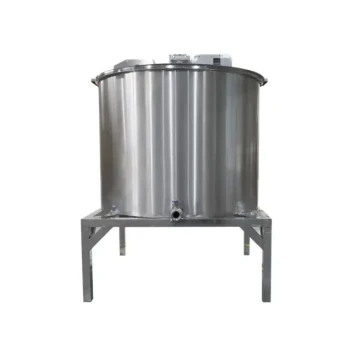
High-specification honey processing machinery acts as the critical technical infrastructure for converting raw, variable harvests into standardized global commodities. It enables the homogenization and precision filtration of honey gathered from diverse sources, ensuring the final product strictly adheres to the global physicochemical standards required for international commercial supply chains.
Scale is not just about volume; it is about consistency. By replacing labor-intensive manual processes with automated precision, high-spec machinery transforms honey production from an agricultural activity into a controlled industrial operation capable of meeting global safety and quality mandates.
The Imperative of Standardization and Homogenization
To move from local sales to large-scale distribution, variability must be eliminated. The primary role of this machinery is to enforce consistency across massive volumes.
Blending Multiple Sources
Large-scale production relies on aggregating honey from numerous hives, apiaries, or even different geographical regions.
High-specification equipment allows for the effective homogenization of these inputs. This process blends distinct batches into a single, uniform product that meets consumer expectations for taste and texture.
Precision Filtration and Compliance
Global supply chains enforce rigorous physicochemical standards regarding purity and composition.
Advanced processing units provide precision filtration capabilities. This ensures the removal of impurities to meet international distribution criteria without compromising the product's fundamental quality.
Scaling Operations via Automation
Beyond standardization, industrial machinery solves the logistical bottlenecks that prevent apiaries from scaling up.
Replacing Manual Labor
Manual processing limits the number of hives an operation can sustain.
By implementing automated systems for hive-making and honey-filling, producers can manage significantly larger bee populations. This shift enables higher processing volumes and improved management levels, leading to better economic returns.
High-Yield Extraction
Efficiency begins at the extraction stage. Industrial-grade pressing machinery utilizes mechanical pressure to separate liquid honey from the honeycomb structure.
This method achieves high extraction yields while preserving the honey's natural chemical structure, a critical balance for maintaining quality while maximizing output.
Mastering Viscosity and Hygiene in Packaging
The final role of high-spec machinery is to ensure the product reaches the bottle safely and accurately, a notorious challenge given honey's physical properties.
Managing Viscosity and Overflow
Honey is a high-viscosity fluid that clings to walls and creates overflow issues during manual filling.
High-performance filling machines utilize precision metering systems to manage these fluid dynamics. This accelerates the packaging process and guarantees that every unit meets strict weight consistency standards.
Eliminating Contamination Risks
Manual handling is the primary vector for secondary contamination.
Automated, closed-loop operating systems minimize human contact during the post-processing and packaging phases. This hardware provides the hygiene and traceability necessary to enter high-end commercial, organic, and pharmaceutical markets.
Critical Considerations for Implementation
While high-specification machinery enables scale, it introduces a shift in production philosophy that must be managed.
The "Homogenization" Trade-off
The primary function of this machinery is to create a standardized product.
For producers whose brand value relies on single-origin nuance or micro-batch variability, the homogenization process required for large-scale supply chains may be counter-productive. This equipment is designed for consistency, not artisanal distinctiveness.
Infrastructure Dependencies
Operating industrial-grade equipment moves an apiary into the realm of manufacturing.
This requires a shift in focus from purely agricultural management to technical facility management, necessitating strict adherence to maintenance protocols to ensure the metering and filtration systems remain calibrated.
Making the Right Choice for Your Goal
The type of machinery you prioritize should depend on where your product is entering the market.
- If your primary focus is International Export: Prioritize homogenization and filtration systems to ensure your product meets the strict physicochemical standards required for global distribution.
- If your primary focus is Volume and Efficiency: Invest in automated filling and precision metering machinery to eliminate bottlenecks caused by viscosity and manual weighing.
High-specification machinery is the bridge between raw agricultural harvest and a compliant, scalable commercial product.
Summary Table:
| Feature | Role in Large-Scale Production | Primary Benefit |
|---|---|---|
| Homogenization | Blends diverse honey sources into a single batch | Ensures consistent taste, color, and texture |
| Precision Filtration | Removes impurities while maintaining quality | Meets international food safety and export standards |
| Automated Filling | Manages high viscosity with metering systems | Prevents overflow and ensures exact weight consistency |
| Mechanical Extraction | High-yield pressing of honeycomb structures | Maximizes output without damaging chemical structure |
| Closed-Loop Systems | Eliminates manual handling and contact | Minimizes contamination risks for pharmaceutical/organic markets |
Scale Your Honey Production with HONESTBEE Precision
Transitioning from local apiary to international supplier requires more than just volume—it requires the technical infrastructure to ensure consistency and compliance. HONESTBEE specializes in empowering commercial apiaries and distributors with the industrial tools needed to dominate the global market.
From high-performance honey-filling machines that master viscosity to specialized hive-making hardware and essential industry consumables, our comprehensive wholesale portfolio covers your entire production chain. Partner with us to enhance your extraction yields, automate your packaging, and meet the world's strictest quality mandates.
Ready to elevate your operation? Contact us today to explore our machinery and wholesale solutions!
References
- Ever Sánchez Osorio, María de Lourdes Flores-López. Conflictos ambientales en la producción apícola: resistencia maya ante la agricultura corporativa en la península de Yucatán. DOI: 10.53331/teq.v1i3.5419
This article is also based on technical information from HonestBee Knowledge Base .
Related Products
- High Quality Honey Dehumidifier Dryer Thickening Machine for Beekeeping
- Heavy Duty Stainless Steel Honey Processing Machine Decrystallizing Tank
- Commercial Rotary Honey Filling Machine for Production
- Precision Durable Efficient HONESTBEE Rotary Honey Filling Machine
- Fully Automatic Honey Filling Packaging Machine for Processing Line
People Also Ask
- Can you dehumidify honey? A Beekeeper's Guide to Preventing Fermentation
- How to dry up honey? The Safe Guide to Stabilizing Honey and Preventing Fermentation
- How can the moisture content of honey be reduced? A Guide to Safe, Effective Drying Methods
- How to remove humidity from honey? Protect Your Harvest from Fermentation
- What is the process for using a dehumidifier to lower honey's moisture content? Expert Drying Techniques