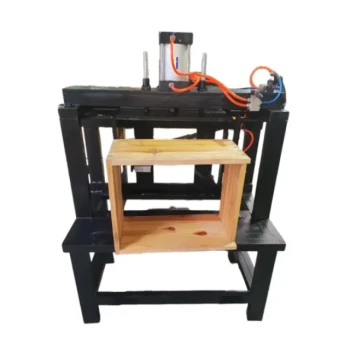
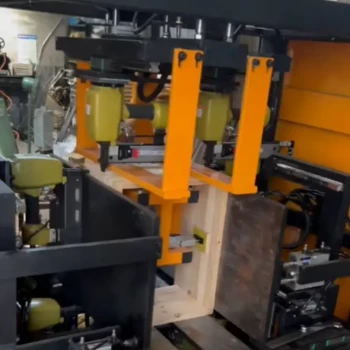
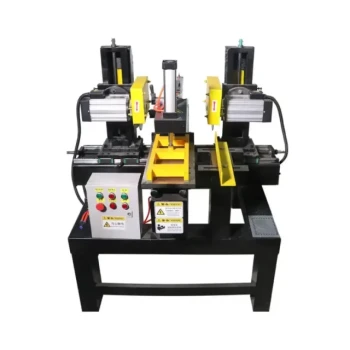
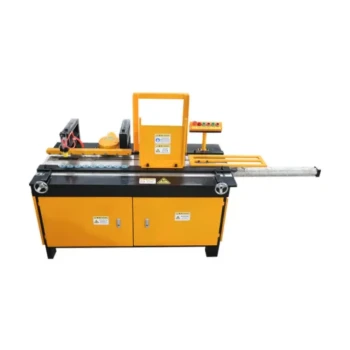
Hive manufacturing and assembly equipment is the infrastructure engine behind apiary expansion. It enables distributors, commercial beekeepers, and growing family apiaries to produce standardized hive bodies, bottom boards, frames, and related components at higher volume and with more consistent quality. By improving dimensional accuracy, joint strength, interchangeability, and production speed, this equipment allows apiaries to add colonies, replace aging equipment, and organize larger operations without relying entirely on costly pre-made hives.
Hive equipment does not increase bee populations by itself, but it removes a major physical constraint on expansion: the availability of reliable, standardized housing. When paired with sound colony-management practices, equipment manufacturing and assembly provide the capacity needed to scale apiaries efficiently.
How Equipment Supports Apiary Expansion
It increases the supply of hive infrastructure
Expanding an apiary requires more than bees and forage. Operators also need sufficient numbers of hive bodies, frames, bottom boards, and other components that can be deployed quickly when colonies split, grow, or require replacement equipment.
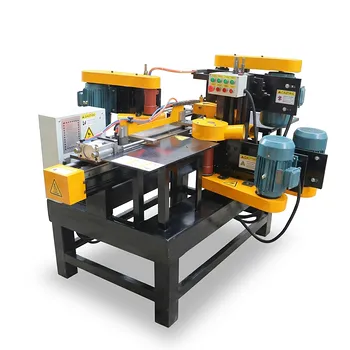
Hive-making machines support higher-volume local or regional production, helping apiaries respond to seasonal demand and large-scale expansion plans.
It creates standardized, interchangeable components
Precision manufacturing ensures that hive parts maintain consistent dimensions and fit together correctly. This interchangeability allows frames, boxes, and other components to move between colonies, production batches, and apiary locations.
For commercial operators, standardization simplifies inspections, colony transfers, equipment rotation, and inventory management.
It improves structural durability
Frame-assembly equipment and accurate jointing help produce stronger hive components. Well-constructed equipment is better prepared to withstand routine handling, seasonal weather, transport, and repeated maintenance.
Durable hives can reduce premature replacement and help control the long-term cost of managing each colony.
Why Standardization Matters at Scale
It supports faster colony expansion
When standardized equipment is readily available, beekeepers can prepare hive space before colonies need it. This is particularly important during colony splits, population growth, seasonal buildup, and large-scale replacement programs.
The equipment therefore supports expansion indirectly by ensuring that new or recovering colonies have suitable housing available at the right time.
It reduces maintenance complexity
Uniform hive components make routine inspections and repairs more systematic. Workers can use familiar procedures across multiple colonies instead of adapting to different dimensions, fittings, or construction standards.
This can reduce labor requirements per colony and improve the consistency of apiary management.
It enables systematic apiary layouts
Large apiaries depend on repeatable equipment specifications. Standardized hives make it easier to organize colonies, plan placement, schedule inspections, and coordinate equipment across multiple sites.
For distributors and wholesalers, consistent product specifications also simplify catalog management, customer support, and replenishment planning.
The Value for Distributors and B2B Resellers
It creates a complete infrastructure offering
Hive-making and assembly equipment allows suppliers to serve more than one point in the beekeeping value chain. A distributor can support customers with machinery, hive bodies, frames, bottom boards, assembly hardware, and replacement components.
This one-stop sourcing capability is particularly valuable for commercial apiaries that want fewer suppliers and more coordinated fulfillment.
It improves response to expansion projects
Commercial beekeepers may need equipment quickly when establishing new apiary sites, replacing damaged inventory, or increasing colony numbers. A supplier with manufacturing equipment and a broad product portfolio can respond more effectively than a seller offering only finished hives.
Rapid quotations, technical guidance, and efficient order fulfillment become important parts of the overall trading service.
It supports local material and production flexibility
Hive-making machinery can process suitable local timber or other sustainable materials, depending on the machine configuration and product requirements. This may give operators greater control over sourcing, specifications, and production schedules.
However, material selection must still account for durability, moisture exposure, dimensional stability, and compatibility with the intended hive design.
How Equipment Improves Operational Economics
It lowers dependence on pre-made hive supply
Producing standardized components in-house or through a local manufacturing partner can reduce dependence on expensive finished hives and uncertain external availability. This gives apiaries more flexibility when demand rises or supply chains become constrained.
The economic benefit depends on production volume, labor, material costs, machine utilization, and maintenance requirements.
It reduces construction and replacement costs
Precise cutting, drilling, and assembly can reduce inconsistent workmanship, rework, and premature component failure. Over time, better production control may lower the total cost of building and maintaining the hive inventory.
The greatest value generally appears in operations large enough to keep the equipment productively utilized.
It improves production planning
Mechanized production makes hive infrastructure more predictable. Operators can plan output around colony expansion, seasonal demand, apiary establishment, and equipment renewal rather than relying exclusively on ad hoc manual construction.
This supports more disciplined inventory control and reduces the risk of infrastructure shortages during critical beekeeping periods.
Understanding the Trade-offs
Equipment requires sufficient scale
Hive-making machinery is not automatically economical for every beekeeper. Small operations may find that the purchase price, setup, maintenance, tooling, and operator training outweigh the savings from producing limited quantities.
For these customers, purchasing standardized components from a reliable distributor may be more practical than owning production equipment.
Precision depends on process control
Machines improve consistency, but they do not eliminate the need for correct design specifications, suitable materials, quality inspection, and trained operators. Poor calibration or unsuitable timber can still produce components that warp, split, or fail to fit properly.
Suppliers should therefore provide technical support, clear specifications, and dependable after-sales service.
Standardization must match the intended application
A standardized component is valuable only when it matches the hive system, bee management method, local climate, and operational requirements. High-precision manufacturing does not justify using one design indiscriminately in every region.
Customization may be necessary, but excessive variation can undermine interchangeability and complicate inventory management.
Machinery does not replace colony-management expertise
Equipment provides housing capacity, not healthy colonies. Expansion still depends on competent queen management, colony nutrition, disease control, suitable forage, seasonal planning, and responsible splitting practices.
Hive manufacturing should be treated as an infrastructure capability that enables biological and operational growth—not as a substitute for beekeeping expertise.
Making the Right Choice for Your Goal
The appropriate equipment strategy depends on the scale, urgency, and level of control required by the apiary or distribution business.
- If your primary focus is rapid commercial expansion: Prioritize high-volume, precision hive-making and frame-assembly equipment that produces interchangeable components with consistent quality.
- If your primary focus is reducing supply-chain dependence: Consider localized production using suitable materials, supported by reliable machinery, tooling, and technical service.
- If your primary focus is serving B2B customers: Build a full-spectrum offering that combines machinery, finished hive components, assembly hardware, replacement parts, and responsive order fulfillment.
- If your primary focus is a small or growing family apiary: Compare the total cost of ownership with purchasing standardized components from a dependable supplier before investing in machinery.
- If your primary focus is long-term maintenance efficiency: Select equipment and hive designs that deliver strong joints, accurate dimensions, durable construction, and broad component interchangeability.
With the right equipment, standardized specifications, and reliable supply support, apiaries can expand more quickly while keeping infrastructure costs, maintenance effort, and operational complexity under control.
Summary Table:
| Aspect | Impact on Apiary Expansion |
|---|---|
| Production Volume | Enables higher output of hive components to support colony growth and equipment replacement. |
| Standardization | Ensures interchangeable parts for efficient management and inventory control. |
| Durability | Produces stronger hives that withstand handling and weather, reducing replacement costs. |
| Operational Efficiency | Streamlines assembly, maintenance, and logistics, saving time and labor. |
| Supply Independence | Reduces reliance on pre-made hives, offering flexibility and cost control. |
| Scalability | Facilitates expansion to commercial scale with consistent quality and planning. |
Ready to scale your apiary with precision equipment and reliable supply? As HONESTBEE, we provide a complete range of hive-making and assembly machinery, alongside all necessary components, tailored for commercial apiaries and distributors. Benefit from one-stop sourcing, rapid response, and expert support to enhance your operational efficiency and profitability. Contact us today to discuss your needs and let's build your infrastructure together.
Related Products
- High-Efficiency Pneumatic Bee Hive Making Machine for Rapid Box Assembly
- Mini Desktop Bee Hive Frame Forming Making Machine
- Automatic High-Speed Bee Hive Box Stapling Machine
- Beehive Machine Double End Saw for Precision Hive Component Manufacturing
- Beehive Handle and Frame Rest Cutting Machine: Your Specialized Hive Machine
People Also Ask
- How does the introduction of professional beehive-making machinery benefit sustainable beekeeping? Scale Your Apiary
- Why is specialized beehive-making machinery critical for low-defense breeding? Enhance Selection with Precision Tools
- How does the introduction of specialized beehive making machinery contribute to increasing the scale of regional beekeeping industries?
- What is the importance of specialized beehive making machinery in a circular bio-economy? Build Local Sustainability
- Why is specialized beehive-making machinery essential? Scale Your Apiary with Precision Industrial Standards