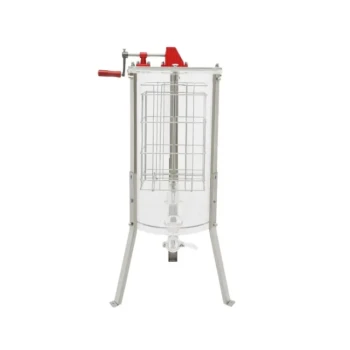
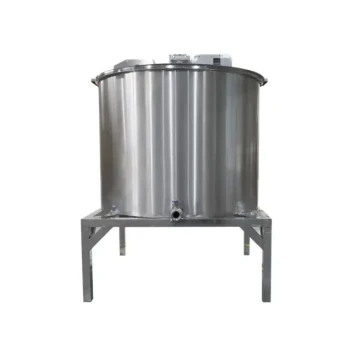
Large-scale honey concentration and filtration equipment serves as the critical bridge between raw, variable harvests and certified premium products. It functions by mechanically removing physical impurities—such as wax debris and plant matter—and precisely regulating moisture content, all while maintaining the chemical integrity of the honey's unique bioactive substances.
The core value of this technology lies in standardization without sterilization. It transforms raw honey from native environments into a stable, export-grade product by ensuring consistency and safety, which are prerequisites for establishing and maintaining a Geographic Indication (GI) reputation in global markets.
Preserving Chemical Integrity and Provenance
Protecting Bioactive Compounds
For honey to qualify for Geographic Indication status, it must maintain specific chemical markers unique to its region. High-quality industrial equipment allows for purification and concentration without damaging these bioactive substances. This preservation is essential for validating the honey’s origin and justifying a premium price point.
Precise Impurity Removal
Raw honey naturally contains wax debris, larval fragments, and other solids that are unacceptable in retail markets. Filtration equipment employs multi-layer media to intercept these impurities. This process yields the clarity and transparency consumers associate with high-end brands while keeping the honey's nutritional profile intact.
Ensuring Commercial Viability and Stability
Moisture Regulation for Shelf Life
Moisture control is perhaps the most critical function of concentration equipment. Excess water in honey leads to fermentation, which destroys the product's flavor and commercial value. By stabilizing moisture levels, the equipment significantly extends shelf life, allowing local products to survive the logistics of international export.
Consistency Across Batches
Geographic Indication implies a reliable standard of quality. Centralized processing facilities use these technologies to integrate centrifugation, filtration, and temporary storage. This ensures that every jar of honey delivers a consistent sensory experience regarding color, viscosity, and clarity, regardless of slight variations in the raw harvest.
Understanding the Trade-offs
The Risk of Over-Filtration
While clarity is desirable, aggressive filtration can strip honey of microscopic pollen. Pollen is often the "fingerprint" required to prove geographic origin. Operators must balance the need for visual clarity with the necessity of retaining enough pollen to satisfy botanical origin tests.
Thermal Sensitivity
Concentration often involves thermal processing to evaporate moisture. If not managed by high-precision equipment, heat can destroy heat-sensitive enzymes and increase HMF (hydroxymethylfurfural) levels. High HMF levels indicate degradation and can disqualify honey from premium or export-grade classifications.
Making the Right Choice for Your Goal
To leverage this equipment for Geographic Indication development, align your processing parameters with your specific market strategy:
- If your primary focus is Mass Export: Prioritize moisture reduction and fine filtration to maximize shelf life and prevent crystallization during long shipping times.
- If your primary focus is Niche "Raw" GI Markets: Use coarser filtration settings to ensure maximum pollen retention for origin verification, accepting a shorter shelf life for higher authenticity claims.
Technology should refine the character of your honey, not erase it.
Summary Table:
| Feature | Impact on GI Development | Key Benefit |
|---|---|---|
| Moisture Regulation | Prevents fermentation & extends shelf life | Enables international export viability |
| Precision Filtration | Removes impurities while retaining pollen markers | Proves geographic origin & authenticity |
| Thermal Control | Protects heat-sensitive enzymes & limits HMF | Maintains premium chemical integrity |
| Batch Standardization | Ensures consistent color, clarity, and viscosity | Builds a reliable, high-end brand reputation |
Scale Your Honey Business with HONESTBEE
Are you ready to transform local harvests into premium, export-ready brands? At HONESTBEE, we specialize in empowering commercial apiaries and distributors with the high-precision machinery needed to secure Geographic Indication status.
Our comprehensive portfolio includes:
- Advanced Honey Concentration & Filtration Systems to ensure shelf stability and purity.
- Specialized Hive-making & Honey-filling Machines for seamless production scaling.
- Full Spectrum Beekeeping Tools & Equipment for professional-grade operations.
- Essential Industry Consumables to keep your facility running at peak efficiency.
Whether you are looking to build a regional honey brand or expand your wholesale distribution, our expertise in specialized hardware and honey-themed cultural merchandise provides the competitive edge you need.
Contact us today to discuss your wholesale equipment needs!
References
- Nicolas Polo, Lorena Herrera. Flora with potential beekeeping value on rocky outcrops with grasslands of the southeastern end of Tandilia Hill System with different productive management.. DOI: 10.22179/revmacn.26.777
This article is also based on technical information from HonestBee Knowledge Base .
Related Products
- Honey Concentrating and Filtering Dehumidifier Machine 2T Capacity for Honey
- Electric Double Wall Honey Filtering Machine Purifier Equipment for Honey Processing Plant
- Honey Concentrating Vacuum Heating Thickening Machine Dehumidifier for Honey
- Professional Stainless Steel Honey Filtering Machine with Water Bath Heating for Beekeeping
- Professional Honey Filter with Tripod Support Stand
People Also Ask
- What heating methods can be used with the honey concentrating equipment? Electric vs. Boiler Options
- How does honey filtration and processing machinery transform raw honey? Scale Your Production for Global Markets
- What electrical safety precaution is necessary when operating the honey concentrating equipment? Essential Grounding Tips
- What are the main functions of the honey concentrating equipment? Essential Machinery for Commercial Quality
- What maintenance should be performed when the honey concentrating equipment is not in use? Key Safety & Care Tips