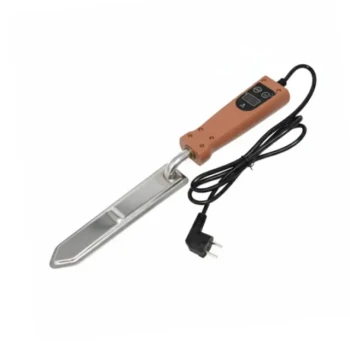
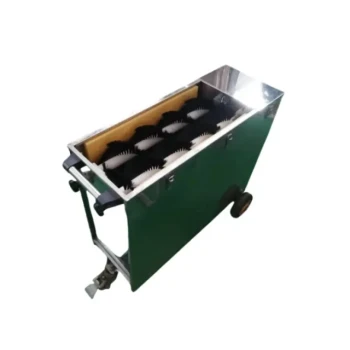
Precision thermal treatment equipment functions as a specialized, non-chemical eradication tool designed to apply controlled heat to honeybee colonies or specific brood frames. By raising the internal temperature of the hive to a specific range, this equipment physically eliminates Varroa mites—particularly those breeding inside capped cells—without injuring the bees or contaminating the hive with chemical residues.
The core value of thermal treatment lies in biological exploitation: Varroa mites succumb to lethal heat stress at temperatures that honeybees can safely withstand. This provides a physical method to sanitize the hive, specifically targeting the reproductive mites hidden behind wax cappings that chemical treatments often fail to reach.
The Mechanism of Thermal Eradication
Exploiting Differential Heat Tolerance
The fundamental principle of this equipment is the difference in physiology between the host (the honeybee) and the parasite (the Varroa mite). Mites have a significantly lower tolerance for high temperatures than adult bees or developing brood.
Physical Elimination Without Chemicals
Thermal equipment delivers a precise heat cycle that exceeds the mite's survival threshold. This causes the mites to die from heat stress or become unable to hold onto the host, resulting in physical removal from the colony. Because the process relies entirely on thermodynamics, it eliminates the risk of chemical resistance building up in the mite population.
Targeting Hidden Populations
One of the greatest challenges in apiary management is reaching mites inside capped brood cells, where they reproduce. Chemical vapors and drips often cannot penetrate the wax capping effectively. Thermal treatment penetrates these barriers, sterilizing the brood frames of parasites while the developing bees remain unharmed.
Operational Context and Verification
Integration with Physical Barriers
While heat kills the current infestation, it does not prevent new mites from entering. To maximize the effectiveness of thermal equipment, it should be used in conjunction with high-precision entrance control hardware. These physical barriers prevent "robbing" behavior, which is a primary vector for re-introducing mites from collapsing colonies nearby.
Monitoring Success
To validate the role of the thermal equipment, operators often utilize netted bottom-board screens. These screens allow the heat-killed mites to fall through to a collection tray, preventing the bees from removing them. This allows for an accurate count of the "mite drop," providing immediate, quantifiable data on the treatment's efficacy.
Understanding the Trade-offs
Precision is Critical
The effectiveness of this method hinges entirely on control. The equipment must maintain a temperature high enough to kill mites but low enough to ensure bee safety. Inaccurate heating can lead to ineffective treatment (if too cool) or damage to the colony's brood and queen (if too hot).
Equipment vs. Consumables
Unlike chemical treatments (such as oxalic acid or miticides) which are consumable goods, thermal treatment represents a hardware investment. It requires a power source and specific application time per hive, making it a more labor-intensive process compared to rapid chemical applications, but one that offers long-term sustainability without residue accumulation.
Making the Right Choice for Your Apiary
Precision thermal treatment is not a universal replacement for all management techniques, but a specialized tool for specific goals.
- If your primary focus is Organic or Residue-Free Beekeeping: Thermal treatment is the superior choice as it eliminates the need for synthetic miticides or acids that might contaminate wax and honey.
- If your primary focus is Treating Heavily Brooded Colonies: Thermal equipment is highly recommended, as it is one of the few methods capable of killing mites inside capped cells where the majority of the population resides.
- If your primary focus is Rapid, Large-Scale Application: Chemical methods may offer faster application times, whereas thermal treatment requires a dedicated heating cycle for each hive.
Mastering thermal treatment allows you to physically reset the mite population, preserving colony health through physics rather than pharmacology.
Summary Table:
| Feature | Precision Thermal Treatment | Traditional Chemical Treatment |
|---|---|---|
| Mechanism | Thermal stress (Biological exploitation) | Neurotoxins or organic acids |
| Targeting | Reaches mites inside capped cells | Primarily affects phoretic (exposed) mites |
| Residue Risk | Zero chemical residues | High risk of honey/wax contamination |
| Resistance | No risk of pest resistance | High risk of developing chemical resistance |
| Requirement | Power source & hardware investment | Ongoing purchase of consumables |
| Best For | Organic honey & high-value brood protection | Rapid, large-scale commercial application |
Elevate Your Apiary Management with HONESTBEE
Transitioning to chemical-free mite control requires the right hardware and expertise. HONESTBEE empowers commercial apiaries and distributors with the specialized machinery needed to maintain healthy, productive colonies. Whether you are looking for precision hive-making equipment, honey-filling machines, or professional-grade beekeeping tools, we provide a comprehensive wholesale offering to scale your operations.
Ready to modernize your beekeeping business? Contact HONESTBEE today to explore our full spectrum of beekeeping hardware and industry consumables. Let us help you deliver high-value, residue-free results to your customers.
References
- Attila Dénes, Mahmoud A. Ibrahim. Global dynamics of a mathematical model for a honeybee colony infested by virus-carrying Varroa mites. DOI: 10.1007/s12190-019-01250-5
This article is also based on technical information from HonestBee Knowledge Base .
Related Products
- Digital Display Electric Honey Uncapping Knife for Beekeeping and Decapping
- Stainless Steel Queen Grafting Tool for Beekeeping and Bee Queen Grafting
- Heavy Duty Manual Bee Smoker Blower for Beekeeping
- Stainless Steel Honey Bee Smoker Hive and Honeycomb Smoker for Beekeeping
- Queen Bee Artificial Insemination Instrument Equipment for Instrumental Insemination
People Also Ask
- Why are electric honey uncapping knives essential? Boost Efficiency & Preserve Comb for Professional Honey Extraction
- What specialized tools are used for uncapping and straining honey? Professional Gear for Efficient Harvesting
- What are the technical advantages of using specialized honey uncapping knives? Optimize Purity and Comb Reusability
- How should an electric uncapping knife be utilized? Master Efficient Honey Extraction with Heated Precision
- What is an electric uncapping knife and how is it used? Master Faster Honey Extraction with Heat