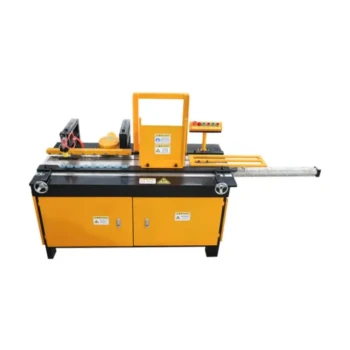
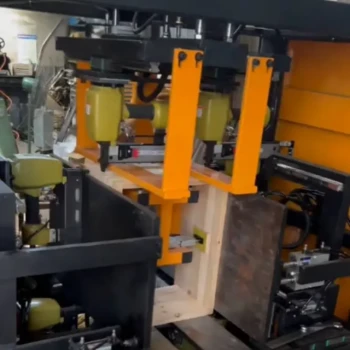
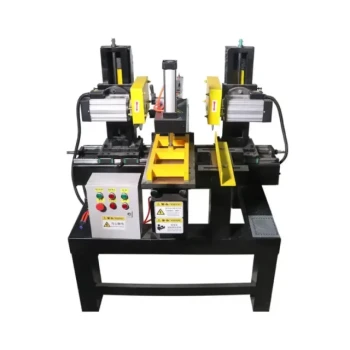
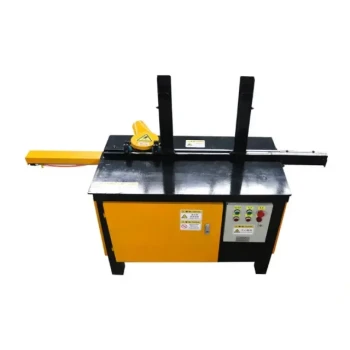
Specialized hive-making machinery acts as the foundational architect of standardization within the modern beekeeping industry. By enforcing rigorous dimensional precision during manufacturing, these machines ensure that every hive component—regardless of when it was made or where it was sourced—fits perfectly with any other. This mechanical consistency solves the logistical nightmare of mismatched equipment, allowing apiaries to focus on management rather than maintenance.
The Core Insight Manual construction inevitably leads to variance, but specialized machinery guarantees the strict tolerances required for modern apiary management. By stabilizing physical dimensions, this technology protects the biological "bee space" and ensures total equipment interchangeability, which is the prerequisite for scalable, commercial beekeeping.
The Critical Role of Precision
Maintaining Biological Alignment
The primary function of hive-making machinery is not just cutting wood; it is strictly adhering to the "bee space." This is a specific gap required between frames and hive walls.
If machinery fails to hold this tolerance, bees will naturally fill the gaps with wild wax (burr comb) or glue components together with propolis. Precision manufacturing prevents this biological reaction, keeping internal components mobile.
Ensuring Component Interchangeability
Standardization means that a frame from Hive A fits perfectly into Hive B. Specialized machinery ensures that frames, boxes, and bottom boards have uniform specifications.
This seamless compatibility reduces equipment waste. Beekeepers can rotate colonies or replace broken parts without modifying the hardware or disrupting the bees.
Facilitating Mechanized Management
Standardization at the manufacturing level is required for standardization at the harvesting level. Because the hives are uniform, they fit into mechanized honey extractors and uncapping machines.
Without the precise dimensions provided by hive-making machinery, downstream automation becomes impossible, creating bottlenecks during harvest.
Economic and Operational Impacts
Reducing Maintenance Friction
When components fit poorly, they suffer from wear and tear during manual manipulation. Machine-made components fit securely, reducing the physical stress on the equipment.
This precision enhances durability and sealing properties, which helps colonies survive harsh winters and reduces the frequency of equipment replacement.
Lowering Procurement Costs
Machinery allows operations to process local materials into professional-grade equipment. This supports a self-sufficient model where apiaries can produce their own supplies rather than relying on expensive external vendors.
By controlling production internally, operators can reduce long-term procurement costs and avoid supply chain delays.
Enabling Rapid Scalability
Manual hive construction is slow and labor-intensive. Specialized machinery drastically reduces the manufacturing cycle and labor cost per unit.
This efficiency allows operations to quickly expand their hive count in response to market demand, increasing overall raw production capacity.
Understanding the Trade-offs
The Requirement for Consistency
While machinery offers precision, it requires a commitment to a specific standard. Once you invest in tooling for a specific dimension (e.g., Langstroth standards), deviating to a different hive style becomes costly.
Material Quality Dependencies
Machinery processes wood with high precision, but it cannot fix poor-quality raw materials. If the local timber warps easily, even a precisely cut joint may fail over time. The machine ensures the cut is perfect, but the operator must ensure the material is stable.
Making the Right Choice for Your Goal
Whether you are managing a few dozen hives or several thousand, the role of standardization remains central to efficiency.
- If your primary focus is Commercial Scalability: Prioritize machinery that guarantees compatibility with automated harvesting lines to eliminate labor bottlenecks.
- If your primary focus is Cost Reduction: Utilize machinery to process local raw materials, decoupling your operation from fluctuating equipment prices.
- If your primary focus is Colony Health: Focus on the precision of the "bee space" settings to minimize propolis buildup and reduce stress on the colony during inspections.
Standardization is not merely a manufacturing preference; it is the operational leverage that turns beekeeping from a craft into a scalable industry.
Summary Table:
| Key Aspect | Role of Specialized Machinery | Impact on Standardization |
|---|---|---|
| Biological Alignment | Maintains strict "bee space" tolerances | Prevents burr comb and ensures component mobility. |
| Interchangeability | Guarantees uniform component dimensions | Allows seamless replacement and rotation of equipment. |
| Mechanization | Prepares hives for automated processing | Enables the use of honey extractors and uncapping machines. |
| Operational Cost | Reduces manual labor and material waste | Lowers procurement costs through efficient local production. |
| Scalability | Accelerates the manufacturing cycle | Allows rapid apiary expansion to meet market demand. |
Elevate Your Apiary Operation with HONESTBEE
Standardization is the backbone of a profitable beekeeping business. At HONESTBEE, we empower commercial apiaries and distributors by providing the high-precision specialized hardware needed to achieve industry-leading standards.
From advanced hive-making machinery that ensures perfect interchangeability to professional honey-filling machines and a full spectrum of beekeeping tools, our portfolio is designed to eliminate bottlenecks and reduce maintenance friction. Whether you are looking to scale your production or secure high-quality consumables, our comprehensive wholesale offering has you covered.
Ready to transform your craft into a scalable industry?
Contact HONESTBEE Today to discuss how our equipment and merchandise can optimize your workflow.
References
- Deborah Ruth Amulen, Paul Cross. The buzz about bees and poverty alleviation: Identifying drivers and barriers of beekeeping in sub-Saharan Africa. DOI: 10.1371/journal.pone.0172820
This article is also based on technical information from HonestBee Knowledge Base .
Related Products
- High-Efficiency Pneumatic Bee Hive Making Machine for Rapid Box Assembly
- Beehive Handle and Frame Rest Cutting Machine: Your Specialized Hive Machine
- Mini Desktop Bee Hive Frame Forming Making Machine
- Automatic High-Speed Bee Hive Box Stapling Machine
- Beehive Machine Double End Saw for Precision Hive Component Manufacturing
People Also Ask
- How does the introduction of professional beehive-making machinery benefit sustainable beekeeping? Scale Your Apiary
- Why is specialized beehive-making machinery critical for low-defense breeding? Enhance Selection with Precision Tools
- How does the introduction of specialized beehive making machinery contribute to increasing the scale of regional beekeeping industries?
- What is the importance of specialized beehive making machinery in a circular bio-economy? Build Local Sustainability
- Why is specialized beehive-making machinery essential? Scale Your Apiary with Precision Industrial Standards