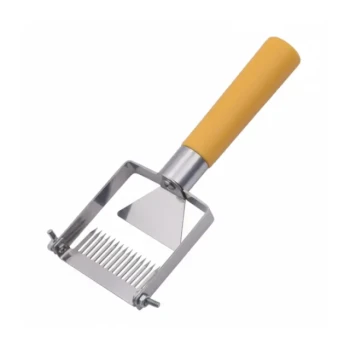
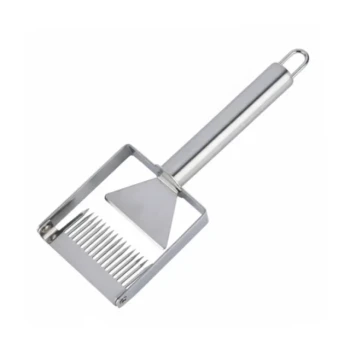
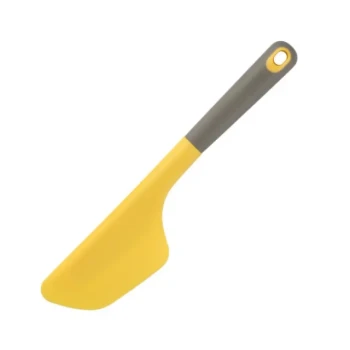
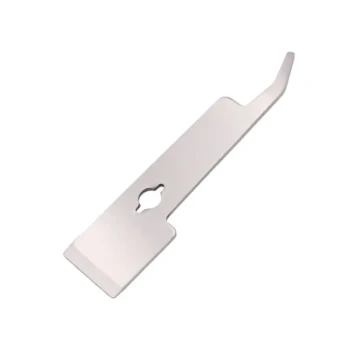
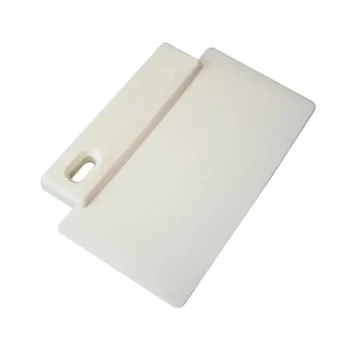
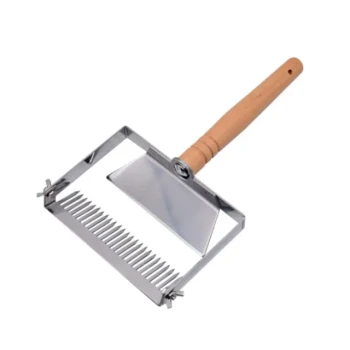
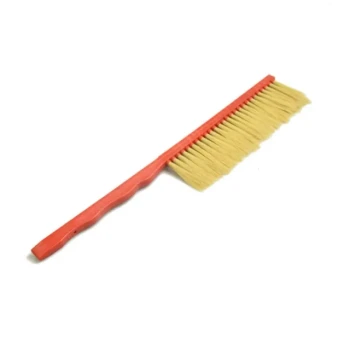
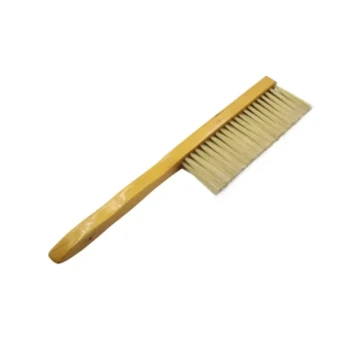
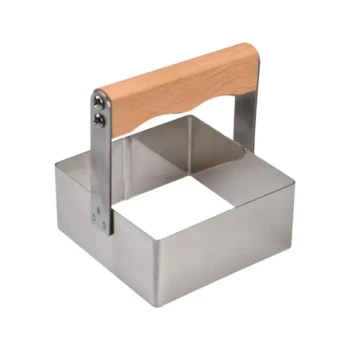
For single-comb, open-nesting honeybees, harvesting requires cutting and pressing the honey-bearing crest rather than spinning removable frames. The essential equipment includes specialized comb-cutting knives, a mechanical honey press, multi-stage filtration strainers, and food-safe collection containers. Because these colonies are highly disturbance-sensitive and may abscond, operators also need lightweight transport boxes and gentle handling tools—equipment that is not normally central to harvesting from standard movable-frame hives.
The key difference is the harvest unit: standard hives yield removable frames that can be returned after centrifugal extraction, while open-nesting dwarf honeybees require the exposed honey crest to be carefully cut, pressed, filtered, and collected.
Why Standard Honey-Extraction Equipment Is Not Suitable
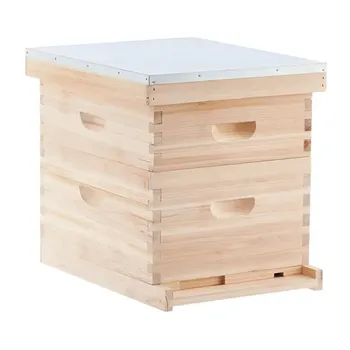
Standard hives preserve the comb
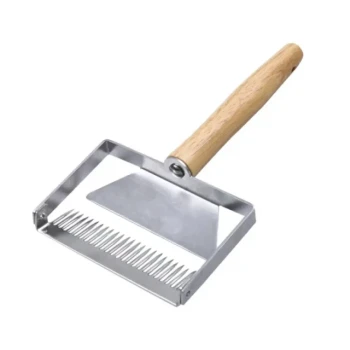
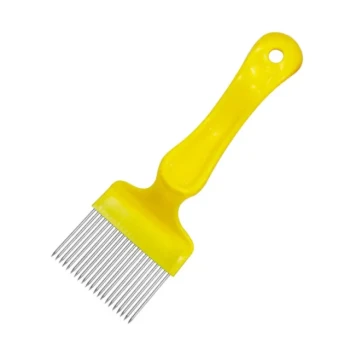
In Langstroth-style systems, bees store honey in removable frames. An uncapping tool opens the sealed cells, and a centrifugal extractor spins honey from the comb while keeping the frame largely intact.
The extracted frame can then be returned to the hive for reuse. This supports efficient, repeatable harvesting and is suitable for both small-scale and commercial apiaries.
Open nests have no removable frames
Dwarf honeybees construct a single exposed comb attached to a twig or branch. Honey is concentrated in a swollen upper section, often called the crest, rather than in standardized frames.
A conventional rotary extractor has no practical way to hold or process this structure. Attempting to use one would risk tearing the comb, contaminating the honey, or damaging the colony’s remaining nest.
The harvest is closer to controlled comb processing
Instead of removing a frame and spinning it, the operator must separate the honey-bearing crest from the rest of the nest. The equipment therefore needs to support precise cutting, controlled pressing, and staged clarification.
This is a fundamentally different workflow from frame-based extraction.
The Specialized Equipment Required
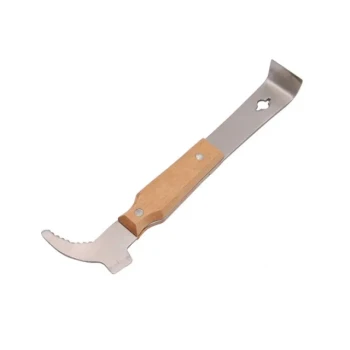
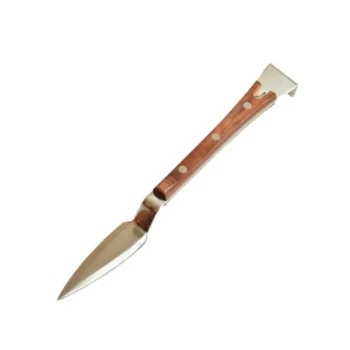
Comb-cutting knives
A sharp, controllable comb-cutting knife is used to remove the swollen honey crest from its supporting structure. The knife should allow the operator to make clean cuts while minimizing unnecessary disturbance to the brood area and the rest of the nest.
For professional supply programs, product selection should emphasize:
- Corrosion-resistant, food-contact-safe construction
- A blade profile suited to delicate exposed comb
- Comfortable, secure grips
- Easy cleaning and sanitization
- Replacement blades or serviceable components where available
The cutting tool is not merely a convenience. It determines how much comb is damaged and how cleanly the honey-bearing section can be separated.
Mechanical honey presses
After cutting, the crest is placed in a mechanical honey press. Pressure ruptures the honey-containing cells and releases honey without relying on centrifugal force.
A suitable press should provide:
- Controlled, progressive pressure
- A food-safe basket or pressing chamber
- Easy separation of honey from crushed comb
- Simple disassembly for washing and sanitation
- Capacity appropriate to the operator’s harvesting volume
Pressing is inherently more destructive to the harvested comb than centrifugal extraction. However, destruction is unavoidable when the honey is stored in a single exposed crest rather than in reusable frames.
Multi-stage filtration strainers
Pressed honey contains wax particles, comb fragments, and other solids. A multi-stage filtration system is therefore required to clarify the honey before storage or packing.
A practical arrangement uses progressively finer food-safe strainers:
- Coarse screening to remove large comb pieces
- Intermediate filtration to capture wax fragments and debris
- Fine filtration to improve clarity before settling or packaging
Filtration should remove unwanted solids without using excessive heat or aggressive processing that could alter the honey’s natural characteristics.
Food-safe collection and settling vessels
The press and strainers should discharge into clean, food-grade collection vessels. Lidded containers help reduce exposure to dust, insects, moisture, and other sources of contamination.
For distributors and commercial operators, the supporting equipment should include compatible:
- Collection buckets or tanks
- Transfer vessels
- Lids and seals
- Food-safe tubing or pouring equipment
- Draining racks or stands for strainers
Equipment compatibility matters. A well-designed set reduces transfer steps, improves hygiene, and makes order fulfillment easier for operations that need a complete extraction package rather than isolated tools.
Handling Equipment for Sensitive Open-Nesting Colonies
Lightweight transport boxes
Dwarf honeybees are highly sensitive to disturbance and may abscond when subjected to excessive handling or environmental stress. Lightweight transport boxes allow colonies or nest sections to be moved with less physical strain and greater control.
The box should be selected for:
- Low weight
- Adequate ventilation
- Secure closure
- Protection from excessive light and impact
- Compatibility with the nest’s exposed structure
Transport equipment is especially important when harvesting is combined with colony relocation or conservation work.
Gentle handling tools
Operators need tools that support careful manipulation without crushing bees or damaging the nest. The exact tool set depends on the handling method, but the principle is consistent: use low-force, precise equipment rather than the heavier manipulation tools associated with conventional hive management.
The objective is to reduce:
- Vibration and impact
- Unnecessary nest movement
- Pressure on brood areas
- Prolonged exposure during the operation
- The likelihood of colony abandonment
Harvesting equipment and handling equipment should be treated as one system. A technically effective press cannot compensate for poor colony handling at the nest.
Controlled work conditions
Although not a specialized machine, a suitable work area is essential. Operators should prepare clean surfaces, organized tools, secure collection containers, and a rapid workflow before opening or disturbing the nest.
This reduces the time the colony remains exposed and helps prevent contamination during cutting and transfer.
How the Workflow Differs From Movable-Frame Harvesting
Open-nesting harvest sequence
The typical process is:
- Locate and assess the exposed single-comb nest.
- Identify the honey-bearing upper crest.
- Use a comb-cutting knife to remove the harvestable section.
- Place the crest in a mechanical press.
- Collect the expressed honey.
- Pass it through staged filtration.
- Transfer it into clean, sealed containers.
- Minimize further disturbance to the remaining colony.
The workflow is cut-and-press, not uncap-and-spin.
Standard movable-frame sequence
A conventional frame-based operation generally involves:
- Removing honey frames from the hive.
- Uncapping sealed honey cells.
- Loading frames into a centrifugal extractor.
- Spinning honey from both sides of the frames.
- Filtering or settling the honey.
- Returning intact frames to the hive.
The frame itself remains a reusable production asset. That is the main operational advantage of standard movable-frame systems.
Why the distinction matters for sourcing
A distributor should not present a rotary extractor as a universal honey-harvesting solution. The correct equipment depends on the physical architecture of the nest and the way honey is stored.
For open-nesting species, a complete product offering should combine cutting, pressing, filtration, collection, and gentle transport equipment.
Understanding the Trade-offs
Higher comb loss
Pressing destroys the harvested crest, whereas centrifugal extraction can preserve the comb for reuse. This may increase the colony’s rebuilding requirement and reduce the efficiency advantage enjoyed by frame-based apiaries.
The equipment should therefore be matched to responsible harvest limits and the biological needs of the colony.
Greater colony disturbance
An exposed nest is more vulnerable during harvesting than a colony housed in a protected movable-frame box. Poor timing, rough handling, or prolonged exposure may increase the risk of absconding.
Training, preparation, and lightweight handling equipment are as important as the extraction machinery itself.
Lower mechanical throughput
A press-and-filter workflow generally requires more manual handling than a powered frame extractor. It may be less suitable for high-volume operations unless the equipment is scaled carefully and the workflow is well organized.
Operators should evaluate actual harvest volume before investing in oversized machinery.
Filtration can affect yield
Very fine filtration can improve visual clarity but may also retain more wax or particulate material and slow processing. Filtration stages should be selected according to the desired product specification, hygiene requirements, and acceptable yield.
The goal is controlled clarification, not simply the maximum number of filters.
Stingless-bee equipment is not automatically interchangeable
Stingless bees store honey in cerumen pots, which are structurally different from the exposed single-comb crest of dwarf honeybees. Vacuum pumps, injectable tools, and non-destructive opening devices described for stingless-bee colonies are designed for pot-based storage and should not be assumed to suit open single-comb nests.
Species biology must guide equipment selection. Similar marketing labels such as “specialized honey extraction” do not guarantee technical compatibility.
Building a Complete Supply Package
Core harvesting package
For a basic professional setup, the essential package should include:
- Specialized comb-cutting knives
- A mechanical honey press
- Coarse, intermediate, and fine food-safe strainers
- Clean collection and settling vessels
- Cleaning and sanitation accessories
- Lightweight transport boxes
- Gentle handling tools
This gives distributors a coherent, one-stop offering rather than a collection of unrelated products.
Premium service considerations
B2B buyers often need more than equipment specifications. They may also require:
- Fast confirmation of product compatibility
- Guidance on press capacity and filtration configuration
- Spare parts and replacement consumables
- Consistent quality across repeat orders
- Rapid quotation and order response
- Efficient packing for mixed equipment shipments
- Technical support for first-time users
A supplier’s value is therefore measured by the complete procurement experience, not only by the individual tool.
Product differentiation for resellers
Resellers can separate entry-level and professional packages by capacity, durability, sanitation features, portability, and ease of maintenance. A compact kit may suit field harvesters, while a larger press-and-filtration line may suit centralized processing.
The important distinction is to market these systems for open-nesting, crest-based harvests, not as substitutes for standard frame extractors in every apiary.
How to Apply This to Your Project
Select equipment according to the colony’s nest structure, harvest volume, handling risk, and required product hygiene.
- If your primary focus is open-nesting dwarf honeybees: Source a coordinated package of comb-cutting knives, mechanical presses, staged filtration strainers, food-safe vessels, lightweight transport boxes, and gentle handling tools.
- If your primary focus is standard movable-frame hives: Use uncapping equipment, centrifugal extractors, frame supports, settling tanks, and compatible filtration systems rather than crest-cutting presses.
- If your primary focus is colony conservation: Prioritize low-disturbance handling and transport equipment, and avoid applying stingless-bee pot-extraction tools or frame-based machinery without confirming biological compatibility.
- If your primary focus is commercial distribution: Build modular product packages with clear capacity specifications, spare-part support, rapid response, and efficient fulfillment for complete extraction workflows.
The right equipment begins with the nest architecture: cut and press exposed single-comb honey, but uncap and centrifuge removable frames.
Summary Table:
| Aspect | Open-Nesting Species | Movable-Frame Hives |
|---|---|---|
| Harvest method | Cut and press | Uncap and spin |
| Key equipment | Comb-cutting knives, mechanical press, filtration strainers, food-safe containers | Uncapping tool, centrifugal extractor, frame supports |
| Comb reuse | Not reusable | Reusable |
| Colony disturbance | High | Lower |
| Throughput | Manual, lower | Higher |
| Suitable for | Specialized honeybees | Standard apiaries |
Need a complete harvesting setup for open-nesting honeybees? HONESTBEE offers a full range of extraction equipment, from comb-cutting knives to multi-stage filtration systems, with rapid delivery and dedicated support for beekeepers and distributors. Upgrade your harvest efficiency today — contact us for tailored solutions and bulk pricing!
Related Products
- Adjustable Stainless Steel Honey Uncapping Fork with Plastic Handle for Beekeeping
- All-Stainless Steel Pivoting Honey Uncapping Fork for Beekeeping
- Professional Long-Handled Silicone Honey Scraper for Beekeeping
- HONESTBEE Professional Mini J-Hook Hive Tool for Beekeeping
- Classic Wooden Bee Brush with Double-Row Boar Bristles
People Also Ask
- What is the design purpose of honey uncapping forks and honey uncapping tanks? Maximize Your Harvest Efficiency
- How does a honey uncapping fork supplement the use of an uncapping knife? Boost Your Honey Yield and Extraction Efficiency
- What are the essential tools for uncapping honey frames? Choose the Right Tool for Your Apiary
- What other tools are available for honey uncapping besides knives? Find the Right Tool for Your Apiary's Scale
- What tools are used for honey uncapping? Choose the Right Knife for Your Harvest