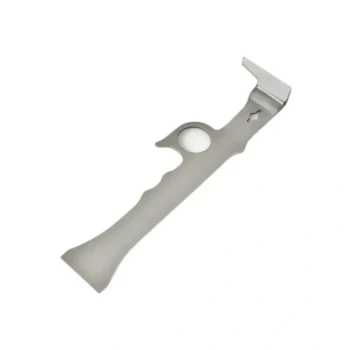
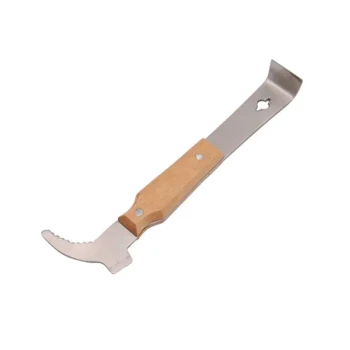
Modern stingless bee beekeeping toolkits represent a paradigm shift from opportunistic gathering to systematic apiary management. By integrating standardized splitting tools, maintenance equipment, and high-efficiency honey suction pumps, these systems eliminate the destructive nature of traditional forest hunting. This approach drastically reduces worker bee mortality and labor intensity, allowing for a sustainable, low-cost production cycle without the need for frequent forest entry.
The transition to modern toolkits transforms honey production from a predatory activity into a sustainable science. By utilizing non-destructive extraction technology, producers can secure higher yields and colony health while removing the physical risks and ecological damage of traditional methods.
Technical Superiority in Harvesting and Propagation
The core advantage of modern toolkits lies in how they interact with the biology of the bee colony. Traditional methods often destroy the hive structure; modern tools preserve it.
Non-Destructive Extraction via Suction
Traditional harvesting often involves squeezing or crushing storage pots, which kills larvae and destroys the nest structure. Modern toolkits utilize high-efficiency honey suction pumps to extract honey cleanly.
This preserves the cerumen (storage pots) and prevents the death of worker bees. The colony recovers faster, leading to shorter intervals between harvests.
Standardized Colony Reproduction
Instead of relying on finding new wild nests, modern kits include specialized colony splitting tools. These allow beekeepers to artificially propagate hives from existing stock.
This standardization transforms beekeeping into a scalable agricultural practice. It ensures a consistent increase in stock without depleting wild forest populations.
Optimizing the Biological Environment
Beyond the tools themselves, the modern hive structures associated with these toolkits offer significant environmental controls that forest hives lack.
Micro-Environment Stabilization
Modern enclosures are scientifically designed to maintain stable temperature and humidity levels.
This reduces the biological stress on the colony. Bees expend less energy regulating the hive climate and more energy foraging and producing honey.
Impurity Isolation and Quality Control
The structural design effectively isolates the hive from external contaminants. This is critical for meeting high-quality national and international standards.
In contrast to open forest harvesting, which is prone to debris, modern toolkits ensure the organic purity of the final product.
Operational Efficiency and Safety
The move from forest hunting to apiary management fundamentally changes the economics and safety profile of the operation.
Reduction of Labor and Risk
Modern toolkits eliminate the need for dangerous, high-altitude forest entry. Management occurs in a controlled apiary setting.
This facilitates easier daily management and routine inspection. The risk of physical injury to the beekeeper is virtually eliminated, and labor costs are significantly lowered.
Disease Monitoring
The accessible design of modern hives allows for close-range observation.
Beekeepers can detect pests or diseases early. This proactive approach prevents the total colony losses that are common when unmonitored wild hives succumb to illness.
Understanding the Trade-offs
While modern toolkits offer superior technical performance, they introduce new variables that must be managed.
Upfront Investment vs. Zero Cost
Traditional forest hunting requires little to no capital; modern toolkits require an initial financial investment in pumps, boxes, and tools. This creates a barrier to entry for resource-poor farmers.
Technical Competency Requirements
Effective use of suction pumps and splitting tools requires specialized training. Improper use of a suction pump can still damage a hive, and incorrect splitting can kill a colony. The transition requires education, not just equipment.
Making the Right Choice for Your Goal
Adopting modern toolkits is a strategic decision that depends on your specific production targets.
- If your primary focus is commercial scalability: Invest in the full toolkit immediately, as the suction technology and standardized splitting are the only ways to achieve the consistent volume required for retail markets.
- If your primary focus is ecological sustainability: Prioritize the use of modern hive boxes and suction pumps to minimize worker bee mortality and stop the depletion of wild forest colonies.
By adopting these technical tools, you move from being a hunter of a finite resource to a manager of a renewable, scalable asset.
Summary Table:
| Feature | Traditional Forest Hunting | Modern Beekeeping Toolkits |
|---|---|---|
| Extraction Method | Crushing/Squeezing (Destructive) | High-Efficiency Suction (Non-Destructive) |
| Colony Impact | High bee mortality & nest damage | Preserves cerumen and worker bee life |
| Propagation | Relying on wild nest discovery | Controlled colony splitting & scaling |
| Honey Quality | Prone to debris and contaminants | Isolated, pure, and export-standard |
| Operational Risk | High (dangerous forest climbs) | Low (managed in controlled apiaries) |
Scale Your Production with HONESTBEE’s Professional Solutions
Transitioning from traditional hunting to a systematic apiary requires precision and the right equipment. HONESTBEE empowers commercial apiaries and distributors worldwide with a comprehensive wholesale catalog designed for modern efficiency.
Our Value to Your Business:
- Advanced Machinery: Streamline your operations with our specialized hive-making and honey-filling machines.
- Complete Equipment Range: We supply the full spectrum of beekeeping tools, from non-destructive suction pumps to essential industry consumables.
- Market Expansion: Enhance your brand with our unique array of honey-themed cultural merchandise.
Ready to transform your beekeeping operation into a sustainable, high-yield enterprise?
Contact HONESTBEE Today for Wholesale Inquiries
References
- Tri Nurhayati, Yeni Rosilawati. Post-Mining Community Development in South Kalimantan through Kelulut Beekeeping as Corporate Social Responsibility Actualization. DOI: 10.1051/e3sconf/202123201037
This article is also based on technical information from HonestBee Knowledge Base .
Related Products
- Stainless Steel Queen Grafting Tool for Beekeeping and Bee Queen Grafting
- HONESTBEE Advanced Ergonomic Stainless Steel Hive Tool for Beekeeping
- Classic Wooden Bee Brush with Double-Row Boar Bristles
- HONESTBEE 15-in-1 Beekeeper Multi-Tool with Hammer and Pliers for Beekeeping
- Stainless Steel J Hook Hive Tool for Beekeeping
People Also Ask
- What are the benefits of using a queen grafting tool for queen rearing? Master Precision for Superior Bee Genetics
- What are the steps involved in using a queen grafting tool? A Guide to Successful Queen Rearing
- What is grafting in queen rearing? Take Control of Your Apiary's Genetics
- What is the step-by-step process for using a queen grafting tool? Master Larva Transfer for Better Queen Rearing
- What is the primary function of a queen grafting tool? Master Precise Larval Transfer for High Queen Acceptance