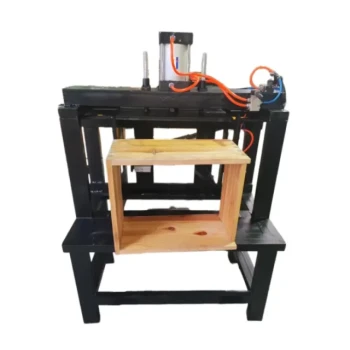
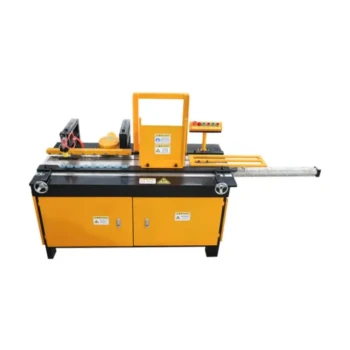
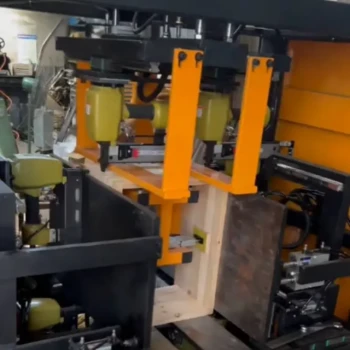
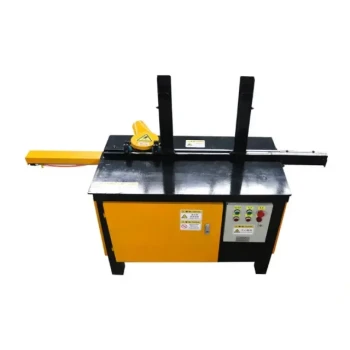
Standardized beehive manufacturing equipment provides the essential architectural foundation for scalable honey production. It produces hives with precise, uniform specifications and scientific structures, which are prerequisites for maintaining colony health and securing stable honey yields. By ensuring consistent production capacity, this equipment enables both long-term melissopalynological (pollen and honey) monitoring and the reliable supply necessary for commercial distribution.
By eliminating the variables of primitive equipment, standardized manufacturing creates a controlled ecosystem that balances biological needs with industrial efficiency, transforming volatile beekeeping into a predictable production base.
The Operational Impact of Standardization
Streamlining Daily Management
Standardized equipment ensures that every internal component is identical across the entire apiary. This uniformity simplifies routine inspections and allows for the seamless exchange of frames between hives.
Reducing Labor Intensity
Unlike primitive hives, modern standardized structures significantly lower the physical and time demands on beekeepers. The consistent internal structure facilitates rapid manipulations, allowing operators to manage larger populations with less effort.
Enabling Modular Operations
The use of standardized hive frames allows for modular colony management. Beekeepers can perform artificial colony splitting or swap out old combs without damaging the overall nest structure, thereby increasing operational flexibility.
Enhancing Biological Stability and Yield
Optimizing the Micro-environment
Standardized manufacturing produces hives that offer a stable micro-environment for the colony. This controlled setting is superior to unstable primitive hives, allowing bees to breed and develop under optimal conditions.
Maximizing Resource Conversion
Scientific hive structures are designed to guide bees to utilize space efficiently. This precise configuration aids in the effective conversion of biological energy—gathered from local nectar and pollen—into higher unit yields of honey and beeswax.
Protecting Local Ecotypes
Standardized environments provide a controlled breeding ground that helps protect core breeding stocks. This isolation and control are vital for preventing hybridization with non-native species and preserving local honey bee ecotypes.
Scaling for Commercial Viability
Facilitating Mechanization and Mobility
Standardization provides the necessary hardware compatibility for downstream processes. Uniform frames and boxes are essential for automated honey extraction and mobile beekeeping operations, which are key drivers for lowering unit costs.
Ensuring Predictable Output
For a production base to support domestic retail or international trade, output must be reliable. Standardized infrastructure ensures a stable flow of honey products, mitigating the production volatility often associated with traditional methods.
The Role in Scientific Monitoring
Establishing a Data Baseline
Consistent production capacity is necessary for conducting long-term monitoring. When the physical hardware is uniform, biological data regarding colony development and foraging behavior becomes scientifically comparable.
Supporting Climate-Aware Models
When monitoring based on climate models, hardware variables must be minimized. Standardized hives ensure that observations reflect environmental changes and bee biology rather than equipment discrepancies.
Understanding the Investment Trade-offs
While standardized equipment drives efficiency, it requires a commitment to a specific ecosystem of hardware.
Initial Capital vs. Long-term Gain
Transitioning to or establishing a base with standardized manufacturing equipment requires a higher initial investment compared to primitive methods. However, this cost is offset by reduced operational losses and increased scalability over time.
System Rigidity
Once a specific standard (dimension and frame style) is adopted, the production base must adhere to it to maintain compatibility. Mixing standards can negate the efficiency gains of interchangeability and complicate mechanization.
Strategies for Establishing Your Production Base
To maximize the value of standardized equipment, align your hardware choice with your primary operational objective:
- If your primary focus is Commercial Scalability: Prioritize equipment that ensures hardware compatibility for mobile beekeeping and automated extraction lines to lower unit costs.
- If your primary focus is Scientific Monitoring: Select equipment that offers the highest precision in "scientific structure" to ensure data comparability across different colonies and climate zones.
- If your primary focus is Colony Health: Focus on standardized designs that optimize the micro-environment and facilitate non-destructive frame manipulation to reduce stress on the bees.
Standardization transforms beekeeping from a craft of variable outcomes into a science of predictable, scalable success.
Summary Table:
| Key Value Driver | Operational Impact | Biological & Economic Benefit |
|---|---|---|
| Uniform Specifications | Identical internal components & frames | Simplifies management and allows seamless hive exchange |
| Scientific Structure | Optimized micro-environment | Improves colony breeding conditions and resource conversion |
| Hardware Compatibility | Facilitates mechanization & mobility | Lowers unit costs and enables automated honey extraction |
| Data Consistency | Minimizes hardware variables | Supports accurate scientific monitoring and climate modeling |
| Modular Design | Enables artificial splitting | Increases operational flexibility and protects core breeding stocks |
Scale Your Beekeeping Operations with HONESTBEE Professional Solutions
Transform your volatile beekeeping into a predictable, high-yield production base. HONESTBEE specializes in supporting commercial apiaries and distributors with a full spectrum of standardized equipment.
Our Value to Your Business:
- Comprehensive Wholesale Offering: Access a wide array of essential industry consumables and high-quality beekeeping tools.
- Advanced Machinery: From precision hive-making to automated honey-filling machines, we provide the hardware for industrial efficiency.
- Commercial Scalability: Our standardized designs are built for mobility and mechanization, helping you lower unit costs and maximize output.
- Brand Enrichment: Explore our honey-themed cultural merchandise to diversify your retail portfolio.
Ready to optimize your production? Contact us today to discuss your wholesale needs and build a more stable future for your honey production base.
References
- G.I. Nenasheva, Y.V. Kozyreva. Assessment of area tourist-recreational potential with honey palinological research. DOI: 10.15421/2020_286
This article is also based on technical information from HonestBee Knowledge Base .
Related Products
- High-Efficiency Pneumatic Bee Hive Making Machine for Rapid Box Assembly
- Mini Desktop Bee Hive Frame Forming Making Machine
- Beehive Handle and Frame Rest Cutting Machine: Your Specialized Hive Machine
- Automatic High-Speed Bee Hive Box Stapling Machine
- Professional Bee Frame Machine for Side Bar Shaping
People Also Ask
- How does the introduction of professional beehive-making machinery benefit sustainable beekeeping? Scale Your Apiary
- Why is specialized beehive-making machinery critical for low-defense breeding? Enhance Selection with Precision Tools
- How does the introduction of specialized beehive making machinery contribute to increasing the scale of regional beekeeping industries?
- What is the importance of specialized beehive making machinery in a circular bio-economy? Build Local Sustainability
- Why is specialized beehive-making machinery essential? Scale Your Apiary with Precision Industrial Standards