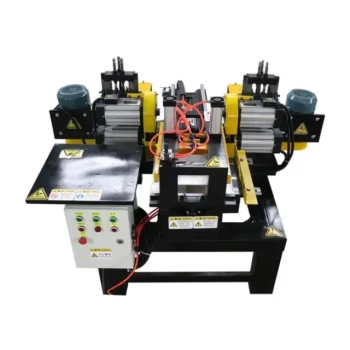
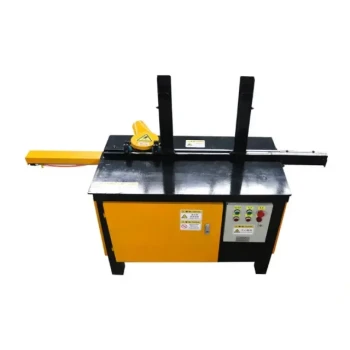
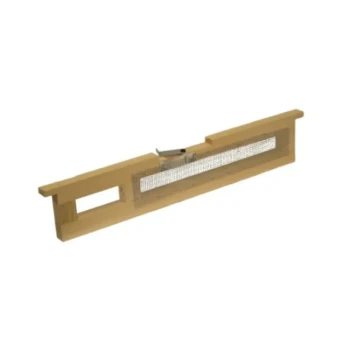
The manufacturing process for frame top bars relied on a high-efficiency workflow that prioritized bulk processing over individual piece work. Instead of cutting strips and then machining them, the process began with wide boards (1x10s, 1x6s, or repurposed lumber), which were cut to length and dadoed before being ripped into individual bars and slotted.
Core Insight: The key to this manufacturing method was the order of operations. By performing complex cuts (dadoing and sizing) on wide, stable boards before ripping them into narrow strips, manufacturers significantly increased throughput and stability while minimizing handling time.
Material Selection and Preparation
Efficient Lumber Utilization
The process was designed to maximize material yield. The primary input consisted of standard 1x10 and 1x6 boards.
However, efficiency extended beyond standard stock. Manufacturers also utilized lumber that was deemed "not suitable for supers" (the boxes of the hive), effectively reclaiming potential waste material for use as internal components.
Automated Feeding
The initial stage of production was automated for speed. A machine equipped with a feed chain was used to pull boards directly from a stack, ensuring a continuous flow of material into the cutting heads.
The Machining Workflow
Cutting to Length and Dadoing
Before the wood was stripped down, the wide boards were processed as a single unit. The machine first cut the boards to a precise top bar length of 19 1/8 inches.
Immediately following the length cut, the machine would dado the ends of the wide board. Doing this on the full-width board guaranteed that the joinery cuts were consistent across every eventual bar produced from that piece of lumber.
Gang Ripping
Once the board was cut to length and the ends were dadoed, it passed through a gang ripsaw.
This saw featured multiple blades that sliced the wide board into narrow strips in a single pass. The resulting strips measured ¾ inch thick and 1 1/16 inch wide.
Because of the previous dadoing step, these strips emerged from the saw with the necessary 3/8 by 1 1/8 inch cut already profiled on each end.
Final Slotting
The final step addressed the specific functional needs of the frame. The individual strips were run through a chain-fed slotting machine.
This operation created the internal geometry required to hold the foundation, completing the manufacturing cycle.
Understanding the Trade-offs
Process Stability vs. Material Quality
The method of machining a wide board before ripping it is highly efficient, but it introduces a specific trade-off regarding material quality.
The Risk of Propagating Defects
When you dado and cut a wide board, you assume the entire board is sound. If the original 1x10 board has a bow, twist, or knot in a critical area, every strip ripped from that section may carry the defect.
While this method is faster than machining individual strips, it requires higher vigilance during the initial lumber sorting to prevent mass-producing defective parts.
Making the Right Choice for Your Goal
Whether you are analyzing historical methods or setting up a modern woodworking run, the principles of this process apply differently depending on your objective.
- If your primary focus is High Volume: Prioritize machining wide boards first (cut and dado) before ripping, as this reduces handling time per unit.
- If your primary focus is Material Economy: Implement a sorting stage to divert lumber unsuitable for large exterior parts (like supers) into smaller internal components like top bars.
Efficiency in manufacturing is defined not just by the speed of the cut, but by the strategic sequence of operations.
Summary Table:
| Stage | Operation | Specification/Result |
|---|---|---|
| Preparation | Material Selection | 1x6 or 1x10 boards (including reclaimed lumber) |
| Initial Machining | Cut to Length | 19 1/8 inches |
| Joinery | End Dadoing | 3/8 x 1 1/8 inch profile on full-width boards |
| Sizing | Gang Ripping | Strips sliced to 3/4" thick x 1 1/16" wide |
| Finishing | Slotting | Internal geometry created for foundation support |
Scale Your Beekeeping Business with HONESTBEE
Maximize your operational efficiency with professional-grade equipment. HONESTBEE specializes in serving commercial apiaries and distributors by providing a comprehensive wholesale range of beekeeping tools, machinery, and consumables.
Whether you need specialized hive-making machinery, high-speed honey-filling systems, or premium hardware and cultural merchandise, we deliver the quality and volume your business demands.
Ready to upgrade your production? Contact our expert team today to discuss custom wholesale solutions and hardware tailored to your scale.
Related Products
- HONESTBEE Top Bar & Bottom Bar Forming Machine | Bee Frame Machine
- Top Bar Beehive for Beekeeping Wholesales Kenya Top Bar Hive
- JZBZ Langstroth Queen Rearing Frame for Beekeeping
- HONESTBEE Bee Frame Grooving Machine | Precision Slotting for Bee Frame Making
- Professional Wooden Requeening Frame for Beekeeping
People Also Ask
- What is the primary function of the Top Bar and Bottom Bar Forming Machine? Automate Hive Frame Production Excellence
- How does the Top Bar and Bottom Bar Forming Machine process wooden strips? High-Precision Frame Component Production
- What is the operational sequence of the Top Bar and Bottom Bar Forming Machine? Precision Beekeeping Frame Manufacturing
- What are the key benefits of investing in the Top Bar and Bottom Bar Forming Machine? Scale Your Hive Production Now
- What customization options are available for the Top Bar and Bottom Bar Forming Machine? Engineered for Any Hive Standard