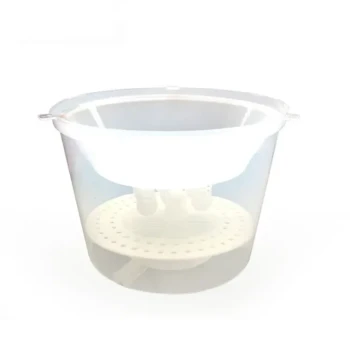
To achieve efficient collection during large-scale harvesting, bee pollen traps are typically installed at the entrance or the bottom of the beehive. These devices act as a mechanical gateway, intercepting foraging bees as they return to the hive and stripping pollen pellets from their legs before they enter the main colony.
Bee pollen traps function as a precise mechanical filter installed at the hive’s access points, utilizing grids to separate pollen from bees without causing injury. By positioning collection boxes underneath these barriers, producers can effectively transition pollen from a biological resource into a clean, harvestable raw material for commercial processing.
The Mechanics of Efficient Extraction
To understand why these locations are chosen, one must look at the harvesting workflow. The goal is to intercept the raw material at the exact moment of delivery without disrupting the colony's workflow.
Strategic Placement Points
The primary hardware is installed where traffic is highest: the hive entrance or the bottom board.
Placing the trap at the entrance forces every returning forager to pass through the device. Similarly, bottom-mounted traps utilize the hive's floor architecture to filter bees as they climb upward into the brood nest.
The Interception Process
The core mechanism involves a grid, fence, or sieve plate with precisely sized openings.
As bees attempt to squeeze through these specific apertures to enter the hive, the physical barrier mechanically scrapes the pollen baskets (clusters) off their hind legs.
Collection and Storage
Gravity is the final component of the installation. Once the pollen pellets are stripped from the bee, they fall immediately into a collection box or drawer located underneath the trap.
This isolation prevents the pollen from being tracked into the hive, ensuring it remains a clean raw material ready for the production workflow.
Ensuring Quality and Volume
For industrial-scale harvesting, the installation location is critical for maintaining both the volume of the harvest and the health of the raw product.
Preservation of Purity
By stripping the pollen at the entrance or bottom, the trap acts as an isolation barrier.
This prevents the pollen from entering the hive interior, where it could be consumed by the colony or contaminated by hive debris. This results in high-purity granules suitable for botanical classification or chemical analysis.
Non-Destructive Continuity
The equipment is designed to enable continuous, automatic collection.
Because the traps are passive mechanical devices, they allow for the accumulation of large volumes of pollen over time without requiring constant human intervention or disrupting the population dynamics of the colony.
Understanding the Operational Trade-offs
While highly effective, the installation of pollen traps requires a balance between harvesting efficiency and biological requirements.
Precision of Pore Size
The efficiency of the trap relies entirely on the accuracy of the hole diameter in the grid.
If the apertures are too large, pollen is not stripped, and harvesting yields drop. If they are too small or poorly finished, the friction can cause physical injury to the bees' legs or wings.
Balancing Colony Needs
A trap is a physical barrier that restricts the colony's food supply.
While these devices are designed to be "non-destructive," they physically remove a significant portion of the protein source (pollen) intended for the hive. Operators must manage installation times to ensure the colony retains enough pollen for its own survival and brood rearing.
Optimizing Your Harvesting Strategy
Selecting the right equipment and installation protocol depends on your specific production targets.
- If your primary focus is Industrial Volume: Prioritize traps with high-precision grids installed at the main entrance to maximize the stripping rate of returning foragers.
- If your primary focus is Product Purity: Ensure the collection drawer is located well below the traffic area to isolate the granules immediately and prevent contamination.
Correctly installed traps transform the hive into a sustainable production unit, delivering clean raw material while respecting the biological limits of the bees.
Summary Table:
| Feature | Entrance-Mounted Traps | Bottom-Board Traps |
|---|---|---|
| Primary Location | Hive entrance (external/internal) | Integrated into the hive floor |
| Workflow Impact | High traffic interception | Seamless upward flow integration |
| Collection Method | Gravity-fed to external drawer | Internal pull-out drawer |
| Purity Level | Excellent (minimal debris) | High (isolated from brood area) |
| Best Used For | Rapid installation & monitoring | Long-term, high-volume harvesting |
Scale Your Pollen Production with HONESTBEE
Are you ready to optimize your commercial apiary for industrial-scale pollen harvesting? At HONESTBEE, we specialize in supporting commercial apiaries and distributors with a comprehensive range of professional beekeeping machinery and tools.
From high-precision bee pollen traps designed for maximum purity to advanced honey-filling and hive-making machines, our portfolio is engineered to enhance your operational efficiency. We provide the essential industry consumables and specialized hardware you need to transform your apiary into a high-yield production unit.
Contact us today to discuss wholesale solutions and customized equipment for your business.
References
- Katarina Šimunović, Sonja Smole Možina. MICROBIOLOGICAL QUALITY, ANTIOXIDATIVE AND ANTIMICROBIAL PROPERTIES OF SLOVENIAN BEE POLLEN. DOI: 10.7251/agreng1901082s
This article is also based on technical information from HonestBee Knowledge Base .
Related Products
- 30 cm Plastic Entrance Hole Bee Pollen Trap and Collector
- Removable Plastic Pollen Trap With Ventilated Tray for Bees Pollen Collector
- Plastic Bee Pollen Trap Strips Comb Catcher Collector
- High-Efficiency Diamond Maze Bee Escape for Clearing Supers
- HONESTBEE Professional Telescopic Pole Bee Swarm Catcher
People Also Ask
- What are the design principles and advantages of pollen traps in the collection of bee pollen? Boost Your Apiary Yield
- Why is frequent harvesting of bee pollen from traps necessary for quality control? Ensure Freshness and Prevent Mold.
- How often should bee pollen be harvested from a trap and why? Master Freshness and Prevent Spoilage
- What function do pollen traps serve in quantitative collection? Boost Your Apiary's Data & Production Efficiency
- What is the primary function of bee pollen traps? Optimize Your Pollen Harvest with Advanced Extraction Efficiency