For commercial beekeeping with movable-frame hives, the suitable species are Apis mellifera and Apis cerana. These cavity-nesting honeybees can establish colonies inside enclosed hives and build multiple, parallel combs that fit standardized movable frames. This behavior supports routine inspections, brood management, queen control, transport, and mechanical honey extraction.
The decisive factor is nesting behavior: Apis mellifera and Apis cerana naturally occupy enclosed cavities, while giant and dwarf honeybees build exposed single-comb nests that do not remain compatible with standard hive equipment.
Which Honeybee Species Suit Commercial Hive Management?
Apis mellifera: The Western Honeybee
Apis mellifera, commonly called the Western honeybee, is the most widely managed species for commercial honey production and crop pollination. It adapts well to standardized wooden hives, movable frames, wax foundation, and centrifugal extractors.
Its wider foraging range makes it suitable for large agricultural fields, commercial orchards, and migratory pollination operations. Larger apiaries can standardize hive dimensions, transport systems, inspection tools, and extraction machinery around this species.
Apis cerana: The Eastern Honeybee
Apis cerana, or the Eastern honeybee, is also suitable for commercial management in movable-frame hives. It is particularly valuable in localized forest, plantation, and agricultural environments.
Apis cerana generally operates within a more localized foraging range than Apis mellifera. This can make it a practical choice where apiaries are positioned near concentrated floral resources and where smaller-scale or regionally adapted management is preferred.
Why Cavity-Nesting Behavior Matters
Both species naturally construct multiple vertical combs inside enclosed spaces. Modern hive equipment takes advantage of this behavior by separating the combs into removable, standardized frames.
This arrangement allows beekeepers to inspect colonies without destroying the nest. It also enables controlled brood management, queen management, colony division, hive transport, and repeatable honey harvesting.
Why Standard Movable-Frame Hives Work
Frames Create a Modular Colony Structure
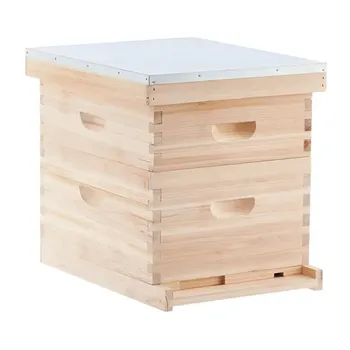
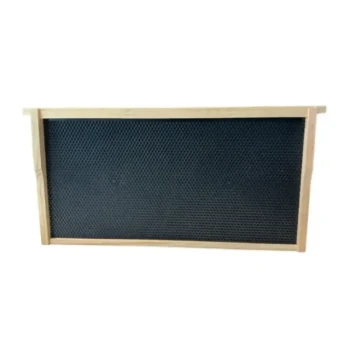
Movable-frame hives depend on colonies accepting a set of parallel frames as the foundation for comb construction. The frames maintain organized spacing and allow individual combs to be removed, inspected, replaced, or transferred.
This modular structure is essential for commercial apiaries because it supports consistent workflows across many colonies. Distributors and equipment suppliers can therefore standardize hive bodies, frames, foundation, tools, and replacement components around the needs of Apis mellifera and Apis cerana.
Equipment Supports Non-Destructive Harvesting
Standard hive systems allow honey-filled frames to be removed and processed in mechanical centrifugal extractors. Honey can be collected while the comb remains intact and is returned to the colony.
The same equipment ecosystem supports frame wiring, wax foundation installation, hive inspection, protective equipment, transport, and colony health management. These capabilities are central to efficient, scalable apiary operations.
Standardization Improves Commercial Efficiency
Commercial beekeepers benefit from interchangeable hive parts and repeatable handling procedures. Standard dimensions simplify purchasing, inventory management, maintenance, order fulfillment, and equipment replacement.
For B2B buyers, species suitability directly affects product selection. Hive bodies, frames, wax foundation machinery, extraction systems, and transport equipment should be specified according to the managed species and the chosen hive format.
Why Giant Honeybees Are Unsuitable for Standard Hives
Apis dorsata Builds Exposed Single Combs
Apis dorsata, the giant honeybee, is an open-nesting species. It typically builds one large exposed comb on locations such as high tree branches, cliffs, rocks, or building surfaces.
A standard Langstroth-style hive is designed for multiple combs arranged inside a dark, enclosed cavity. The giant honeybee's natural nesting pattern does not match this internal, modular arrangement.
Confinement Conflicts With Natural Behavior
Apis dorsata has not adapted to remain in conventional closed hive boxes for extended periods. It can also display strong defensive behavior and seasonal or long-distance movement, making routine confinement and repeated frame manipulation impractical.
As a result, standard multi-frame boxes, frame-based inspection tools, and centrifugal extraction systems cannot be applied to Apis dorsata in the same way they are applied to cavity-nesting species. Management methods must instead accommodate its open-air nesting behavior.
Why Dwarf Honeybees Are Unsuitable for Standard Hives
Apis florea and Apis andreniformis Nest in the Open
The dwarf honeybees Apis florea and Apis andreniformis are also open-nesting species. They construct exposed single combs rather than multiple parallel combs inside an enclosed cavity.
Their nests may be attached to branches, rocks, roofs, or other exposed structures. This prevents them from using the internal frame layout for which standard commercial hive equipment is designed.
Frequent Nest Abandonment Limits Management
Open-nesting dwarf honeybees are vulnerable to disturbance and may abandon their nests. Apis florea also produces relatively small honey yields compared with the principal commercial species.
These characteristics make routine colony inspection, frame replacement, controlled brood management, transport, and mechanical extraction unsuitable for standard commercial apiary workflows.
Understanding the Trade-offs
Species Selection Determines Equipment Requirements
Choosing Apis mellifera or Apis cerana allows an apiary to use a broad range of standardized equipment. Choosing an open-nesting species requires methods and devices that preserve exposed comb structures and accommodate natural colony movement.
This is not simply a difference in hive size. It is a fundamental difference in nest architecture, colony behavior, handling method, and equipment compatibility.
Apis mellifera Supports Scale
Apis mellifera is generally the stronger fit for high-capacity commercial operations, especially where broad forage availability, large agricultural areas, and migratory pollination are involved. Its use can justify larger inventories of modular hive components and higher-capacity extraction equipment.
However, equipment must still match the chosen hive dimensions, frame configuration, local climate, colony strength, and operating model.
Apis cerana Supports Local Adaptation
Apis cerana can be well suited to localized production systems and environments where its regional adaptation and more concentrated foraging behavior are advantageous. It should not automatically be managed with equipment dimensions intended for Apis mellifera.
The practical requirement is consistency: hive bodies, frames, foundation, transport gear, and extraction equipment must be compatible with the selected species and hive standard.
Open-Nesting Species Require Specialized Approaches
Giant and dwarf honeybees are not inherently impossible to study or manage, but their management cannot rely on conventional movable-frame commercial systems. Approaches must simulate or preserve their natural open-air nesting conditions.
That makes operations more specialized and less compatible with standardized procurement, mechanized extraction, interchangeable components, and large-scale apiary logistics.
Making the Right Choice for Your Goal
The most reliable purchasing decision begins with the bee species, hive standard, and production model rather than with equipment alone.
- If your primary focus is large-scale honey production or commercial pollination: Select Apis mellifera and build operations around standardized movable-frame hives, high-capacity extraction equipment, transport systems, and readily replaceable components.
- If your primary focus is localized production in forest, plantation, or regional environments: Consider Apis cerana and source hive hardware and frames specifically matched to its management requirements.
- If your primary focus is open-nesting wild bee management: Do not plan around standard multi-frame box hives; use specialized methods that preserve exposed single-comb nesting behavior.
- If your primary focus is reliable B2B sourcing: Work with a supplier able to coordinate species-compatible hive bodies, frames, wax foundation, inspection tools, protective equipment, and extraction machinery through responsive order fulfillment.
For scalable commercial beekeeping, the correct species choice is the foundation of an efficient, standardized, and serviceable hive-equipment system.
Summary Table:
| Species | Nesting Behavior | Suitability for Standard Hives |
|---|---|---|
| Apis mellifera | Cavity-nesting, multiple parallel combs | Suitable; adapts to movable frames and commercial management |
| Apis cerana | Cavity-nesting, multiple parallel combs | Suitable; ideal for localized production |
| Apis dorsata | Open-nesting, single exposed comb | Unsuitable; cannot adapt to enclosed hive boxes |
| Apis florea / andreniformis | Open-nesting, single exposed comb | Unsuitable; prone to abandonment and low yields |
Ready to equip your commercial apiary? HONESTBEE supplies a full spectrum of beekeeping tools, machinery, and equipment tailored to Apis mellifera and Apis cerana operations. As a trusted B2B partner, we offer rapid response, OEM/ODM support, and ultra-fast delivery to keep your business thriving. Contact us today to discuss your needs!
Related Products
- Assembled Wooden Bee Frames with Beeswax Foundation Ready to Use by HONESTBEE
- Automatic Heat Preservation 6 Frame Pro Nuc Box for Honey Bee Queen Mating
- Professional In-Hive Frame Bee Feeder by HONESTBEE
- Langstroth Honey Bee Box Hive Boxes for Different Depths
- High-Performance Langstroth Bee Hives for Global Professional Beekeeping
People Also Ask
- Under what circumstances should bee frames be destroyed? Protect Your Apiary from American Foulbrood
- How should frames be rearranged as a bee colony grows? Master Hive Expansion and Nest Management
- Do bee frames need foundation? Choose the Right Approach for Your Apiary
- How do you re-wax bee frames? A Simple Guide to Faster Comb Building
- What are bee frames and how are they sized? A Professional Guide to Standardization & Material Choice