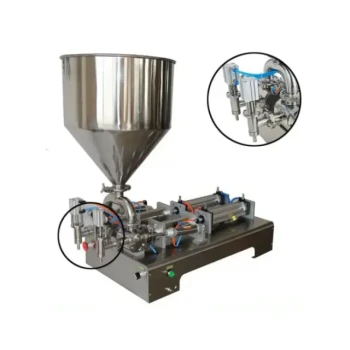
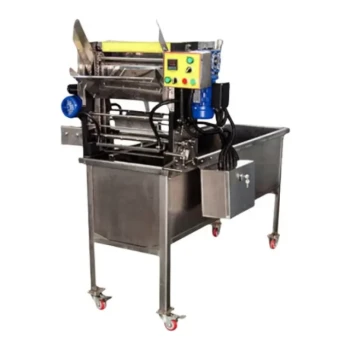
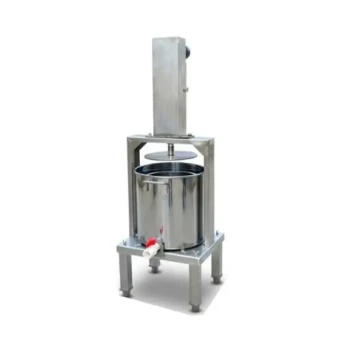
Automatic honey filling machines serve as the fundamental bridge between raw agricultural output and high-value commercial commodities. They are critical to the deep-processing and branding process because they introduce industrial precision and sterility that manual methods cannot replicate. By ensuring exact filling volumes and sealing in a hygienic environment, these machines enable producers to transition from bulk wholesale to standardized retail products that meet rigorous market consistency requirements.
By eliminating human error and environmental contamination, automatic filling machines transform honey from a variable agricultural ingredient into a stable, standardized consumer product capable of supporting a premium brand identity.
Transforming Production Capabilities
Achieving Absolute Consistency
In the retail market, consistency is the foundation of consumer trust. Automatic filling machines utilize precise metering controls to ensure that every unit contains the exact same volume of product. This standardization effectively eliminates the variances inherent in manual handling, which is essential for creating a unified brand appearance across thousands of units.
Maximizing Efficiency and Reducing Labor
Deep-processing requires speed to be profitable. Industrial-grade filling equipment significantly increases packaging throughput compared to manual methods. This automation drastically reduces labor costs and minimizes the material loss often caused by manual spills or overfilling, allowing operations to scale without a proportional increase in overhead.
Empowering Decentralized Apiaries
Many honey brands aggregate product from various sources. Automatic machinery allows decentralized apiaries to adhere to a single, strict packaging standard. This capability enables a scattered network of producers to contribute to a "unified brand" that maintains high-level consistency regardless of where the raw honey was harvested.
Elevating Brand Value and Compliance
Guaranteeing Hygiene and Shelf Life
Honey is sensitive to environmental factors. Automated machines provide a sterile, sealed environment that prevents secondary contamination, moisture absorption, and oxidation. This aseptic control is vital for maintaining biochemical stability—specifically keeping Hydroxymethylfurfural (HMF) levels within optimal ranges—which prevents fermentation and spoilage during storage.
Meeting Export and Retail Standards
To enter high-value consumer markets or export internationally, products must meet strict safety and labeling certifications. Automated filling ensures the physical stability of the product during long-distance or transoceanic transport. This reliability is often a prerequisite for obtaining organic certifications and passing the rigorous quality inspections required by major distributors.
Understanding the Trade-offs
Initial Capital vs. Long-Term Yield
While these machines drive efficiency, they represent a significant upfront capital expenditure. Small-scale producers must carefully calculate their production volume to ensure the reduction in labor costs and material waste justifies the investment in industrial-grade hardware.
operational Complexity
Transitioning to automation changes the skill set required on the production floor. The focus shifts from manual labor to machine operation and maintenance. Producers must be prepared to manage technical calibration and sanitation protocols to prevent equipment downtime, which can be more disruptive than slowing down a manual line.
Making the Right Choice for Your Goal
To select the appropriate level of automation, consider your specific business objectives:
- If your primary focus is entering international markets: Prioritize machines with advanced aseptic control and sealing capabilities to ensure HMF levels remain stable during transoceanic shipping.
- If your primary focus is scaling a unified brand: Focus on high-precision metering systems that guarantee identical product presentation across high volumes to build consumer trust.
- If your primary focus is cost reduction: Look for equipment that maximizes throughput speed to lower the labor-cost-per-unit ratio while minimizing raw material loss.
Investing in precise filling technology is not just about packaging; it is about securing the product integrity required to command a premium price.
Summary Table:
| Feature | Manual Filling | Automatic Filling | Brand Impact |
|---|---|---|---|
| Consistency | High variance in volume | Precise metering controls | Builds consumer trust through uniformity |
| Hygiene | Risk of contamination | Sterile, sealed environment | Ensures safety compliance and export quality |
| Efficiency | Labor-intensive and slow | High-speed throughput | Reduces overhead and enables scaling |
| Product Loss | Frequent spills/overfilling | Minimal material waste | Maximizes profit margins per batch |
| Shelf Life | Variable stability | Optimized HMF levels | Prevents spoilage during long-range transport |
Elevate Your Apiary to Global Standards with HONESTBEE
Ready to transition from bulk production to a premium retail brand? HONESTBEE empowers commercial apiaries and distributors with the industrial tools needed to dominate the market. Our comprehensive wholesale catalog features high-precision honey-filling machines, specialized hive-making machinery, and a full spectrum of beekeeping hardware designed for durability and scale.
Whether you are looking to optimize your production line or source essential industry consumables, our experts are here to help you select the right technology to protect your product integrity and maximize your yield.
Contact HONESTBEE today to discuss your equipment needs and see how we can streamline your path to a unified, high-value brand.
References
- Aina Yakupova, Andrey Svetalakov. Innovative beekeeping strategies for sustainable rural employment: Addressing socio-ecological contradictions. DOI: 10.1051/e3sconf/202561403015
This article is also based on technical information from HonestBee Knowledge Base .
Related Products
- Automatic Honey Filling and Filtering Machine for Beekeeping Bottle Filling
- Fully Automatic Honey Filling Packaging Machine for Processing Line
- Semi Automatic Small Honey Bottle Filling Machine Honey Filler
- Automatic Single-Dose Snap & Squeeze Honey Sachets Packing Machine
- Precision Durable Efficient HONESTBEE Rotary Honey Filling Machine
People Also Ask
- What process advantages do professional honey filtering and filling machines provide? Optimize Your Organic Honey Output
- How do honey filling and filtering machines increase product value? Turn Raw Honey into Premium Export-Grade Goods
- How do honey filtration and filling machinery contribute to industrialization? Scale Your Commercial Honey Production
- What specific issues do industrial filtration and automated filling machinery address? Ensure Honey Quality & Compliance
- How does the use of professional honey filtration and filling machinery facilitate international honey exports?