Commercial hives and hive-manufacturing equipment are designed around bee biology, not simply honey production. Cavity-dwelling honeybees such as Apis mellifera and Apis cerana naturally build multiple, parallel combs inside enclosed spaces, so they adapt to box hives, movable frames, supers, and mechanical extraction systems. Open-nesting giant and dwarf honeybees, including Apis dorsata, Apis florea, and Apis andreniformis, build exposed single combs that are not compatible with standard enclosed hive management over extended periods.
The decisive factor is nest architecture. Commercial equipment works when a colony’s combs can be installed, inspected, moved, transported, uncapped, and extracted as standardized units. Open-nesting species may produce usable honey, but their natural colonies do not provide the stable, reusable comb framework required for scalable apiary operations.
Why Nesting Behavior Determines Hive Compatibility
Cavity-nesting bees already use the same basic structure
Cavity-dwelling honeybees build their nests inside dark, sheltered spaces such as natural cavities. Their multiple combs are arranged in parallel, creating a structure that can be represented effectively by removable frames inside a wooden hive.
This makes the transition from natural nest to artificial hive relatively practical. The beekeeper is not forcing the colony to adopt an entirely foreign nesting pattern; the hive provides a standardized version of the enclosed environment the bees already prefer.
Open-nesting bees depend on exposed nest conditions
Giant and dwarf honeybees typically construct a single comb suspended from a tree branch, cliff, or rock overhang. The comb is exposed rather than enclosed within a series of box-like chambers.
That open-air structure is central to the colony’s natural organization. Placing such a colony inside a conventional hive removes the environmental conditions and physical arrangement to which its nesting behavior is adapted.
The issue is long-term colony management
A hive must do more than temporarily contain bees. Commercial equipment must support repeated inspections, frame manipulation, colony expansion, transport, and harvesting throughout the production cycle.
Open-nesting species generally cannot remain confined and managed in standard artificial hive containers for these purposes. Their comb cannot be treated as a set of interchangeable, movable frames in the same way as comb from cavity-nesting species.
Why Movable Frames Matter to Commercial Beekeeping
Frames turn the colony into a manageable production system
Movable frames allow beekeepers to inspect brood, monitor food stores, assess colony condition, and manipulate comb without dismantling the entire nest. They also preserve the colony’s basic organization while making individual combs accessible.
This is the foundation for standardized hive bodies, frame assembly equipment, foundation systems, supers, and related hardware.
Standardization enables machinery
Honey-processing machinery depends on predictable inputs. Uncapping machines, centrifugal extractors, honey pumps, filters, and filling equipment are designed around combs or honey flows that can be handled consistently.
A single exposed comb attached to a branch does not fit naturally into this workflow. It is more likely to require manual collection and handling rather than a continuous process based on removable frames.
Standardization supports migratory operations
Commercial beekeepers may transport colonies between seasonal floral sources. Box hives and movable frames provide a stable, repeatable format for loading, securing, inspecting, and managing colonies during these operations.
This is especially important for distributors and B2B equipment buyers. Products must work as a coordinated system across large numbers of colonies, not merely function for occasional individual harvests.
Why Commercial Yield Also Influences Equipment Design
Commercial systems require surplus honey and reusable comb
Large-scale honey equipment is justified when colonies produce substantial surplus honey and store it in structured combs that can be harvested repeatedly. Social honeybees such as Apis mellifera form large, perennial colonies with organized worker populations and reusable wax comb.
These characteristics support investment in mechanical extraction, filling, and packaging lines.
Low-volume or irregular harvest changes the economics
Some species and nest structures cannot efficiently supply the regular, standardized volumes expected by automated commercial systems. Even where honey can be collected, the harvesting method may be too irregular or labor-intensive for large-scale frame-based processing.
In such cases, smaller-scale or semi-automated equipment may be more appropriate than a full commercial extraction line.
Social structure matters too
Standard honeybee equipment is built for social honeybees that maintain colonies with worker castes, brood, stored food, and wax comb. Solitary bees, such as mason and leafcutter bees, are important pollinators but do not form conventional honey-producing colonies or store surplus honey in reusable communal combs.
They therefore require pollination-management systems rather than hive bodies, honey supers, centrifugal extractors, and comb-processing machinery.
What Open-Nesting Species Require Instead
Harvesting is closer to comb collection than frame management
For open-nesting giant and dwarf bees, harvesting generally involves collecting exposed comb rather than removing standardized frames from a hive body. This changes the tools, workflow, labor requirements, and processing approach.
The process cannot be integrated easily into equipment designed around movable-frame apiaries.
The colony cannot be treated as a modular unit
Commercial hives depend on modular management. Beekeepers can add boxes, move frames, separate brood from honey stores, and replace components according to colony needs.
An exposed single-comb nest does not offer the same modularity. Its attachment point, orientation, and surrounding environment are part of the nest structure, so removing it can disrupt the colony rather than simply relocate a frame.
“Not suitable” does not mean “biologically unimportant”
Open-nesting species can be valuable pollinators and honey producers in their natural environments. The limitation is not that they have no value; it is that their biology does not align with the standardized, repeatable operating model of modern movable-frame beekeeping.
Understanding the Trade-offs
Standard hives optimize control, not natural nesting freedom
Artificial hives make colonies easier to inspect, transport, divide, and harvest. However, they replace the bees’ natural nest environment with a managed structure and therefore work best with species already adapted to enclosed nesting.
The closer the hive design is to the species’ natural nesting behavior, the more practical long-term management becomes.
A high-capacity machine is not automatically the right machine
Large automated extraction and filling lines are valuable for standardized, high-volume operations. They are inefficient when the incoming comb is irregular, the honey yield is low, or the harvest requires substantial manual preparation.
Equipment selection must therefore follow species biology, colony scale, comb format, and expected throughput.
Mixing species assumptions creates poor purchasing decisions
A hive or extractor designed for Apis mellifera should not be marketed as universally suitable for every honeybee species. Distributors and resellers should distinguish between movable-frame cavity-nesting systems and equipment intended for manual or specialized harvesting.
This distinction reduces customer complaints, prevents unsuitable installations, and supports more accurate product recommendations.
Species compatibility must be checked before standardization
Even among cavity-nesting bees, management requirements may differ. Hive dimensions, frame systems, colony size, climate conditions, and local beekeeping practices should be confirmed before specifying equipment for a new market.
A reliable supplier should be able to evaluate the complete operating requirement rather than recommend isolated components.
How to Apply This to Your Project
Equipment planning should begin with the bee species and production model, then proceed to hive hardware, frame systems, extraction, filling, and fulfillment requirements.
- If your primary focus is commercial Apis mellifera or Apis cerana operations: Prioritize standardized wooden hives, movable frames, supers, uncapping and centrifugal extraction equipment, and compatible filling systems.
- If your primary focus is open-nesting giant or dwarf bees: Do not assume standard box hives will provide long-term colony management; evaluate manual collection methods or specialized, lower-throughput processing equipment instead.
- If your primary focus is distribution or wholesale: Build a product portfolio around clearly defined species and workflow compatibility, supported by rapid technical response and dependable order fulfillment.
- If your primary focus is automated honey processing: Confirm that the operation supplies regular, standardized comb or honey inputs before selecting high-capacity machinery.
- If your primary focus is pollination rather than honey production: Separate solitary-bee or non-honeybee systems from conventional honeybee hive and extraction equipment.
The right commercial system is the one that matches the bee’s natural nest architecture to a practical, repeatable, and supportable management workflow.
Summary Table:
| Aspect | Cavity-Nesting Bees | Open-Nesting Bees |
|---|---|---|
| Nest architecture | Multiple parallel combs in enclosed spaces | Single exposed comb on branches or cliffs |
| Compatibility with standard hives | High – adapt to box hives and movable frames | Low – do not adapt to enclosed boxes |
| Hive management | Routine inspections and frame manipulation | Difficult; comb not movable as frames |
| Harvest method | Repeated extraction from reusable frames | Comb collection, more labor-intensive |
| Suitable commercial equipment | Standard hives, extractors, filling lines | Specialized or manual processing systems |
Optimize your apiary with equipment matched to your bees' biology. At HONESTBEE, we supply a full spectrum of beekeeping tools, machinery, and equipment for cavity-nesting honeybees, ensuring high yield and efficient operations. Our one-stop sourcing, rapid response, and ultra-fast delivery help distributors and beekeepers scale with confidence. Contact us today to discuss your specific needs and increase your profitability with our premium trading services.
Related Products
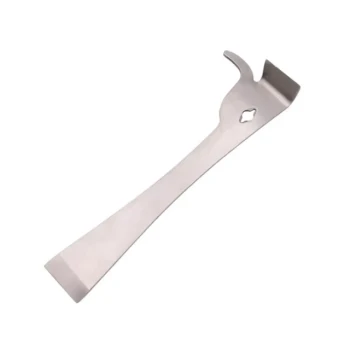
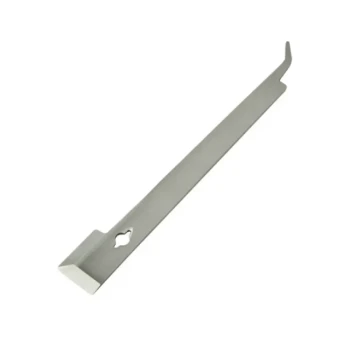
- Professional Multi-Function Stainless Steel Hive Tool
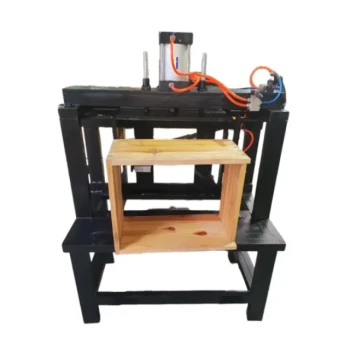
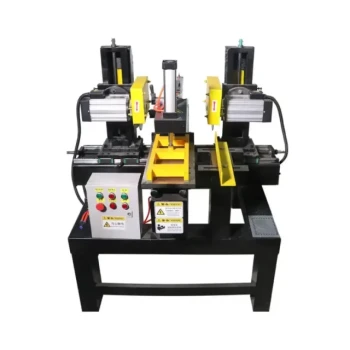
- High-Efficiency Pneumatic Bee Hive Making Machine for Rapid Box Assembly
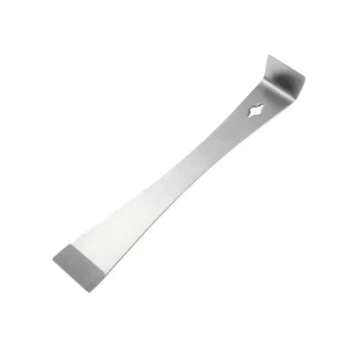
- Professional Stainless Steel Pry-Bar Hive Tool
- HONESTBEE Professional Long Handled Hive Tool with Precision Cutting Blade
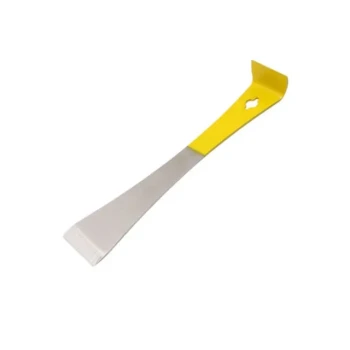
- HONESTBEE Classic Pry Bar Hive Tool with High Visibility Finish for Beekeeping
People Also Ask
- Why are professional hive tools considered indispensable? Master Beekeeping Maintenance with Precision Leverage
- What is the role of professional hive tools in routine apiary maintenance? Expert Tips for Hive Health and Longevity
- What are the benefits of a multi-functional hive tool? Streamline Your Apiary Workflow with One Tool
- What advantages do multi-functional hive tools offer? Maximize Your Apiary Efficiency and Workflow
- What are the common construction features of hive tools? Key Insights for Superior Beekeeping Efficiency