Industrial forklifts and boom loader systems form the operational backbone of modern migratory beekeeping. They are utilized specifically to enable the rapid, double-layer stacking of beehive pallets, allowing operators to move massive numbers of colonies within tight time constraints. Without this automation, the logistical demands of relocating hundreds of hives efficiently would be impossible to meet.
The primary driver for using heavy machinery is the strict biological deadline of the relocation process. Operations must be completed within a specific nighttime window to ensure colony survival, making manual loading functionally obsolete for large-scale apiaries.
The Logistics of Migratory Beekeeping
The Critical Nighttime Window
Migratory beekeeping is governed by a strict biological clock. Relocation operations must generally be executed at night when the bees are inside the hive and inactive.
To minimize bee loss and stress, the entire process—loading, transport, and unloading—must often be finalized before sunrise. This creates a high-pressure environment where speed is not just a convenience, but a necessity for the health of the livestock.
Achieving Velocity at Scale
When managing large-scale apiaries, an operation may involve moving hundreds of hives simultaneously. Manual labor is simply too slow to meet the pre-sunrise deadline for this volume.
Boom loaders and forklifts provide the necessary mechanical leverage to move heavy pallets quickly. This automation transforms a multi-day manual task into a rapid, single-shift operation.
Mechanical Advantages in Handling
Double-Layer Stacking
Efficiency in transport requires maximizing the cargo space of the transport vehicle. Industrial forklifts allow for the double-layer stacking of beehive pallets.
This capability effectively doubles the capacity of a single truck. By consolidating the load, beekeepers reduce the number of trips required, further ensuring the relocation fits within the limited operational window.
Rapid Loading and Unloading
The sheer weight of a palletized colony is significant. Boom loaders are designed to extend reach and lift heavy loads with precision.
This facilitates rapid loading and unloading, reducing the time the bees spend in a disrupted state. The faster the physical transition, the lower the risk of overheating or stress-induced mortality within the colony.
Understanding the Trade-offs
The Requirement for Standardization
While heavy machinery offers speed, it demands rigid consistency in hardware. You cannot safely forklift uneven or irregular stacks.
This creates a dependency on standardized beehive components. As noted in manufacturing contexts, industrial-grade hive-making machines are required to produce hives with precise, uniform specifications.
The Cost of Variance
If an apiary relies on manually produced hives with dimensional variances, the safety of mechanical lifting is compromised.
High-precision joints and uniform dimensions are essential not just for the bees' "Bee Space," but to ensure the physical stability of the stack during forklift operations. A lack of standardization effectively disqualifies an apiary from using these advanced relocation methods.
Making the Right Choice for Your Operation
To successfully implement large-scale relocation, you must align your handling equipment with your hive hardware.
- If your primary focus is Relocation Speed: Invest in boom loaders or forklifts to ensure you can execute double-stacking and meet the critical pre-sunrise window for colony safety.
- If your primary focus is Operational Safety: Ensure your hive inventory is manufactured via automated equipment to guarantee the dimensional standardization required for stable mechanical handling.
Successful migration relies on the synchronization of heavy machinery with precision-manufactured hardware to protect the colony.
Summary Table:
| Feature | Manual Relocation | Mechanical Handling (Forklifts/Boom Loaders) |
|---|---|---|
| Loading Speed | Slow, labor-intensive | Rapid, automated performance |
| Operational Window | Difficult to meet pre-sunrise deadlines | Optimized for tight nighttime windows |
| Transport Capacity | Single-layer (Limited) | Double-layer stacking (Maximized) |
| Hive Requirements | Variable dimensions acceptable | Strict standardization required |
| Colony Stress | High due to long handling times | Low due to rapid transit |
| Scalability | Small-scale only | Essential for large-scale/commercial |
| Precision | Low consistency | High mechanical precision |
Scale Your Apiary Operations with HONESTBEE
Transitioning to large-scale migratory beekeeping requires more than just heavy machinery; it demands precision-engineered hardware that can withstand the rigors of mechanical handling. At HONESTBEE, we specialize in empowering commercial apiaries and distributors with the tools needed for industrial-grade efficiency.
How we add value to your business:
- Standardized Precision: Our high-performance hive-making machines ensure every component meets the exact specifications required for safe forklift stacking.
- Complete Wholesale Solutions: From honey-filling machinery to a full spectrum of beekeeping tools and consumables, we provide everything to streamline your supply chain.
- Industry Expertise: We cater specifically to the needs of large-scale operators who prioritize colony safety and operational velocity.
Ready to modernize your fleet? Contact us today to discover how HONESTBEE’s comprehensive equipment range can transform your commercial beekeeping success.
References
- Catherine Phillips. Following beekeeping: More-than-human practice in agrifood. DOI: 10.1016/j.jrurstud.2014.06.013
This article is also based on technical information from HonestBee Knowledge Base .
Related Products
- Professional Frame Comb Fork and Lifter for Efficient Handling
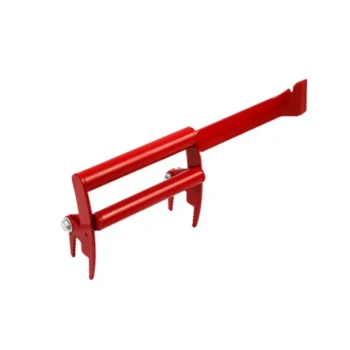
- Heavy-Duty Lever-Action Frame Grip with Hive Tool
- Ergonomic Two Person Foldable Hive Lifter
People Also Ask
- What is the specific design and purpose of a frame lifter hive tool? Master Gentle Hive Inspections
- How does the frame lifter hive tool function? Master Safe and Gentle Frame Removal
- What are the technical benefits of using a frame lifter? Maximize Hive Safety and Inspection Efficiency
- What are the roles of frames and combs in a beehive? Essential Infrastructure for Healthy Apiaries
- What is the function of specialized beekeeping tools and hive frames? Enhance Efficiency & Yield in Your Apiary