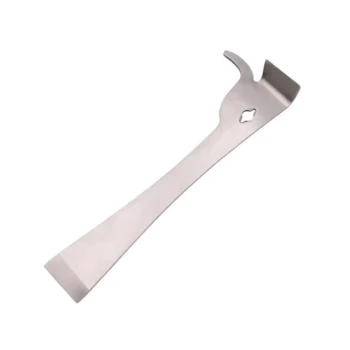
A hive tool is the quintessential multi-purpose instrument for beekeepers, serving as a lever, scraper, and hammer all in one. Its most common applications include prying apart hive boxes and frames glued together by propolis, scraping away unwanted burr comb and debris, and manipulating stuck components during inspections.
The hive tool is not just an accessory; it is the primary mechanism for overcoming the strength of propolis (bee glue), allowing you to disassemble and inspect a hive without damaging the wooden ware or injuring the bees.
Managing the Hive Structure
Breaking the Propolis Seal
Bees naturally seal cracks and joints with propolis, a resinous "bee glue" that hardens significantly.
The primary function of the hive tool is prying apart vertical components, such as supers and brood boxes, that have been fused together. It provides the necessary leverage to "crack" this seal gently.
It is also essential for levering open covers (inner and outer) that have been glued shut, ensuring smooth entry into the hive.
Frame Manipulation
Frames often become cemented to the frame rests. A hive tool is used for loosening attached frames by wedging the blade between the frame ears.
Once loosened, the tool assists in lifting the frames out for inspection. This creates space to work without rolling or crushing the bees.
Hygiene and Cleaning
Removing Excess Wax and Debris
Bees build "burr comb" (unwanted wax bridges) between boxes and frames. The hive tool is the standard implement for scraping propolis and burr comb off these surfaces to maintain proper bee space.
During maintenance or honey extraction, the tool is used for cleaning honey and beeswax off frames to ensure they fit back together squarely.
General Sanitation
The flat edge acts as a scraper for cleaning debris from the hive's floorboards (bottom boards).
Supplementary data indicates this edge is also effective for pest control, specifically for crushing small hive beetles found during inspections.
Utility and Emergency Uses
Equipment Maintenance
The tool is robust enough to act as a makeshift hammer for banging loose nails back into wooden equipment.
It is also standard practice to use the tool for opening bee packages and nucs (nucleus colonies) upon installation.
Smoker Management
Bee smokers often become stuck due to heat and creosote buildup. The hive tool is used for opening a jammed bee smoker lid.
It is also frequently used to push fuel down into the smoker's combustion chamber.
Safety and First Aid
In the event of a sting, the flat blade is the ideal tool for scraping out bee stingers.
Using the tool rather than your fingers prevents you from squeezing the venom sac, which would inject more venom into the skin.
Understanding the Trade-offs
Risk of Equipment Damage
Because the hive tool is made of hardened steel, it is significantly harder than the wooden pine or cypress boxes.
Careless prying can gouge the wood, creating splinters or gaps. These damaged areas can become hiding spots for pests like wax moths or small hive beetles.
Disturbance to the Colony
While the tool provides leverage, "popping" boxes apart too aggressively creates a sudden vibration (snap) throughout the hive.
This vibration acts as an alarm signal to the colony, potentially triggering a defensive response before you have even removed the cover.
Making the Right Choice for Your Goal
- If your primary focus is routine inspection: Prioritize using the tool to gently pry frames apart side-to-side before attempting to lift them, as this preserves bee life.
- If your primary focus is equipment restoration: Utilize the sharpest edge of the tool to scrape propolis down to the bare wood, ensuring boxes stack flush in the future.
Mastering the hive tool requires balancing force with finesse to maintain the integrity of your equipment and the temperament of your bees.
Summary Table:
| Use Category | Specific Function | Key Benefit |
|---|---|---|
| Structural Management | Breaking propolis seals & prying frames | Allows non-destructive entry and inspection |
| Hygiene & Cleaning | Scraping burr comb & floorboard debris | Maintains bee space and improves hive sanitation |
| Pest Control | Crushing hive beetles | Reduces pest populations during routine checks |
| Utility | Opening smokers & hammering nails | Provides a versatile solution for field maintenance |
| Safety | Scraping out bee stingers | Minimizes venom injection compared to pinching |
Elevate Your Apiary Operations with HONESTBEE
At HONESTBEE, we understand that professional beekeeping requires precision tools that stand up to the rigors of commercial use. Whether you are managing a large-scale commercial apiary or operating as a regional distributor, we provide the high-quality hardware you need to succeed.
From durable hive tools and specialized beekeeping machinery to advanced honey-filling equipment and unique cultural merchandise, our comprehensive wholesale portfolio is designed to enhance your efficiency and profitability.
Partner with a supplier who knows your business. Contact us today to discuss how our full spectrum of beekeeping tools and industry consumables can support your growth!
Related Products
- HONESTBEE Professional Long Handled Hive Tool with Precision Cutting Blade
- Professional Multi-Function Stainless Steel Hive Tool
- HONESTBEE Premium Italian Style Hive Tool with Hardwood Handle
- Ergonomic Plastic Frame Spacer Tool for Rapid Hive Management Beekeeping
- Professional Grade Foldable Beehive Handles
People Also Ask
- Why are professional hive tools considered indispensable? Master Beekeeping Maintenance with Precision Leverage
- What is the role of professional hive tools in routine apiary maintenance? Expert Tips for Hive Health and Longevity
- What is a bee hive tool? Discover Why It’s the Most Essential Hand Tool for Every Beekeeper
- How do hive tools and queen rearing equipment facilitate the bee colony splitting process? Restore Your Apiary Faster
- Why are professional hive tools & observation equipment necessary for queen rearing evaluation? Master Your Quality