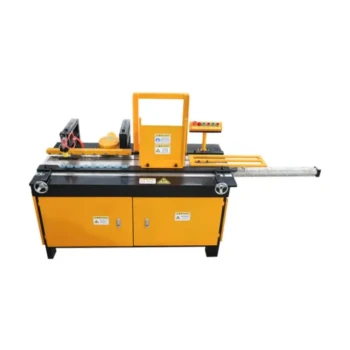
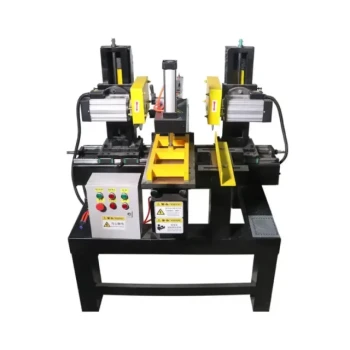
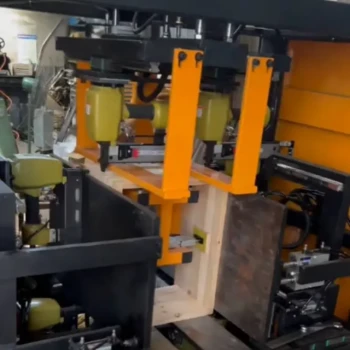
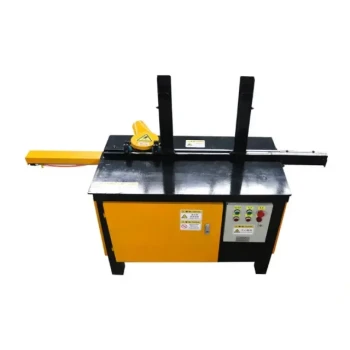
Industrial-grade hive-making machines are the foundation of scientific accuracy and operational scalability in modern beekeeping. They provide the structural precision and durability necessary to implement hive configurations derived from complex mathematical models. By standardizing the physical hardware, these machines eliminate quality variations that would otherwise cause significant errors in bee population prediction research.
The Core Insight Precision manufacturing transforms the beehive from a simple wooden shelter into a standardized scientific instrument. This uniformity is the only way to isolate biological variables for reliable research data and ensure the modular interchangeability required for efficient, large-scale apiary management.
The Role of Precision in Research
Eliminating Hardware Variables
In bee population research, data integrity is paramount. Mathematical models used to predict colony growth rely on the assumption of a stable environment.
Industrial machines ensure that every hive is physically identical. This standardization removes the "noise" caused by structural defects or varying internal volumes found in hand-built hives.
Reducing Prediction Errors
When hardware varies, it becomes difficult to distinguish between biological changes and environmental stressors caused by the hive itself.
Machine-manufactured hives provide a stable physical carrier, ensuring that variations in population data reflect actual colony dynamics, not inconsistencies in the habitat's construction.
Operational Necessity for Apiary Construction
Modular Interchangeability
For large-scale operations, efficiency depends on modularity. Frames and supers must be perfectly interchangeable across thousands of hives.
Professional manufacturing ensures precise dimensions for components like Nagy-Boczonádi frames. This allows beekeepers to move resources between colonies instantly, streamlining inspections, honey harvesting, and overwintering without fighting ill-fitting parts.
Durability in Migratory Beekeeping
Modern apiaries often transport colonies to follow bloom cycles. This places immense physical stress on hive structures.
The precise fit achieved by industrial machines ensures stability during mechanized transport. Tight tolerances prevent structural failure on the road, protecting the colony and the investment.
Biological Optimization and Product Quality
Maintaining Critical "Bee Space"
Bees require specific gaps within the hive to move effectively; incorrect spacing leads to burr comb or inefficient movement.
Machine-controlled production guarantees the physical construction maintains this correct "bee space." This alignment with the specific biological characteristics of the bee species reduces absconding and improves overall colony health.
Protecting Honey Purity
Quality control starts with the physical container. Machine-manufactured hives offer superior sealing and weather resistance compared to traditional methods.
This tight seal allows bees to efficiently regulate humidity, converting nectar to honey by reducing water content to the optimal 20 percent. It also protects the harvest from external environmental pollution, securing the chemical integrity of the final product.
The Cost of Inconsistency (Trade-offs)
The Burden of Maintenance
While manual construction may seem cost-effective initially, it often leads to higher long-term costs.
Hives with structural defects require frequent repairs and suffer from lower durability. Industrial machines produce units that resist weathering, significantly lowering the total cost of ownership over time.
Loss of Yield
Inaccuracy costs money. Structural defects can lead to honey loss or bee absconding.
By utilizing standardized molds and precise processing, apiaries minimize these losses. The "trade-off" of investing in industrial-grade equipment is balanced by the achievement of economies of scale and higher production yields.
Making the Right Choice for Your Goal
- If your primary focus is Scientific Research: Prioritize machines that offer the tightest structural tolerances to eliminate hardware-induced variables in your population models.
- If your primary focus is Commercial Scalability: Focus on equipment that guarantees 100% interchangeability of frames and supers to maximize labor efficiency during inspections and harvest.
- If your primary focus is Honey Quality: Select manufacturing processes that emphasize superior sealing and weather resistance to assist bees in moisture regulation and pollution prevention.
Standardization is not just about convenience; it is the control variable that makes both rigorous science and industrial beekeeping possible.
Summary Table:
| Key Factor | Manual/Traditional Construction | Industrial-Grade Machine Manufacturing | Impact on Apiary Performance |
|---|---|---|---|
| Dimensional Precision | Variable (High margin of error) | Standardized (Micron-level accuracy) | Eliminates hardware variables in population data. |
| Modularity | Poor (Parts may not fit across hives) | 100% Interchangeability | Streamlines inspections and large-scale management. |
| Durability | Low (Susceptible to transport stress) | High (Reinforced structural integrity) | Essential for survival in migratory beekeeping. |
| Biological Fit | Inconsistent "Bee Space" | Perfect Biological Alignment | Reduces absconding and improves moisture regulation. |
| Long-term Cost | High (Frequent repairs/replacement) | Low (Extended lifecycle) | Achieves superior economies of scale. |
Scale Your Apiary Operations with HONESTBEE Precision
At HONESTBEE, we understand that for commercial apiaries and distributors, equipment precision translates directly to profit. We offer a comprehensive wholesale portfolio designed to meet the rigorous demands of modern beekeeping:
- Advanced Machinery: From high-precision industrial-grade hive-making machines to automated honey-filling lines.
- Quality Hardware: Standardized beekeeping tools and equipment that ensure 100% modular interchangeability.
- Industry Consumables: A full spectrum of essential supplies and honey-themed cultural merchandise to support your brand.
Whether you are conducting bee population research or managing a multi-state commercial operation, our tools provide the standardization you need to succeed.
Ready to upgrade your infrastructure? Contact us today to discuss your wholesale requirements!
References
- Wuxun Li, Yiwen Sun. A honey bee requirements design study based on multi-objective optimization. DOI: 10.56028/aetr.4.1.426.2023
This article is also based on technical information from HonestBee Knowledge Base .
Related Products
- High-Efficiency Pneumatic Bee Hive Making Machine for Rapid Box Assembly
- Beehive Handle and Frame Rest Cutting Machine: Your Specialized Hive Machine
- Beehive Machine Double End Saw for Precision Hive Component Manufacturing
- Mini Desktop Bee Hive Frame Forming Making Machine
- Automatic High-Speed Bee Hive Box Stapling Machine
People Also Ask
- How does the introduction of professional beehive-making machinery benefit sustainable beekeeping? Scale Your Apiary
- Why is specialized beehive-making machinery critical for low-defense breeding? Enhance Selection with Precision Tools
- How does the introduction of specialized beehive making machinery contribute to increasing the scale of regional beekeeping industries?
- What is the importance of specialized beehive making machinery in a circular bio-economy? Build Local Sustainability
- Why is specialized beehive-making machinery essential? Scale Your Apiary with Precision Industrial Standards