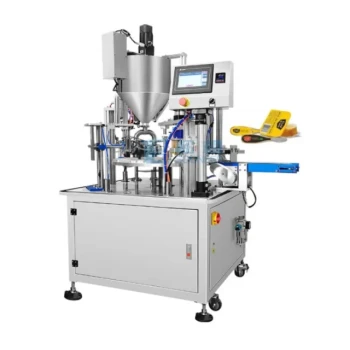
Industrial-grade machinery forms the operational backbone of large-scale beekeeping. For professional apiaries, these machines are not a luxury but a necessity to manage high harvest volumes that would overwhelm manual processing. They automate essential workflows—specifically filtering, dehydration, and precise filling—to maintain throughput speeds while strictly adhering to the hygiene and consistency standards required by commercial distribution chains.
For the professional apiary, industrial equipment bridges the gap between raw agricultural harvest and a retail-ready product. It transforms a labor-intensive process into a streamlined operation that guarantees product safety, extends shelf life, and preserves the honey's natural value at scale.
Managing High-Volume Production
To survive in a competitive market, large-scale apiaries must process massive quantities of raw honey during short harvest windows.
Streamlining Critical Workflows
Industrial-grade equipment automates the most time-consuming aspects of processing, such as filtering and dehydration. By removing bottlenecks associated with manual handling, these machines significantly increase overall production throughput.
Precision and Standardization
Manual filling often leads to inconsistent net weights, which is unacceptable for retail environments. Industrial machines utilize precise flow metering systems to ensure every container meets exact volume requirements. This minimizes raw material waste and ensures compliance with strict weights and measures regulations.
Preserving Quality and Shelf Life
Moving honey from the hive to the bottle involves risks to the product's chemistry. Industrial processors are designed to mitigate these risks.
Protecting Bioactive Components
One of the primary challenges in honey processing is maintaining the product's nutritional profile. High-quality industrial equipment is engineered to process honey efficiently without destroying its natural bioactive components, preserving the health benefits consumers expect.
Extending Shelf Life through Dehydration
Raw honey often contains moisture levels that can lead to fermentation and spoilage. Industrial processing includes controlled dehydration steps. This stabilizes the honey, preventing fermentation and ensuring the product remains shelf-stable for long periods.
Advanced Sealing Technology
Integrated sealing capabilities isolate the product from air immediately after filling. This prevents moisture re-absorption and oxidation, further securing the product against chemical changes during storage and transport.
Ensuring Hygiene and Market Readiness
Entering the retail market or international trade requires adherence to rigorous food safety standards that manual processing rarely achieves.
Eliminating Secondary Contamination
Industrial filling machines often operate as closed environments. This isolation prevents external contaminants, such as dust or airborne particles, from entering the product during the packaging phase. It effectively eliminates the risk of "secondary contamination" often caused by manual handling.
Visual Consistency and Brand Image
Retail consumers demand aesthetic uniformity. Automated packaging ensures that fill lines are identical and sealing is professional. This consistency is critical for building a high-quality brand image and meeting the visual standards expected in high-end retail markets.
Understanding the Trade-offs
While necessary for scale, upgrading to industrial-grade systems introduces specific challenges that must be managed.
High Capital and Maintenance Overhead
The shift to industrial automation requires significant upfront capital investment compared to manual equipment. Furthermore, these complex systems require specialized maintenance and technical expertise to prevent downtime, adding a layer of operational overhead.
The Risk of Over-Processing
If not calibrated correctly, industrial machines—particularly those involving heat for dehydration or flow—can degrade the honey's quality. Operators must carefully manage settings to ensure efficiency does not come at the cost of the honey’s delicate flavor profile or enzyme content.
Making the Right Choice for Your Operation
Selecting the right machinery depends on your specific bottleneck and market goals.
- If your primary focus is Market Expansion and Export: Prioritize machines with advanced sealing and dehydration capabilities to prevent fermentation and meet international shelf-life standards.
- If your primary focus is Profit Margin and Efficiency: Prioritize high-speed filling machines with precision metering to eliminate product giveaway (overfilling) and drastically reduce labor costs.
Success in large-scale beekeeping ultimately relies on using these tools to deliver a pristine, consistent product without sacrificing the natural qualities that define your brand.
Summary Table:
| Feature | Manual Processing | Industrial-Grade Machinery | Impact on Business |
|---|---|---|---|
| Production Speed | Slow / Labor-intensive | High-speed automation | Increases throughput for peak seasons |
| Fill Precision | Variable (High waste) | Precise flow metering | Minimizes product loss & ensures compliance |
| Quality Control | High contamination risk | Closed, sterile systems | Extends shelf life & preserves bio-activity |
| Market Readiness | Local / Small scale | Retail & Export ready | Enables brand scaling and international trade |
Elevate Your Honey Production with HONESTBEE Professional Solutions
Transitioning to industrial-scale beekeeping requires more than just tools—it requires a partner who understands the demands of professional apiaries and commercial distributors. HONESTBEE provides the industry's most comprehensive range of beekeeping machinery, specialized hardware, and essential consumables to streamline your operations.
From high-precision honey-filling machines to advanced hive-making technology and honey-themed cultural merchandise, we equip you to maximize efficiency while preserving the natural integrity of your harvest.
Ready to optimize your production and dominate the retail market?
Contact HONESTBEE Today to Discuss Your Wholesale Needs
References
- Małgorzata Bieńkowska, Paweł Węgrzynowicz. Honey Bee Queen Replacement: An Analysis of Changes in the Preferences of Polish Beekeepers through Decades. DOI: 10.3390/insects11080544
This article is also based on technical information from HonestBee Knowledge Base .
Related Products
- Fully Automatic Honey Filling Packaging Machine for Processing Line
- Precision Durable Efficient HONESTBEE Rotary Honey Filling Machine
- Commercial Rotary Honey Filling Machine for Production
- Automatic Honey Filling and Filtering Machine for Beekeeping Bottle Filling
- Economy Small Honey Filling Machine Honey Bottle Filler Packaging Machine
People Also Ask
- Why are fully automatic honey filling and packaging lines essential? Boost Your Honey's Market Value and Quality
- What is a fully-automatic honey filler? Streamline Your Production with High-Precision Automation
- How do automated honey filling and packaging machines affect profitability? Boost Margins with HONESTBEE Technology
- How do automated honey filling and packaging machines contribute to the market value of honey products? Maximize Your ROI
- How do industrial-grade automated honey filling and packaging machines mitigate the risk of physical contamination?