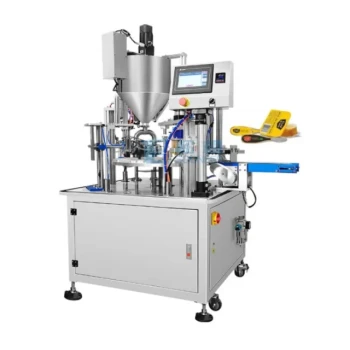
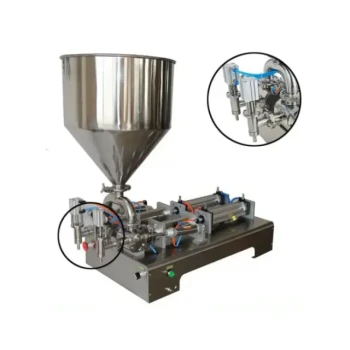
Industrial-grade honey filling machines are indispensable for organic producers because they utilize high-precision automated metering and aseptic packaging technologies to guarantee product purity. By automating the bottling process, these systems eliminate the risk of secondary contamination, ensuring the honey complies with the rigorous processing standards required for official organic certification.
The core value of industrial filling equipment lies in its ability to scale production while maintaining a sterile environment. It bridges the gap between raw extraction and retail distribution, ensuring the honey's biological activity and nutritional profile remain unaltered during packaging.
Preserving Purity and Hygiene
The primary challenge in organic honey production is preventing contamination after extraction. Industrial machinery addresses this through specialized construction and operation.
Eliminating Secondary Contamination
Manual or semi-automated bottling methods introduce human contact and environmental exposure, which are primary vectors for bacteria and debris. Industrial machines utilize aseptic packaging technologies to maintain a sterile environment throughout the filling process. This ensures that the honey remains as pure in the jar as it was in the comb.
Strict Material Compliance
To meet organic standards, processing equipment must be constructed from food-grade stainless steel. This construction prevents the leaching of metal ions or rust into the honey, which can degrade flavor and violate safety regulations. Industrial-grade machines are specifically engineered to eliminate these chemical interactions.
Preventing Physical Contamination
Advanced machines feature no-drip filling nozzles and automated capping systems. These mechanisms ensure the bottle neck remains clean and the seal is airtight immediately after filling. This prevents sticky residues that attract pests or dust, significantly enhancing the hygiene of the final package.
Maintaining Chemical Integrity
Organic honey is prized for its natural enzymes and antioxidants. Improper handling can destroy these high-value components.
Minimizing Oxidation
Exposure to air causes honey to oxidize, which darkens its color and degrades its antioxidant activity. Industrial filling machines are designed to minimize air contact during the transfer from tank to bottle. This preservation of physical and chemical stability is critical for maintaining the honey's premium market value.
Handling Viscosity Without Heat Damage
Different honey varietals range from fluid to highly viscous. Industrial machines use constant temperature filling and specialized pumps (such as piston-style systems) tailored to specific viscosities. This allows for smooth flow without excessive heating, which is crucial because high heat destroys the natural enzymes that define raw, organic honey.
Ensuring Commercial Consistency
Beyond chemistry, the marketability of organic honey depends on professional presentation and strict volume control.
Precision Metering
Industrial machines employ high-precision weighing or piston-based systems to ensure every jar contains the exact volume specified on the label. This uniformity prevents material loss from overfilling and ensures compliance with legal weights and measures. It guarantees that every customer receives an identical product.
Accessing High-End Markets
Retailers in the high-end organic sector demand traceability, uniformity, and aesthetic perfection. Automated packaging provides the standardized look and professional sealing necessary to compete on store shelves. It signals to the consumer that the product is safe, traced, and professionally handled.
Understanding the Trade-offs
While critical for scale, industrial automation introduces complexities that producers must manage.
Capital Investment vs. Volume
These machines represent a significant financial overhead compared to manual methods. They are generally only cost-effective when production volumes are high enough to justify the expense through reduced labor costs and material waste.
Maintenance and Cleaning
The complexity of aseptic systems requires rigorous cleaning protocols (often Clean-in-Place or CIP systems). Failure to maintain the machinery properly can lead to cross-contamination between batches, negating the very hygiene benefits the machine is meant to provide.
Making the Right Choice for Your Goal
To select the appropriate filling technology, you must align the equipment capabilities with your specific business objectives.
- If your primary focus is Organic Certification: Prioritize equipment constructed entirely of food-grade stainless steel with verified aseptic filling capabilities to prevent contamination.
- If your primary focus is Scalability and Efficiency: Look for machines with high-speed automated metering and capping to maximize throughput while minimizing raw material loss.
- If your primary focus is Product Integrity: Choose machinery with advanced viscosity control and low-temperature handling to preserve the enzymes and antioxidants in the honey.
By integrating the right industrial filling solution, you transform a delicate agricultural product into a stable, premium commodity ready for the global market.
Summary Table:
| Key Feature | Benefit for Organic Honey | Quality Impact |
|---|---|---|
| Aseptic Packaging | Eliminates secondary contamination | Ensures biological purity |
| Precision Metering | Accurate volume & zero waste | Commercial consistency |
| Viscosity Control | Handling without excessive heat | Preserves enzymes & nutrients |
| Stainless Steel (Food-Grade) | Prevents chemical leaching | Maintains flavor & safety |
| Air-Contact Minimization | Reduces oxidation | Retains color & antioxidant levels |
Elevate Your Honey Production with HONESTBEE
At HONESTBEE, we understand that for commercial apiaries and distributors, the transition from raw extraction to retail distribution requires precision and care. Our industrial-grade honey-filling machines are designed specifically to meet the rigorous demands of organic certification while maximizing your operational efficiency.
Why partner with HONESTBEE?
- Comprehensive Wholesale Range: From specialized hive-making machinery to high-precision honey-filling systems.
- Expert Solutions: We supply beekeeping tools, machinery, and essential consumables tailored to high-volume production.
- Market Advantage: Beyond hardware, we offer honey-themed cultural merchandise to help you build a complete brand experience.
Ready to scale your production without compromising quality? Contact us today to explore our full spectrum of beekeeping equipment and tools!
References
- Maja Mladenović, Radica Bojičić. Organic agricultural production in the function of sustainable development of the municipality of Štrpce. DOI: 10.5937/ekopog2001001m
This article is also based on technical information from HonestBee Knowledge Base .
Related Products
- Precision Durable Efficient HONESTBEE Rotary Honey Filling Machine
- Commercial Rotary Honey Filling Machine for Production
- Fully Automatic Honey Filling Packaging Machine for Processing Line
- Precision Automated Packaging Turntable Honey Spoon Filling Sealing Packing Machine
- Automatic Honey Filling and Filtering Machine for Beekeeping Bottle Filling
People Also Ask
- What are the common types of bottling machines used for honey? Choosing the Right Solution for Your Apiary
- How do high-precision honey filling machines ensure quality? Optimize Your Commercial Production with HONESTBEE
- How do honey filling and processing machines aid native bee product conservation? Boost Value with HONESTBEE Technology
- What is a key feature of the new generation of the honey filling machine? The Advanced Electronic Control Unit
- How do honey filling machines work? Achieve Precision & Speed for Your Apiary