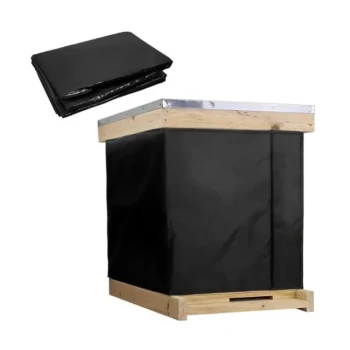
Insulation quilts and mud sealing serve as critical defensive barriers that secure a beehive against the lethal combination of drafts and dampness. Mud sealing acts as a structural reinforcement to close gaps and eliminate wind chill, while cotton quilts provide a thermal layer that stabilizes internal temperatures and manages moisture. Together, these techniques reduce winter mortality by minimizing the energy the colony must expend to generate heat.
Effective winter management is less about heating the hive and more about conserving colony energy and preventing moisture accumulation, which is often more deadly to bees than the cold itself.
The Role of Mud Sealing
Mud sealing addresses the physical integrity of the hive structure. It is a primitive yet highly effective method for weatherproofing.
Stopping Penetrating Drafts
Wind is a significant threat to a winter cluster. Mud is applied to seal gaps and cracks in the hive body, effectively acting as a natural caulking agent.
Reinforcing Hive Structure
Beyond draft protection, mud sealing offers structural reinforcement. It secures loose components against winter storms, ensuring the physical enclosure remains intact throughout the season.
The Function of Insulation Quilts
Insulation quilts, typically made of cotton or similar materials, address the thermodynamic needs of the colony. They are usually placed inside the hive during the coldest months (late October through February).
Stabilizing Internal Temperatures
Bees attempt to maintain their brood nest at roughly 90-95°F (32-35°C). Insulation shields the hive from abrupt external temperature swings, allowing the colony to maintain this constant heat with less effort.
Controlling Deadly Moisture
Cold air meets warm air inside the hive, causing condensation. If this water drips onto the bee cluster, it can freeze and kill them. Insulation quilts help keep the internal environment dry by preventing the ceiling from becoming cold enough to cause dangerous condensation drips.
Biological Impact on the Colony
The physical application of mud and quilts translates directly to biological advantages for the bees.
Conserving Honey Stores
When a hive is well-insulated and draft-free, the cluster works less to stay warm. This energy conservation significantly reduces the amount of stored honey the bees must consume, lowering the risk of late-winter starvation.
Promoting Early Spring Growth
Colonies in insulated hives are less susceptible to late-season cold snaps. This stability encourages earlier brood rearing, ensuring a strong, robust population is ready for the spring breeding season.
Understanding the Trade-offs
While insulation and sealing are vital, they must be applied with precision to avoid unintended consequences.
The Risk of Poor Ventilation
While mud seals gaps, total airtightness is dangerous. Bees need fresh air to breathe and a way for excess humidity to escape; sealing every opening without allowing for ventilation can suffocate the colony or trap moisture.
Space and Fitment Issues
Insulation quilts require physical space within the hive setup. Forcing insulation into a hive without adequate room can compress the cluster or block critical movement pathways for the bees.
Making the Right Choice for Your Goal
Applying these techniques requires balancing protection with ventilation. Use the following guide to prioritize your approach.
- If your primary focus is Colony Survival: Prioritize mud sealing to stop drafts and ensure the bees have enough honey stores, as energy conservation is the key to preventing starvation.
- If your primary focus is Rapid Spring Growth: Invest in high-quality insulation quilts to maintain the stable 90-95°F temperatures required for early and aggressive brood rearing.
Winter success is built on the principle of keeping the colony dry, draft-free, and energy-efficient.
Summary Table:
| Technique | Primary Function | Key Benefit | Optimal Timing |
|---|---|---|---|
| Mud Sealing | Eliminates drafts & gaps | Reduces wind chill & reinforces structure | Late Autumn (Pre-frost) |
| Insulation Quilts | Thermal regulation | Stabilizes heat & prevents condensation | Oct - Feb (Coldest Months) |
| Energy Conservation | Biological protection | Minimizes honey consumption | Entire Winter Season |
| Strategic Ventilation | Humidity control | Prevents suffocation & mold growth | Ongoing Monitoring |
Maximize Your Colony Survival with HONESTBEE
Winter management is the ultimate test for commercial apiaries. At HONESTBEE, we empower commercial beekeepers and distributors with the high-performance tools and machinery needed to scale production and protect assets. From precision hive-making machines that ensure draft-free construction to specialized honey-filling equipment and essential consumables, we provide the full spectrum of beekeeping hardware.
Don't let winter mortality impact your bottom line. Partner with HONESTBEE for comprehensive wholesale solutions and industrial-grade equipment designed for the modern bee industry.
Contact our experts today to optimize your apiary equipment!
References
- David Pattinson. Pre-modern Beekeeping in China: A Short History. DOI: 10.3098/ah.2012.86.4.235
This article is also based on technical information from HonestBee Knowledge Base .
Related Products
- Professional Insulated Winter Hive Wrap for Beekeeping
- Professional Insulated Plastic Bee Hives
- Inner Beehive Cover for Beekeeping Bee Hive Inner Cover
- Stainless Steel Round Beehive Air Vents for Ventilation
- Langstroth Solid Bottom Board for Beekeeping
People Also Ask
- What are the steps to properly wrap a beehive for winter? Ensure Your Colony Survives the Cold
- When is the best time to wrap a beehive for winter? A Guide to Perfect Winterization Timing
- How do professional insulation wraps provide protection for bee colonies? Optimize Winter Survival & Energy Efficiency
- What are the technical benefits of using winter wraps for beehive insulation? Boost Colony Survival & Hive Health
- What are the benefits of using insulated covers for hives? Ensure Colony Survival and Health