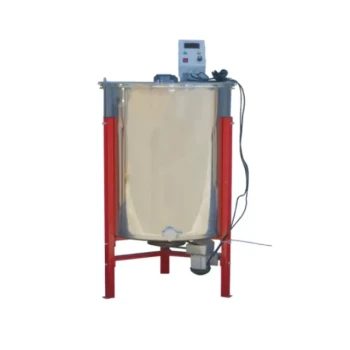
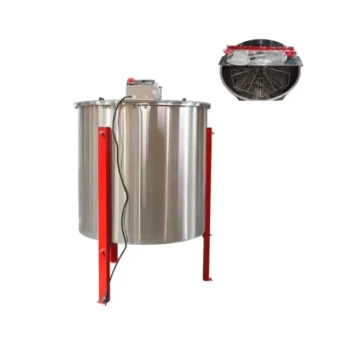
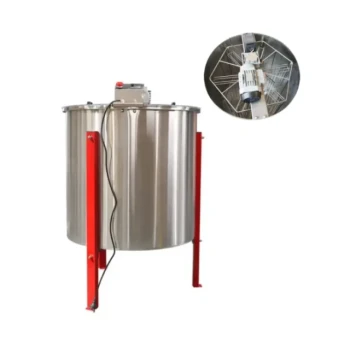
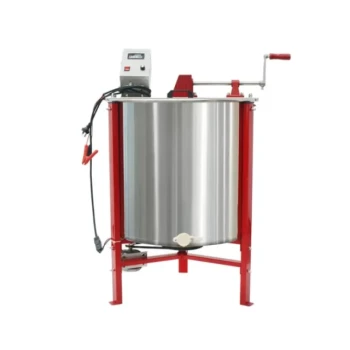
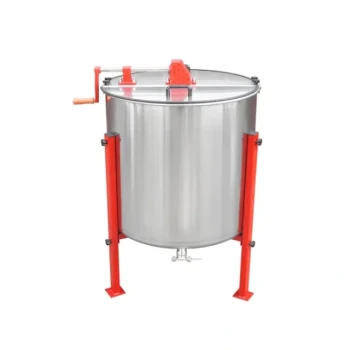
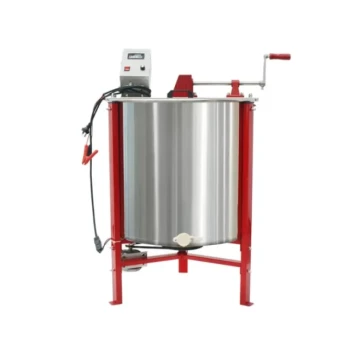
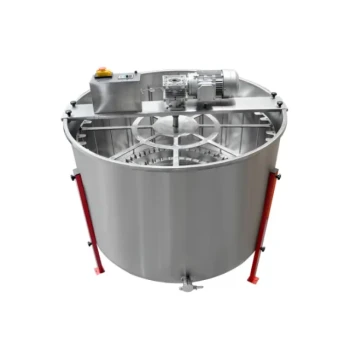
The indispensability of specialized honey extraction centrifuges lies in their ability to decouple honey harvesting from comb destruction. By utilizing controlled centrifugal force, these devices separate liquid honey from the wax frame without compromising the structural integrity of the honeycomb. This non-destructive approach transforms the post-harvest process from a resource-intensive reset into a sustainable cycle of reuse.
Core Takeaway The primary value of a centrifugal extractor is not just speed, but energy conservation for the hive. By preserving the drawn comb, you eliminate the need for bees to secrete new wax, allowing the colony to redirect its energy entirely toward foraging and nectar production.
Preserving the Hive's Most Critical Resource
The Biological Cost of Wax
In a natural setting, bees consume significant amounts of honey and energy to secrete the wax needed to build fresh combs. Specialized centrifuges prevent the need for this biological expenditure by keeping the original comb intact during extraction.
The Cycle of Reuse
Because the centrifugal process is non-destructive, beekeepers can return the empty, intact wax frames immediately to the hive. This allows the colony to skip the construction phase and begin filling the cells with nectar immediately, maximizing efficiency during peak nectar flows.
Preventing Structural Damage
Unlike crushing or straining methods, centrifugal force applies pressure evenly across the frame. This ensures the delicate wax walls remain undamaged, preserving the comb for future seasons and significantly extending the lifespan of the hive's infrastructure.
Driving Operational Efficiency
Shortening the Harvest Cycle
By eliminating the time bees spend rebuilding combs, the interval between harvests is drastically reduced. This acceleration increases the overall frequency of extraction, leading to higher total honey production per season.
The Role of Automation
Advanced centrifugal systems utilize programmed controls to manage rotation speeds and force. This automation ensures high-efficiency collection that outperforms manual operations, serving as a cornerstone for commercial competitiveness in medium-to-large apiaries.
Maximizing Cleanliness
Automated extraction reduces human contact and manual handling errors. This results in a cleaner process that improves the overall hygiene of the operation compared to traditional manual extraction methods.
Ensuring Product Quality and Marketability
Maintaining Sensory Integrity
Specialized extractors are typically constructed from food-grade materials that facilitate high-quality filtration. This preserves the honey's original nutritional components and sensory characteristics, which can be degraded by rougher processing methods.
Meeting Market Standards
The enclosed nature of these systems prevents physical and chemical contamination during the extraction phase. This adherence to hygiene protocols ensures the final product meets stringent regulatory standards (such as AGMARK) required for high-value markets.
Increasing Product Value
By removing impurities and preventing fermentation risks early in the process, centrifuges help stabilize the product. This allows for effective grading and packaging, suitable for demanding sectors like pharmaceuticals and confectionery.
Understanding the Trade-offs
Equipment Cost vs. Labor Savings
While centrifuges offer superior efficiency, they represent a significant capital investment compared to simple gravity or crush-and-strain methods. Small-scale hobbyists must weigh this upfront cost against the labor hours saved and the long-term increase in honey yield.
Operational Complexity
Automated systems require a consistent power source and technical knowledge to program rotation cycles correctly. Improper speed settings can still lead to "comb blowout" (structural failure) if the centrifugal force exceeds the tensile strength of the wax, particularly with new, soft combs.
Making the Right Choice for Your Goal
To select the appropriate extraction strategy, consider your specific operational targets:
- If your primary focus is maximizing yield: Prioritize high-speed centrifugal extractors to return drawn combs to the hive quickly, allowing bees to focus solely on nectar foraging.
- If your primary focus is product purity: Select equipment with food-grade stainless steel components and automated speed controls to minimize contamination and human handling.
- If your primary focus is beeswax production: You may need to balance centrifugal extraction with other methods, as centrifuges are designed specifically to prevent the harvesting of wax.
The specialized centrifuge is the bridge between a hobbyist operation and a commercially viable enterprise, converting the bees' biological energy directly into harvestable inventory.
Summary Table:
| Feature | Centrifugal Extraction | Traditional Crush & Strain |
|---|---|---|
| Comb Preservation | Non-destructive; frames are reused | Comb is destroyed for wax |
| Hive Productivity | High; bees focus on nectar foraging | Low; bees must rebuild wax combs |
| Processing Speed | Fast; automated for high volumes | Slow; manual and labor-intensive |
| Honey Purity | High; food-grade, enclosed systems | Variable; higher risk of contamination |
| Primary Output | Maximized honey volume | Combined honey and wax harvest |
Scale Your Apiary Performance with HONESTBEE
Transition from hobbyist to high-yield commercial operations with HONESTBEE. We provide a comprehensive wholesale suite of beekeeping tools, machinery, and equipment designed specifically for commercial apiaries and distributors.
Our specialized honey extraction centrifuges and honey-filling machines ensure your product meets the highest market standards while maximizing the efficiency of your hives. From specialized hardware to essential industry consumables and honey-themed cultural merchandise, we offer the full spectrum of solutions to grow your business.
Ready to upgrade your harvest efficiency? Contact us today to explore our wholesale catalog!
References
- J. Christopher Brown. Responding to Deforestation: Productive Conservation, the World Bank, and Beekeeping in Rondonia, Brazil. DOI: 10.1111/0033-0124.00273
This article is also based on technical information from HonestBee Knowledge Base .
Related Products
- electric honey extractor honey centrifuge 3 frame honey extractor stainless steel honey frame extractor
- Manual Hand Crank 4 Frame Honey Extractor Centrifuge for Beekeeping
- Professional 4 Frame Self Reversing Electric Honey Extractor for Beekeeping
- 24 Frame Honey Extractor Commercial Radial Honey Frame Extraction Machine
- 10L Stainless Steel Electric Honey Press Machine
People Also Ask
- What are the characteristics of electric honey extractors? Boost Your Apiary Efficiency with Automated Technology
- What are the disadvantages of using an electric honey extractor? Weighing Cost, Power, and Comb Safety
- What are the advantages of an electric honey extractor? Boost Efficiency and Scale Your Honey Production
- What are the technical advantages of electric honey extractors? Maximize Yield and Protect Your Bee Colony
- How does an electric honey extractor affect the quality of honey? Preserve Flavor & Purity with Precision Extraction