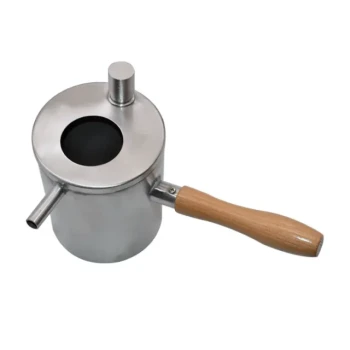
Modern beeswax presses utilize specific materials and internal geometries to solve the twin challenges of contamination and extraction inefficiency. Stainless steel construction is strictly employed to prevent metal ion contamination, ensuring the final product remains chemically pure. Meanwhile, the internal perforated separator acts as the mechanical engine of the device, separating wax from waste dross to drastically improve yield and minimize resource consumption.
By combining non-reactive materials with specialized internal separators, modern presses shift extraction from a passive process to an active, high-yield operation. This approach secures the chemical purity of the wax while simultaneously reducing the energy and water required for processing.
The Critical Role of Material Selection
The choice of material in beeswax processing is not aesthetic; it is a functional necessity for maintaining product quality.
Preventing Chemical Contamination
The primary reference indicates that stainless steel is selected specifically to prevent metal ion contamination.
Beeswax is sensitive to interaction with reactive metals. Using stainless steel creates a neutral environment that preserves the wax's natural properties.
Ensuring Final Purity
For professional applications, the purity of the beeswax is paramount.
By eliminating the risk of ion leaching, stainless steel ensures that the extracted wax meets higher purity standards, free from the discoloration or chemical alteration often caused by reactive metal equipment.
The Mechanics of the Perforated Separator
The internal structure of the press is designed to address the inefficiency of traditional extraction methods.
Mechanical Separation Logic
The internal perforated separator is the core component responsible for the physical extraction process.
It operates on the raw material after it has been boiled. This component mechanically facilitates the separation of the desired liquid wax from the solid waste dross.
Increasing Wax Yield
The separator maximizes the amount of usable product retrieved from the raw material.
By effectively pressing the dross, the system extracts wax that would otherwise be trapped and discarded in the waste product, leading to a significantly higher total yield.
Operational Efficiency
This internal geometry does more than just extract wax; it optimizes the entire workflow.
According to the technical specifications, the separator leads to shorter processing cycles. This efficiency directly translates to reduced consumption of both energy and water, making the process more sustainable.
Understanding the Process Dependencies
While these components offer significant advantages, it is important to understand the operational requirements they impose.
The Thermal Prerequisite
The perforated separator is not a standalone solution; it relies on a specific pre-condition.
The reference notes that separation occurs "after the raw material is boiled." This means the efficiency of the mechanical separator is entirely dependent on the effectiveness of the initial thermal phase. The press cannot compensate for raw material that has not been adequately heated and prepared.
Making the Right Choice for Your Goal
When evaluating beeswax processing equipment, understand how these components align with your specific objectives.
- If your primary focus is Product Quality: Prioritize stainless steel construction to eliminate metal ion contamination and guarantee the highest chemical purity.
- If your primary focus is Operational Volume: Prioritize the internal perforated separator, as this component directly influences yield rates and shortens the time required for each processing cycle.
Modern beeswax processing relies on the synergy between material science and mechanical design to deliver a pure product with maximum efficiency.
Summary Table:
| Feature | Purpose | Key Benefit |
|---|---|---|
| Stainless Steel Body | Prevents metal ion leaching | Ensures chemical purity and prevents wax discoloration |
| Perforated Separator | Mechanical dross separation | Maximizes wax yield and reduces waste trapped in solids |
| Internal Geometry | Optimizes extraction flow | Shortens processing cycles and reduces energy/water use |
| Cylindrical Design | Structural integrity | Withstands high pressure during the mechanical pressing phase |
Elevate Your Apiary Operations with HONESTBEE
Maximize your yield and maintain the highest purity standards with HONESTBEE’s premium beekeeping equipment. As a leading supplier for commercial apiaries and global distributors, we provide everything from advanced beeswax presses and honey-filling machines to durable hive-making hardware.
Whether you are scaling up your wholesale production or seeking high-quality consumables and honey-themed merchandise, our comprehensive portfolio is designed to enhance your efficiency and product value.
Ready to upgrade your beekeeping business? Contact our experts today to discover how HONESTBEE’s specialized machinery and tools can drive your success.
References
- V.M. Piaskivskyi, Yu.S. Kulakov. Beekeeping wax with improved technology in the conditions of «Bjolovod LTD» Agro firm. DOI: 10.32851/2226-0099.2020.111.30
This article is also based on technical information from HonestBee Knowledge Base .
Related Products
- Beeswax Machine Press Embosser Wax Foundation Mold Printer Bee Hive Equipment Making Sheet
- Manual Beeswax Flat Sheet Machine for Beeswax Processing
- 10L Stainless Steel Honey Wax Press Extractor for Wax Cappings
- Stainless Steel Manual Honey Press with Guard for Pressing Honey and Wax
- Honey Wax Separating Wax Press with Metal Screw Wax Separator Machine
People Also Ask
- What equipment is needed to make beeswax foundation? A Guide to DIY Wax Sheet Production
- What miscellaneous equipment is needed for making foundation? A Guide to the Essential Tools
- What miscellaneous equipment is useful when making beeswax foundation? Essential Support Tools for Beekeepers
- What specific equipment is required for making beeswax foundation? Essential Tools for High-Quality Production
- What is the recommended temperature for melting beeswax to make foundation sheets? Master the 70°C-80°C Ideal Range