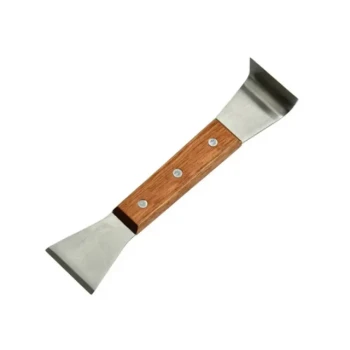
Standardized hive inspection tools and protective equipment serve as the essential control variables in the complex assessment of honey bee behavior. They allow technicians to perform repeated inspections under identical physical conditions, ensuring that any observed defensive reactions or swarming impulses are attributed to the colony's genetics rather than inconsistencies in the inspection process.
Core Takeaway By stabilizing the physical environment and the inspector's presence, standardized equipment transforms subjective observations into structured, reliable data. This infrastructure is critical for accurately rating stinging frequency, following behavior, and swarming tendencies across diverse testing sites.
The Science of Consistent Evaluation
Eliminating Environmental Variables
To accurately judge a colony's temperament, the physical conditions of the test must remain constant. Standardized tools ensure that every hive opening, frame removal, and manipulation is performed with the same mechanical consistentcy.
This stability allows evaluators to isolate specific behavioral traits. When the environment is controlled, a sudden spike in defensive behavior can be confidently linked to the bees' internal state rather than external handling errors.
Structured Ratings for Defensive Behavior
Standardized protective equipment is not just for safety; it is a tool for measurement. It enables evaluators to remain stationary and calm, facilitating the objective counting of stings or the measurement of "following behavior" (how long bees pursue a retreating subject).
Without standardized gear, the technician's reaction to pain or fear would introduce a new variable. This consistency creates a reliable baseline for grading colonies on aggression levels, ensuring data is comparable across different days and different technicians.
Assessing Swarming Tendencies
Evaluating the urge to swarm requires distinguishing between genetic predisposition and environmental stress. Standardized hives allow for the precise management of internal conditions, such as spatial structure and ventilation.
By utilizing specific hardware to regulate airflow and entrance points, beekeepers can mitigate environmentally induced swarming caused by overcrowding or overheating. This ensures that any remaining swarming attempts are accurate indicators of the colony's biological biological tendency to abscond or divide.
The Role of Specialized Hardware
Regulating Internal Balance
Standardized queen rearing equipment helps regulate the colony's demographic structure. By controlling the introduction of queens and the management of brood, technicians can suppress spontaneous migration.
This suppression is vital for evaluation. It allows breeders to observe which colonies maintain retention rates naturally versus those that require constant intervention to prevent swarming.
Ensuring Data Comparability
The use of uniform equipment extends the value of data beyond a single apiary. When hardware is consistent, observations regarding colony development and defensive traits can be compared scientifically across different climate zones.
This creates a reliable physical foundation for utilizing bee resources. It protects core breeding stocks by ensuring that decisions are based on data derived from a "level playing field."
Understanding the Trade-offs
The Cost of Standardization
Implementing a fully standardized system requires significant upfront investment in specific hardware and protective gear. For smaller operations, the cost of replacing eclectic equipment with uniform tools may seem prohibitive compared to immediate returns.
The "Laboratory" Effect
Highly controlled environments yield excellent data, but they may not perfectly mimic the chaotic variables of a natural setting. A colony that performs well under standardized inspection might behave differently when placed in non-standard equipment or managed by a hobbyist with less precise techniques.
Dependence on Human Training
Standardized tools do not eliminate human error. While the equipment provides a baseline, the interpretation of "moderate" versus "high" aggression still requires rigorous training to ensure the standardized ratings remain objective.
Making the Right Choice for Your Goal
To apply these principles effectively, align your equipment choices with your specific management objectives:
- If your primary focus is Genetic Breeding: Prioritize standardized queen rearing equipment and protective gear to ensure trait selection is based on accurate, comparable behavioral data.
- If your primary focus is Colony Retention: Focus on standardized hive bodies and ventilation modifications to separate environmental stress swarming from genetic swarming tendencies.
- If your primary focus is Scientific Research: strict adherence to identical protective equipment and inspection tools is mandatory to validate your data against broader climate-aware models.
Standardization turns the art of observation into the science of selection, giving you the certainty needed to improve your stock.
Summary Table:
| Feature | Purpose in Evaluation | Impact on Data Quality |
|---|---|---|
| Standardized Protective Gear | Minimizes inspector movement/reaction | Enables objective sting counts and tracking behavior |
| Uniform Hive Hardware | Controls ventilation and spatial structure | Distinguishes genetic swarming from environmental stress |
| Calibrated Inspection Tools | Ensures consistent frame manipulation | Isolates genetic defensive traits from handling errors |
| Queen Rearing Equipment | Regulates colony demographics | Standardizes breeding cycles for scientific comparability |
Elevate Your Apiary’s Performance with HONESTBEE
At HONESTBEE, we specialize in empowering commercial apiaries and distributors with the high-precision tools necessary for professional genetic evaluation and colony management. Whether you need specialized hive-making and honey-filling machinery to scale your operations, or a full spectrum of beekeeping equipment and consumables to ensure standardized testing environments, we provide the industrial-grade solutions you require.
Our value to your business:
- Comprehensive Wholesale Offering: A one-stop shop for everything from hardware to honey-themed cultural merchandise.
- Precision-Engineered Tools: Designed to eliminate variables and provide the reliable data your breeding program demands.
- Scalability for Professionals: Tailored solutions for large-scale distributors and commercial beekeepers.
Ready to standardize your success? Contact us today to explore our wholesale catalog and see how our expertise can strengthen your stock.
References
- Sreten Andonov, I. Misztal. Modeling honey yield, defensive and swarming behaviors of Italian honey bees (Apis mellifera ligustica) using linear-threshold approaches. DOI: 10.1186/s12863-019-0776-2
This article is also based on technical information from HonestBee Knowledge Base .
Related Products
- Professional Multi-Function Stainless Steel Hive Tool
- HONESTBEE Professional Long Handled Hive Tool with Precision Cutting Blade
- Professional Stainless Steel Pry-Bar Hive Tool
- Professional Dual-End Stainless Steel Hive Tool for Beekeeping
- Stainless Steel J Hook Hive Tool for Beekeeping
People Also Ask
- Why are professional hive tools considered indispensable? Master Beekeeping Maintenance with Precision Leverage
- What is the role of professional hive tools in routine apiary maintenance? Expert Tips for Hive Health and Longevity
- What are the benefits of a multi-functional hive tool? Streamline Your Apiary Workflow with One Tool
- What advantages do multi-functional hive tools offer? Maximize Your Apiary Efficiency and Workflow
- What are the common construction features of hive tools? Key Insights for Superior Beekeeping Efficiency