Top Bar Hives (TBHs) are selected primarily for their ability to yield high-quality biological data through a simplified, natural nest structure. Their design encourages honeybee colonies to build nests in a relatively natural state, allowing technical personnel to observe critical indicators—specifically worker bee homing behavior and pollen color—without the structural interference common in other hive types.
Core Insight: By facilitating a natural nesting environment, Top Bar Hives serve as effective bio-indicators. They allow apiarists to visually verify flora utilization and regional carrying capacity with minimal cost and disruption before committing to large-scale infrastructure.
The Science of Resource Assessment
The primary goal during the establishment phase of an apiary is to validate the local environment's ability to support a commercial population. The Top Bar Hive is uniquely suited for this data collection.
Facilitating Natural Behavior
Unlike conventional framed hives that dictate comb structure, the Top Bar Hive allows the colony to build nests in a natural state.
This lack of artificial constraint ensures that the colony's behavior reflects the environment accurately, rather than their reaction to internal hive management.
Observation of Pollen and Flora
The design permits direct, unobstructed observation of the colony's intake. Technical personnel can easily monitor the color of collected pollen on returning foragers.
This visual data allows for the accurate recording of which specific flora are being utilized by the bees at different times of the season.
Monitoring Homing Behavior
Because inspection causes minimal physical interference, the bees maintain consistent flight patterns.
Observers can track worker bee homing behavior, providing direct data support regarding flight range, forage density, and the energy expenditure required for bees to gather resources.
Operational Advantages in Early Phases
Beyond biological data, the Top Bar Hive offers logistical benefits that are critical during the high-risk assessment phase of a commercial project.
Ease of Localized Manufacturing
The structural design of the Top Bar Hive is inherently simple. This allows for ease of localized manufacturing without the need for complex industrial machinery or imported components.
Rapid Deployment
Because they can be built quickly using local materials, apiaries can set up multiple observation stations across a region to test different micro-climates simultaneously.
Cost-Effective Testing
Using TBHs minimizes capital expenditure during the evaluation phase. You can assess the regional carrying capacity—the maximum number of colonies the area can support—without purchasing expensive, standardized equipment prematurely.
Understanding the Trade-offs
While Top Bar Hives are superior for evaluation and biological assessment, they present specific challenges for long-term commercial scaling.
Evaluation vs. Standardization
The "natural state" of a TBH is excellent for data but poor for mechanization. In a full-scale operation, interchangeability is key.
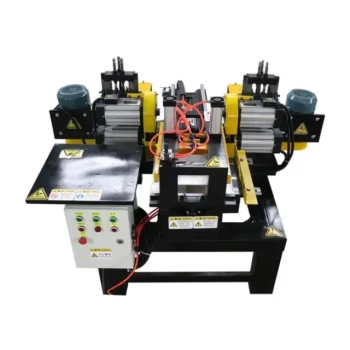
Industrial hive-making machines produce standardized components that allow for automated extraction and rapid expansion. TBHs generally lack this standardization, making them less efficient for the eventual heavy lifting of mass honey production.
Management Intensity
While inspection is simple, the lack of frames can make managing a fully grown, heavy commercial colony more difficult compared to standardized Langstroth equipment designed for mechanized loading and unloading.
Making the Right Choice for Your Goal
The choice of hive depends entirely on the phase of your business lifecycle.
- If your primary focus is Site Assessment: Deploy Top Bar Hives to capture accurate data on pollen diversity and carrying capacity with low initial overhead.
- If your primary focus is Mass Production: Transition to standardized hives compatible with industrial manufacturing to maximize operational efficiency and automation.
Use the Top Bar Hive as your diagnostic tool to prove the location's value before investing in the standardized infrastructure required to harvest it.
Summary Table:
| Feature | Benefit for Site Assessment | Impact on Commercial Strategy |
|---|---|---|
| Natural Nest Structure | Encourages natural colony behavior | Provides accurate environmental data |
| Direct Observation | Easy monitoring of pollen color & homing | Identifies specific flora utilization |
| Simple Design | Low-cost localized manufacturing | Minimizes risk during testing phase |
| Low Interference | Consistent flight pattern tracking | Calculates regional carrying capacity |
| Data-Centric Design | Superior biological data collection | Informs transition to industrial hives |
Maximize Your Commercial Honey Production with HONESTBEE
Selecting the right tools for site assessment is just the first step. To transition from evaluation to a high-yield commercial operation, you need professional-grade infrastructure. HONESTBEE specializes in supporting commercial apiaries and distributors with a full spectrum of beekeeping solutions.
From high-precision hive-making machines and automated honey-filling equipment to essential industry consumables and honey-themed merchandise, we provide everything needed to scale your business. Let our expertise in wholesale beekeeping hardware and machinery turn your site data into a profitable enterprise.
Contact HONESTBEE today to build your industrial apiary
References
- Hounnankpon Yédomonhan, D. Traoré. Diversité des plantes mellifères de la zone soudano-guinéenne: cas de l’arrondissement de Manigri (Centre-Ouest du Bénin). DOI: 10.4314/ijbcs.v3i2.44514
This article is also based on technical information from HonestBee Knowledge Base .
Related Products
- Top Bar Beehive for Beekeeping Wholesales Kenya Top Bar Hive
- Long Langstroth Style Horizontal Top Bar Hive for Wholesale
- HONESTBEE Top Bar & Bottom Bar Forming Machine | Bee Frame Machine
- HONESTBEE Square Top Hive Bee Feeder Top Bee Feeder
- HONESTBEE Round Hive Top Bee Feeder for Syrup
People Also Ask
- How is burr comb and propolis removed from a top bar hive? A Practical Guide for Hive Maintenance
- How does comb construction differ between a top bar hive and a Langstroth hive? Choose the Best Method for Your Apiary
- Why do top bar hives require beekeepers to detach comb? Master the Detach-then-Lift Technique for Comb Safety
- How does the design of a top bar hive minimize disturbance to the bees during inspection? Achieve a Calmer, More Natural Approach
- What are the main differences between a top bar hive and a Langstroth hive? A Guide to Choosing Your Hive