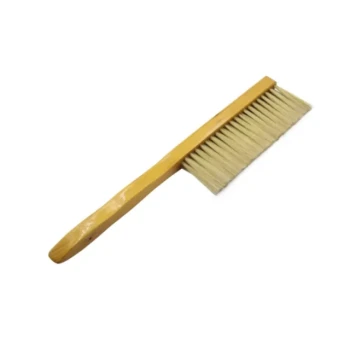
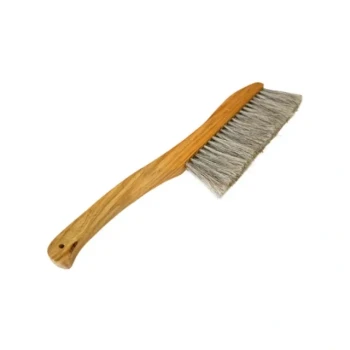
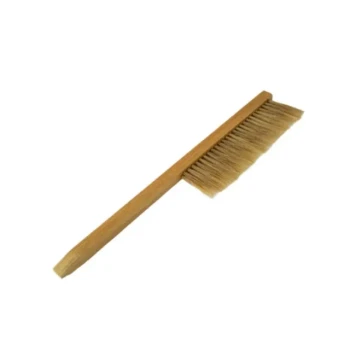
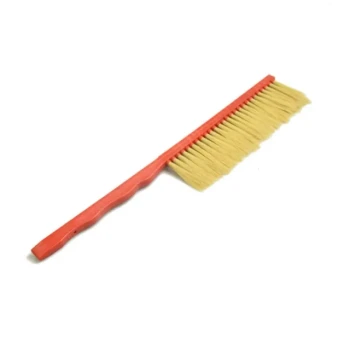
The selection of a fine brush is strictly dictated by the physical fragility of the specimen. Varroa mites and their offspring are delicate organisms that are easily crushed or distorted by rigid instruments. The flexible bristles of a fine brush allow for non-invasive extraction, enabling researchers to sweep mites off honey bees or hive cell walls without causing physical trauma or compromising the specimen's structure.
Core Takeaway Reliable biological analysis requires specimens that retain their natural physiological state. The fine brush is the industry standard for extraction because it prevents mechanical damage, ensuring that data regarding the mite's developmental stages and reproductive capacity remains accurate and uncontaminated by handling errors.
The Mechanics of Specimen Preservation
Preventing Physical Trauma
The primary function of the fine brush is to act as a buffer between the researcher's hand and the parasite. Because the bristles possess high flexibility, they yield against resistance rather than exerting force.
This mechanical compliance is critical when removing mites from complex surfaces, such as the body of a host bee or the interior of a comb cell. It ensures the mite is lifted rather than scraped, preserving its exoskeleton and internal organs.
Protecting Developmental Stages
Varroa mites are often collected to study their lifecycle and reproduction. Immature mites and eggs are significantly softer and more vulnerable than adult females.
Using a fine brush ensures that these fragile offspring are not destroyed during collection. Preserving these early-stage specimens is the only way to gain a complete picture of the colony's infestation dynamics.
Ensuring Data Accuracy in Research
Analyzing Reproductive Capacity
To understand how an infestation grows, researchers must analyze the reproductive status of the female mites. If a mite is crushed during extraction, it becomes impossible to determine its fecundity or pregnancy status accurately.
By maintaining the physical integrity of the mite, the fine brush allows for precise dissection or observation in subsequent studies. This leads to valid conclusions regarding how fast the population is expanding.
Linking Vectors to Disease
As noted in studies of Apis mellifera intermissa, accurate quantification of mite loads is essential for correlating infestation rates with colony collapse.
When researchers can isolate intact mites, they can better study the mites as vectors for pathogens, such as the Deformed Wing Virus (DWV). Intact specimens allow for clearer analysis of how high infestation rates (e.g., reaching 42 percent) accelerate viral spread.
Understanding the Trade-offs
Manual Precision vs. Speed
While the fine brush is superior for specimen quality, it represents a manual, high-touch methodology.
This approach requires steadiness and patience, making it potentially slower than bulk separation methods. However, this time investment is a necessary trade-off when the goal is biological insight rather than a simple numerical count.
The Risk of Subjectivity
The effectiveness of the brush relies heavily on the dexterity of the user. Unlike automated or chemical separation tools, the "fine brush" method introduces a human variable.
Inconsistent handling by the researcher can still result in lost or damaged specimens if the brush is not used with the appropriate gentle technique.
Making the Right Choice for Your Goal
When deciding on an extraction protocol for Varroa mites, consider your end-game data requirements.
- If your primary focus is Biological Analysis: Use a fine brush to ensure mites remain intact for dissection, reproductive study, or pathogen screening.
- If your primary focus is Infestation Quantification: While a brush is effective for sampling, ensure your technique is consistent to compare infestation rates (like the 42% benchmark) accurately across colonies.
The integrity of your biological data is directly proportional to the gentleness of your extraction method.
Summary Table:
| Feature | Fine Brush Method | Alternative Rigid Tools |
|---|---|---|
| Specimen Safety | High (Non-invasive extraction) | Low (Risk of crushing/distortion) |
| Data Accuracy | Preserves developmental stages | Compromises internal organs/structure |
| Primary Use | Biological analysis & dissection | Simple numerical counting |
| Mechanical Action | Flexible bristles yield to resistance | Rigid force can damage exoskeleton |
| Focus | Quality & physiological integrity | Speed & bulk processing |
Maximize Your Research Precision with HONESTBEE
For commercial apiaries and distributors, the accuracy of your colony health data is non-negotiable. HONESTBEE provides the professional-grade tools you need to maintain the highest standards of biological analysis.
We specialize in supplying a comprehensive range of beekeeping equipment—from precision sampling tools to high-capacity honey-filling machines and specialized hive-making hardware. Whether you are managing large-scale operations or supplying the industry, our wholesale solutions ensure your specimens remain intact and your data stays reliable.
Ready to upgrade your apiary’s technical capabilities? Contact HONESTBEE today for specialized tools and wholesale inquiries!
References
- Shuai Wang, Vincent Dietemann. Reproduction of ectoparasitic mites in a coevolved system: <i>Varroa</i> spp.—Eastern honey bees, <i>Apis cerana</i>. DOI: 10.1002/ece3.7038
This article is also based on technical information from HonestBee Knowledge Base .
Related Products
- 12V Bee Mite Removal Evaporator Oxalic Acid Vaporizer for Bee Fumigation Treatment 180W Atomization
- Adjustable Formic and Acetic Acid Dispenser for Bee Mite Treatment
- Compact Circular Bee Mite Treatment Dispenser
- Double Row Artificial Fiber Bee Brush for Beekeeping
- Wooden Bee Brush with Triple Row Artificial Fiber for Beekeeping
People Also Ask
- What should be done after applying the vapor? A Step-by-Step Guide to Sealing Your Hive
- What are the main advantages of using oxalic acid vaporization for Varroa mite control? Achieve 90%+ Efficacy Safely
- How can oxalic acid vaporization be used effectively in a hive that contains brood? Master Multi-Stage Mite Control
- What is the process of using an oxalic acid vaporizer? A Step-by-Step Guide to Safe Varroa Control
- Why is it necessary to control varroa mite infestations? Protect Your Colony with Oxalic Acid Vaporizers