A mechanical stirrer is the critical component that ensures honey retains its quality during thermal processing. Honey is a highly viscous substance with very poor heat conduction, meaning it acts more like an insulator than a conductor. Without active mechanical agitation, heat applied to the vessel walls cannot naturally migrate to the center of the batch, leading to severe overheating at the edges and a cold core.
Core Takeaway By forcibly circulating the honey, a mechanical stirrer balances the internal temperature field. This prevents the "wall effect"—where static honey overheats near the heating elements—thereby protecting the honey from chemical degradation and ensuring a uniform consistency.
The Physics of Heat Transfer in Honey
Overcoming High Viscosity
Honey is dense and resistant to flow. Because of this high viscosity, heat does not diffuse through the liquid efficiently on its own.
Forcing Convection
A mechanical stirrer creates artificial convection. It physically moves the heated honey away from the vessel walls and forces it into the cooler center.
Eliminating Temperature Gradients
Without stirring, a significant temperature gradient develops. The honey touching the walls may reach damaging temperatures, while the center remains well below the target temperature. Stirring homogenizes the batch, ensuring the temperature reading is accurate for the entire volume.
Preserving Chemical and Biological Integrity
Preventing HMF Formation
When honey is subjected to excessive heat, its sugars break down to form hydroxymethylfurfural (HMF). This compound is a primary marker of low-quality or heat-damaged honey. By preventing localized hot spots near the walls, the stirrer minimizes HMF production.
Protecting Enzyme Activity
Honey contains delicate enzymes (such as diastase) that provide its biological value. These enzymes are easily denatured (destroyed) by high heat. The uniform temperature distribution provided by the stirrer ensures the honey is heated only enough to process it, without crossing the thermal threshold that destroys these enzymes.
Mechanical Control and Consistency
High-Torque Requirements
Moving such a viscous fluid requires significant power. A high-torque stirrer is necessary to generate the mechanical shear force needed to mobilize the heavy mass of honey.
Enhancing Mass Transfer
Beyond simple heating, the mechanical energy input accelerates mass transfer. If the goal involves controlled crystallization (creamed honey), adjustable rotation speeds (typically 180 to 540 rpm) allow the operator to manipulate the nucleation rate, promoting smaller, smoother crystals.
Understanding the Trade-offs
While essential, mechanical stirring introduces variables that must be managed to avoid damaging the product in other ways.
Risk of Aeration
Aggressive stirring can fold air into the honey. Air bubbles not only ruin the visual clarity of liquid honey but can also introduce moisture or contaminants that affect shelf life.
Mechanical Shear Stress
While shear force helps mix the honey, excessive speed can damage the physical structure or texture of the product. The rotation speed must be carefully calibrated to balance heat distribution against the risk of over-agitating the fluid.
Making the Right Choice for Your Goal
When configuring your heating system, your stirring strategy should align with your end-product goals.
- If your primary focus is Preservation of Quality (Raw/Liquid Honey): Prioritize a low-speed, high-torque agitation that moves the mass gently to prevent hot spots without introducing air bubbles.
- If your primary focus is Texture modification (Creamed Honey): Utilize higher rotation speeds to generate the shear force necessary to stimulate nucleation and create a fine, spreadable crystal structure.
Ultimately, the mechanical stirrer transforms the heating process from a passive risk into a controlled, precise operation.
Summary Table:
| Feature | Impact of Mechanical Stirring | Risk of No Stirring |
|---|---|---|
| Temperature Field | Homogeneous & balanced | Severe temperature gradients |
| HMF Levels | Minimized (Prevents sugar breakdown) | High (Localized overheating) |
| Enzyme Activity | Preserved (Diastase protection) | Denatured/Destroyed |
| Heat Transfer | Forced convection/Active flow | Poor conduction/Insulated core |
| Product Texture | Smooth & controlled nucleation | Coarse crystals or burnt edges |
Elevate Your Honey Production with HONESTBEE
At HONESTBEE, we understand that maintaining the biological integrity of honey is non-negotiable for commercial apiaries and distributors. Our professional-grade honey-processing machinery and specialized hardware are engineered to deliver high-torque mechanical agitation, ensuring your product reaches the perfect consistency without compromising on quality.
Whether you are looking for high-capacity honey-filling machines, specialized hive-making equipment, or a full spectrum of beekeeping consumables, we provide the wholesale tools you need to scale your operations efficiently. Partner with us to bring precision to your honey processing—Contact HONESTBEE today for expert equipment solutions tailored to your business.
References
- Dmitry Ovsyannikov, Dmitry Tsokur. Modeling of honey heating in recrystallizer. DOI: 10.22616/erdev.2020.19.tf096
This article is also based on technical information from HonestBee Knowledge Base .
Related Products
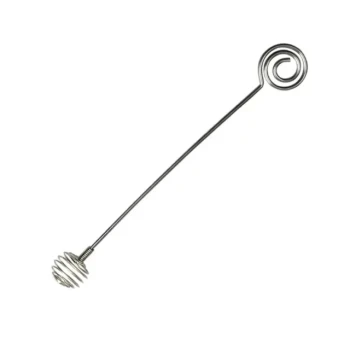
- Modern Stainless Steel Honey Dipper Stirrer
- Double Wall Honey Heating Stirring Homogenizer Mixing Machine with Various Capacity
- Professional Plastic Honey Dipper for Easy Honey Drizzling
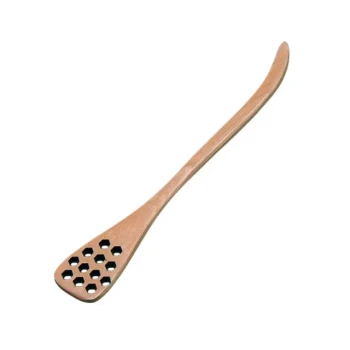
- Modern Honeycomb Pattern Wooden Honey Dipper for Stirring and Drizzling
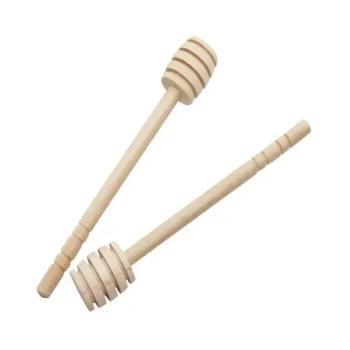
- Natural Wood Honey Dipper for Tea Coffee and Desserts
People Also Ask
- What is a honey dipper? Master the Art of the Perfect Drizzle with This Essential Tool
- How do you clean and store a honey dipper? Simple Steps for Long-Lasting Performance
- What is a honey taking spoon called? Discover the Tool for a Perfect, Mess-Free Drizzle
- What is a honey dipper and what is it used for? A Guide to Mess-Free Drizzling
- What is the proper method for cleaning a honey dipper? Maintain Pure Flavor with These Easy Pro Tips