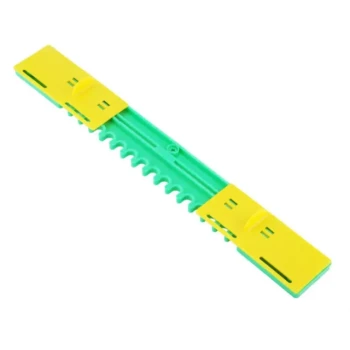
Precise control over foraging behavior is the primary requirement for successful greenhouse pollination. An improved Langstroth hive utilizes a dual-entrance control system to physically regulate the direction of bee flight via manual switches. This hardware allows operators to direct bees toward crops during optimal pollination windows (usually mornings) and release them outdoors to forage for diverse resources during non-critical periods (afternoons).
The dual-entrance system solves the critical problem of colony decline in enclosed environments by balancing specific crop pollination duties with the need for external nutritional foraging, while simultaneously protecting human workers during field operations.
Managing Colony Health and Efficiency
To understand why this specific hardware is required, you must look beyond simple pollination and consider the survival pressures placed on a bee colony inside a greenhouse.
Regulating Pollination Windows
Pollination is rarely required 24 hours a day.
The dual-entrance system allows operators to open the inner entrance specifically when crops are most receptive, typically in the morning.
This concentrates the colony's energy on the target crop, ensuring high efficiency without exhausting the bees on non-productive flights.
Preventing Colony Decline
Greenhouses are often nutritional deserts for bees, offering limited pollen diversity.
By closing the inner entrance and opening the outer entrance in the afternoon, the system enables bees to forage outside the greenhouse.
Access to diverse external resources reduces survival pressure, preventing the rapid colony decline often seen in permanently enclosed hives.
Ensuring Worker Safety
Agricultural management requires human intervention, such as pruning or harvesting.
The control system allows for the complete exclusion of bees from the greenhouse interior during these maintenance periods.
This ensures that field management tasks are performed without interference from the bees or risk of stings to the workers.
Environmental and Navigation Stability
While the entrance system controls flow, the improved hive design addresses the hostile physical environment of the greenhouse.
Buffering Temperature Extremes
Greenhouse interiors frequently experience drastic temperature fluctuations, including extreme heat during the day and cold at night.
Improved setups often utilize specialized shelters or buffer zones to physically isolate the hive from the main greenhouse space.
This stabilizes the micro-climate for the colony, protecting vital brood-rearing activities that would otherwise be disrupted by thermal stress.
Overcoming Navigation Issues
Indoor environments lack the natural ultraviolet light bees use for navigation.
Standard hives often fail in these settings because bees cannot orient themselves effectively.
Improved hives incorporate specific orientation structures and supplemental feeding systems to help bees maintain high-frequency flights despite the lack of natural navigational cues.
Understanding the Operational Trade-offs
While the dual-entrance system is superior to standard hives for greenhouses, it introduces specific operational demands.
The Necessity of Active Management
This is not a passive system.
The dual-entrance design relies on human operators to manually toggle the switches based on time of day and crop needs.
Failure to switch the entrances at the correct times can lead to missed pollination windows or starved bees trapped inside.
Dependency on External Conditions
The effectiveness of the "outer entrance" strategy depends on the availability of forage outside the greenhouse.
If the external environment is barren or weather conditions are poor, the benefit of the dual system is marginalized.
In such cases, the reliance on supplemental feeding systems becomes absolute.
Making the Right Choice for Your Operations
The dual-entrance system is about striking a balance between the needs of the crop and the biological needs of the bee.
- If your primary focus is crop yield: Prioritize opening the inner entrance during peak morning hours to synchronize bee activity with flower receptivity.
- If your primary focus is colony sustainability: Ensure the outer entrance is utilized daily to allow access to natural, diverse pollen sources outside the enclosure.
- If your primary focus is worker safety: Utilize the system to lock bees out of the greenhouse interior strictly during scheduled maintenance blocks.
By mechanically bridging the gap between the enclosed crop and the outside world, the dual-entrance system sustains both the harvest and the hive.
Summary Table:
| Feature | Dual-Entrance System Benefit | Operational Impact |
|---|---|---|
| Foraging Control | Regulates inner/outer flight direction | Higher pollination efficiency & resource diversity |
| Colony Health | Access to external nutritional sources | Prevents colony decline in nutrient-poor greenhouses |
| Worker Safety | Total exclusion from greenhouse interior | Allows maintenance & harvesting without risk of stings |
| Climate Stability | Buffered temperature micro-climate | Protects brood-rearing from extreme thermal stress |
| Navigation | Orientation structures & supplemental feeding | Maintains flight frequency despite low UV light levels |
Maximize Your Harvest with HONESTBEE Beekeeping Solutions
Transitioning to greenhouse pollination requires specialized hardware designed for durability and precision. HONESTBEE supports commercial apiaries and distributors with a comprehensive wholesale portfolio, ranging from advanced hive-making and honey-filling machinery to a full spectrum of professional beekeeping tools and industry consumables.
Whether you are scaling your operation or supplying a regional market, our high-quality equipment ensures your colonies thrive and your pollination cycles remain uninterrupted.
Ready to upgrade your commercial infrastructure? Contact us today to discuss our wholesale offerings and how we can add value to your beekeeping business.
References
- Beatriz de Jesus Rodrigues, Daniel Nicodemo. An easy-to-manage two-entrance honey bee hive system for greenhouse pollination that improves fruit production. DOI: 10.33448/rsd-v10i11.20029
This article is also based on technical information from HonestBee Knowledge Base .
Related Products
- Beehive Entrance Reducer Guardian Metal Hive Entrance for Bees
- Langstroth Honey Bee Box Hive Boxes for Different Depths
- Long Langstroth Style Horizontal Top Bar Hive for Wholesale
- Solid Bottom Board Australian Pine Wood Langstroth Bottom Board for Wholesale
- High-Performance Langstroth Bee Hives for Global Professional Beekeeping
People Also Ask
- Why are entrance reducers used to counter hornet infestations? Protect Your Hive with Strategic Choke Points
- What is the purpose of an entrance reducer for a beehive? Strengthen Colony Defense and Prevent Robbery
- What are the proper guidelines for using hive entrance reducers? Master Temperature Control & Colony Defense
- Why is it critical to maintain a smaller entrance for a newly established bee hive? Boost Colony Growth and Security
- What is the physical mechanism behind the use of hive entrance reducers? Protect Your Bees from Vespa velutina