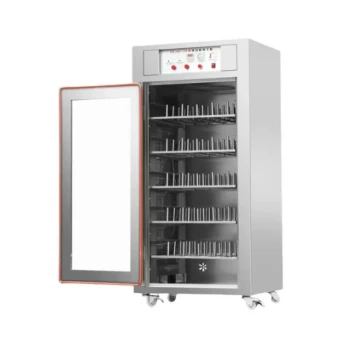
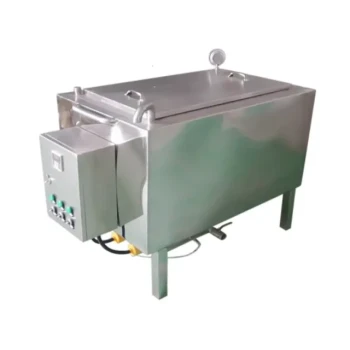
The industrial vacuum dryer serves as the central engine of the beeswax impregnation process because it coordinates the critical simultaneous application of heat and negative pressure. This equipment does not merely apply wax; it actively forces the material into the wood's microscopic structure, transforming the process from a superficial cosmetic treatment into a deep structural enhancement.
The core value of this equipment lies in its ability to evacuate air from wood pores while maintaining wax fluidity, utilizing a pressure differential to drive protection deep into the cellular cavities rather than allowing it to sit on the surface.
The Mechanics of Deep Impregnation
To understand why this equipment is non-negotiable for high-quality impregnation, you must look at how it manipulates both the protective material and the substrate.
Thermal Management and Fluidity
The first function of the equipment is thermal regulation. Beeswax is naturally solid at room temperature, making it impossible to absorb into dense materials.
The dryer’s heating device ensures the wax remains in a molten fluid state throughout the process. By maintaining a stable temperature, the equipment lowers the viscosity of the wax, preparing it for deep infiltration.
The Role of Negative Pressure
Fluidity alone is not enough; the wax needs a pathway to enter the wood. Wood is naturally porous, but these pores are filled with air that blocks liquid entry.
The vacuum pump resolves this by evacuating the air from the wood's interior. This creates a negative pressure environment, effectively "pulling" the air out of the material to create a vacuum void within the timber.
The Pressure Differential Driver
Once the air is removed and the wax is molten, physics takes over. The equipment creates a significant pressure differential between the exterior environment and the interior of the wood.
This force drives the molten beeswax into the wood’s tracheids and cell cavities. Without this vacuum-driven pressure, the wax would simply rest on top of the wood grain.
Superiority Over Traditional Methods
The industrial vacuum dryer is considered "core" equipment because it achieves results that passive methods cannot replicate.
Penetration vs. Coating
Standard surface coating methods rely on gravity or simple absorption, which results in a thin, external layer of protection. This layer is easily damaged and offers no internal support.
In contrast, the vacuum dryer ensures deep-layer protection. By forcing wax into the cellular structure, the wood is preserved from the inside out.
Structural Saturation
The specific target of this process is the wood's internal architecture. The reference material highlights the filling of tracheids (water-conducting cells) and cell cavities.
Reaching these microscopic structures provides superior resistance to environmental factors, as the wood is saturated rather than just sealed.
Understanding the Operational Trade-offs
While the vacuum dryer offers superior results, utilizing this core equipment introduces specific considerations compared to simpler methods.
Process Complexity
Using an industrial vacuum dryer transforms a simple application task into a complex thermodynamic process. It requires precise control over both temperature and vacuum levels to ensure the wax does not burn and the wood structure is not damaged by rapid pressure changes.
Equipment Dependency
Unlike surface coating, which requires minimal tools, this process is entirely dependent on the reliability of the machinery. If the heating element fails, the wax solidifies; if the vacuum seal breaks, penetration stops immediately.
Making the Right Choice for Your Goal
Whether this equipment is necessary for your specific application depends on the level of protection required.
- If your primary focus is deep structural preservation: You must use the vacuum dryer to drive molten wax into the tracheids and cell cavities for internal saturation.
- If your primary focus is superficial aesthetics: A simple surface coating may suffice, though it lacks the durability and deep-layer protection of the vacuum method.
The industrial vacuum dryer is the bridge between a temporary cosmetic finish and a permanent structural integration of beeswax into timber.
Summary Table:
| Feature | Surface Coating | Vacuum Impregnation (Industrial Dryer) |
|---|---|---|
| Penetration Depth | Superficial/External | Deep Structural (Tracheids & Cell Cavities) |
| Mechanism | Gravity & Simple Absorption | Negative Pressure & Heat-Driven Differential |
| Durability | Low (Easily damaged) | High (Internal saturation) |
| Wax State | Variable | Precisely Maintained Molten Fluid |
| Wood Protection | Moisture Barrier Only | Internal Reinforcement & Preservation |
Elevate Your Beekeeping Operations with HONESTBEE
At HONESTBEE, we specialize in empowering commercial apiaries and beekeeping equipment distributors with high-performance solutions. Whether you are looking for advanced hive-making machinery or specialized honey-filling equipment, our comprehensive wholesale portfolio has you covered.
Our industrial-grade machinery ensures your wooden hives achieve maximum durability through deep-layer beeswax impregnation, while our full range of industry consumables and honey-themed merchandise supports every facet of your business growth.
Ready to upgrade your production capabilities? Contact us today to discover how our specialized hardware and wholesale expertise can drive your success.
References
- Çağlar Akçay. Determination of decay, larvae resistance, water uptake, color, and hardness properties of wood impregnated with honeybee wax. DOI: 10.15376/biores.15.4.8339-8354
This article is also based on technical information from HonestBee Knowledge Base .
Related Products
- 0.5T Capacity Honey Dehumidifier Dryer with Vacuum Heating and Thickening Filtering Machine
- HONESTBEE Professional Cabinet Bottle Dryer
- Electric Commercial Beeswax Melter for Factory Use
- Economy Small Scale Honey Dryer Dehumidifier Thickening Machine
- High Quality Honey Dehumidifier Dryer Thickening Machine for Beekeeping
People Also Ask
- What is the primary function of professional dehumidification equipment in honey processing? Stability & Quality
- How to dry up honey? The Safe Guide to Stabilizing Honey and Preventing Fermentation
- What is the process for using a dehumidifier to lower honey's moisture content? Expert Drying Techniques
- How to decrease moisture in honey? Prevent Fermentation and Ensure Long-Term Quality
- How to remove humidity from honey? Protect Your Harvest from Fermentation