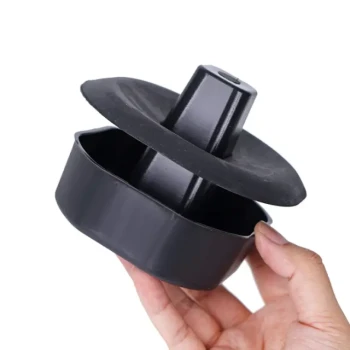
The primary utility of an inverted plastic bucket in integrated beehive designs is to provide a seamless, monolithic enclosure that completely eliminates structural gaps. By functioning as both the top and side walls simultaneously, this design creates a light-tight environment that is critical for managing specific honeybee behaviors.
The inverted bucket design solves the problem of light leakage found in traditional assembled hives. This prevents stress-induced absconding in sensitive species and utilizes the bees' natural instinct to retreat into darkness, protecting the beekeeper during harvesting.
Structural Integration and Light Control
Eliminating Component Gaps
Traditional beehives are constructed from multiple assembled parts, creating joints and seams where light can penetrate. An inverted plastic bucket integrates the roof and the hive body into a single, continuous unit.
This lack of assembly joints ensures that the upper portion of the hive remains physically sealed against the elements and light intrusion.
Creating a Controlled Dark Zone
The fundamental goal of this design is to maintain total darkness at the top of the hive.
By using an opaque, single-piece material, the design guarantees that no stray beams of light disturb the colony in their primary dwelling area.
Impact on Bee Behavior and Safety
Preventing 'Boiling' Absconding
For sensitive honeybee species, light leakage is not merely a nuisance; it is a significant stressor.
When light penetrates the upper hive through gaps, it can trigger a reaction known as "boiling." This is a form of immediate absconding where the agitated colony abandons the hive in a stress response. The inverted bucket effectively neutralizes this trigger.
Managing Defensive Reactions
The design provides a significant safety advantage during the harvesting process.
When the harvester opens the bottom door, light enters the hive from below. Because the inverted bucket maintains a pitch-black environment at the top, the bees instinctively move upward toward the darkness rather than flying downward to attack.
This predictable migration allows the beekeeper to work safely while the colony retreats into the protected upper zone.
Operational Considerations
Species Specificity
It is important to note that this design is specifically highlighted for "sensitive honeybee species."
While effective for all, the specific prevention of "boiling" suggests this architecture is a necessity for volatile species, whereas docile breeds might tolerate light leaks in traditional wooden boxes with less dramatic reactions.
Reliance on Material Integrity
The success of this system relies entirely on the bucket remaining opaque and intact.
Unlike wood, which can be patched, a crack in the plastic structure compromises the monolithic seal. If the bucket allows light to leak through damage, the behavioral control mechanisms described—specifically the retreat to darkness—will fail.
Making the Right Choice for Your Apiary
The inverted bucket design is an engineering response to the biological instincts of the honeybee.
- If your primary focus is managing sensitive species: This design is essential to prevent stress-induced swarming and loss of the colony due to light leaks.
- If your primary focus is harvester safety: The structure provides a passive safety mechanism that naturally directs defensive bees away from the operator during bottom-access maintenance.
By controlling the light, you control the colony's stress and movement, turning a potential hazard into a predictable behavior.
Summary Table:
| Feature | Benefit | Impact on Management |
|---|---|---|
| Monolithic Enclosure | Eliminates seams and assembly gaps | Total light control in the hive body |
| Light-Tight Zone | Prevents 'boiling' behavior | Reduces stress-induced colony absconding |
| Upward Migration | Bees retreat to darkness during harvest | Increased safety for the beekeeper |
| Integrated Top/Sides | Simplifies hive structural integrity | Durable, weather-sealed environment |
Maximize Your Apiary Productivity with HONESTBEE
At HONESTBEE, we understand that managing sensitive honeybee species requires precision equipment designed for their unique biological instincts. Whether you are a commercial apiary or a specialized distributor, we provide the high-quality tools and machinery needed to scale your operations.
Our value to your business includes:
- Comprehensive Wholesale Offering: From innovative hive designs to essential consumables.
- Advanced Machinery: specialized hardware including hive-making and honey-filling machines.
- Tailored Solutions: Supporting everything from large-scale honey production to honey-themed cultural merchandise.
Ready to upgrade your equipment and ensure the safety of your colonies? Contact us today to explore our full spectrum of beekeeping solutions!
References
- Wolfgang Edrich. In Search of an Appropriate Beekeeping Technology for African Honey Bees. DOI: 10.1080/0005772x.2010.11417361
This article is also based on technical information from HonestBee Knowledge Base .
Related Products
- Professional Insulated Plastic Bee Hives
- Yellow Plastic Bucket Pail Perch for Beekeeping
- Food Grade Plastic Honey Bucket Pail for Beekeeping
- 3.5L Plastic Beehive Frame Feeder Deep Frame Water Feeder for In Hive Use
- Durable Plastic Interlocking Hive Connector for Beekeeping
People Also Ask
- What are the advantages of plastic bee hives? Boost Efficiency & Durability for Your Apiary
- Are plastic bee hives any good? Unlock Durability & Efficiency for Your Apiary
- How do plastic bee hives compare to wooden hives in handling? Reduce Strain & Boost Efficiency
- Are plastic bee hives good? Durable, Low-Maintenance Hives for Modern Apiaries
- What are the disadvantages of plastic beehives? Key Operational and Environmental Risks Exposed