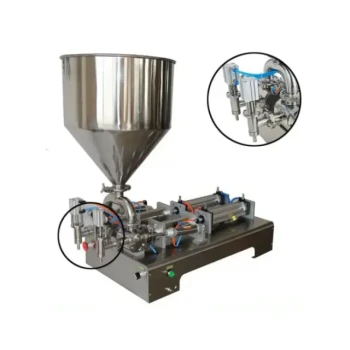
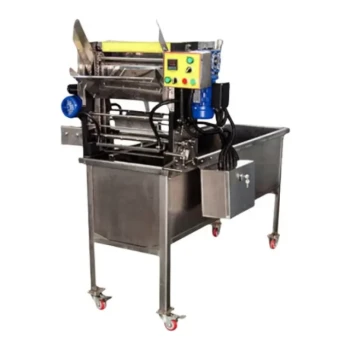
Automated honey-filling machinery is the prerequisite for entering the global market, providing the high-precision quantitative packaging necessary to satisfy rigorous international trade standards. Beyond simply managing large processing volumes with increased speed, these machines employ closed-system operations that minimize air exposure, preventing secondary contamination and preserving the honey's unique physical and chemical properties.
The Core Reality: Industrial honey processing is less about speed and more about standardization and preservation. Automation transforms a variable natural product into a consistent, shelf-stable commodity that meets the legal and safety strictures of global export markets.
Preserving Integrity via Closed Systems
Minimizing Environmental Exposure
The primary advantage of industrial automation is the utilization of closed-system operations.
By sealing the process from storage tank to retail package, the machinery drastically reduces the honey's exposure to ambient air. This preservation of an anaerobic environment is critical for maintaining the honey's natural flavor profile and chemical stability.
Eliminating Secondary Contamination
Manual handling is the single largest vector for introducing impurities into food products.
Automated systems utilize aseptic transfer methods and vacuum sealing to remove human contact from the equation. This ensures the final product remains free of biological contaminants, satisfying the hygiene requirements of strict markets like the European Union.
Achieving Commercial Standardization
High-Precision Quantitative Packaging
In international trade, weight consistency is a legal necessity, not just a quality metric.
Automated metering systems deliver exact net weights for every unit, ensuring compliance with international packaging laws. This precision also reduces material waste, preventing the financial bleed associated with consistently overfilling containers.
Traceability and Labeling Compliance
Entering markets such as Saudi Arabia or the EU requires more than just pure honey; it requires data.
Integrated filling and labeling machinery ensures that ingredient labeling, batch tracking, and packaging specifications are applied uniformly. This technical capability is often the deciding factor in obtaining export certifications.
Understanding the Trade-offs
Capital Intensity vs. Operational Flexibility
While automation drives efficiency, it requires significant upfront capital investment and introduces rigidity into the production line.
High-speed machines are optimized for specific container sizes and viscosities. Switching between different bottle shapes or honey types often requires downtime for retooling and calibration, making these systems less agile than manual teams for small, bespoke batches.
Making the Right Choice for Your Goal
To maximize the return on investment in automation, align the equipment capabilities with your specific business objective:
- If your primary focus is International Export: Prioritize machinery with integrated labeling and traceability features to ensure compliance with EU or other regional legal standards.
- If your primary focus is High-Volume Production: Focus on systems with advanced flow control and waste-reduction metering to maximize yield and turnover rates.
Automation is not merely a tool for speed; it is the mechanism of quality assurance that legitimizes your product on the world stage.
Summary Table:
| Feature | Manual Processing | Automated Machinery | Impact on Trade |
|---|---|---|---|
| Weight Precision | Variable/Manual Error | High-Precision Metering | Ensures legal weight compliance |
| Contamination Risk | High (Human Contact) | Low (Closed Systems) | Meets EU/Global hygiene standards |
| Scaling Potential | Limited by Labor | High-Volume Output | Enables industrial-scale export |
| Data Traceability | Difficult to Track | Integrated Batch Labeling | Simplifies export certifications |
| Product Integrity | Air Exposure Risk | Anaerobic/Vacuum Sealing | Preserves natural flavor & profile |
Scale Your Apiary Operations with HONESTBEE Professional Solutions
Transitioning from local production to international trade requires more than just honey—it requires precision and reliability. HONESTBEE specializes in empowering commercial apiaries and distributors with the high-performance machinery needed to dominate the global market.
Our comprehensive wholesale portfolio includes:
- Advanced Machinery: Industrial-grade honey-filling, capping, and labeling machines designed for high-precision and traceability.
- Manufacturing Tools: High-efficiency hive-making equipment and processing hardware.
- Essential Supplies: A full spectrum of beekeeping tools and industry consumables.
- Cultural Merchandise: Unique honey-themed retail products to diversify your brand.
Whether you are upgrading a processing facility or expanding your distribution network, HONESTBEE provides the technical expertise and equipment to ensure your honey meets every international standard.
Ready to elevate your production? Contact HONESTBEE today for a customized consultation and wholesale quote.
References
- Georgi Aleksiev. Dynamic of the processing and trade with Bulgarian apiculture products. DOI: 10.22620/sciworks.2020.02.010
This article is also based on technical information from HonestBee Knowledge Base .
Related Products
- Fully Automatic Honey Filling Packaging Machine for Processing Line
- Automatic Honey Filling and Filtering Machine for Beekeeping Bottle Filling
- Precision Durable Efficient HONESTBEE Rotary Honey Filling Machine
- Precision Automated Packaging Turntable Honey Spoon Filling Sealing Packing Machine
- Semi Automatic Small Honey Bottle Filling Machine Honey Filler
People Also Ask
- Why are fully automatic honey filling and packaging lines essential? Boost Your Honey's Market Value and Quality
- What is a fully-automatic honey filler? Streamline Your Production with High-Precision Automation
- How do automated honey filling and packaging machines affect profitability? Boost Margins with HONESTBEE Technology
- How do automated honey filling and packaging machines contribute to the market value of honey products? Maximize Your ROI
- How do industrial-grade automated honey filling and packaging machines mitigate the risk of physical contamination?