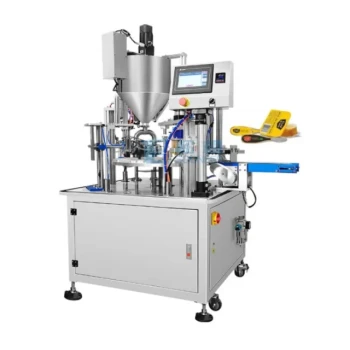
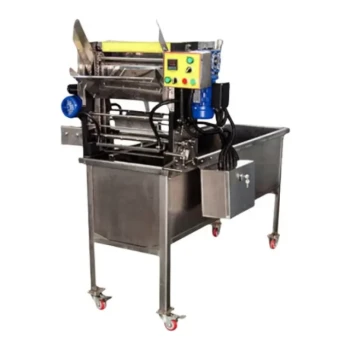
Honey’s natural resistance to flow acts as a physical barrier in the packaging process, demanding specialized equipment to maintain efficiency. If a machine is not engineered to manage this high viscosity, operators will face immediate issues such as nozzle clogging, inaccurate fill volumes, and significant leakage.
Because honey is thick and sticky, it requires positive displacement and temperature control to move through a system efficiently. A standard gravity-fed filler will fail; you need a machine equipped with specific features like piston fillers or heated nozzles to ensure smooth operation and prevent costly downtime.
Overcoming Resistance: The Mechanics of Viscosity
The Necessity of Piston Fillers
Standard liquid fillers often rely on gravity, which is ineffective for honey.
Piston fillers are far more effective because they physically push the product through the system. This positive force overcomes the honey's thickness to ensure a consistent flow rate.
Utilizing Heated Nozzles
Viscosity drops as temperature rises.
Machines equipped with heated filling nozzles or hoppers keep the honey warm during the filling process. This temporarily thins the liquid, allowing it to flow smoothly without altering the final product's consistency once cooled.
Preventing System Clogs
Thick liquids are prone to solidifying or bunching up in narrow passageways.
A machine designed for viscous liquids will have wider pathways and stronger pumps. This specific engineering prevents the clogging that frequently halts production in non-specialized equipment.
Precision and Waste Control
The Role of Anti-Drip Features
Honey’s "stringy" nature causes it to trail off after a fill, leading to messy containers and wasted product.
To combat this, effective machines utilize anti-drip features or cut-off nozzles. These mechanisms cleanly sever the flow immediately after filling, preventing spillage onto the conveyor or the bottle exterior.
Ensuring Fill Accuracy
Viscosity changes can lead to inconsistent volumes if the machine cannot self-regulate.
A suitable machine provides accurate measurements despite the drag caused by the fluid's thickness. This precision is vital for maintaining product integrity and avoiding the legal and financial risks of underfilling or overfilling.
Maintenance and Hygiene Implications
Managing The Stickiness Factor
Honey is notoriously difficult to clean, and residue can lead to contamination between batches.
Because of the product's viscous and sticky properties, the machine must be designed for easy disassembly. Parts that can be quickly removed and washed ensure better hygiene and prevent cross-contamination.
Reducing Downtime
A machine struggling against viscosity requires more frequent maintenance.
Selecting equipment designed for heavy liquids reduces strain on the motors and pumps. A well-maintained, purpose-built machine will have a longer lifespan and suffer less from wear-and-tear caused by the product's density.
Understanding the Trade-offs
Speed vs. Viscosity Handling
High viscosity generally slows down filling speeds compared to water-thin liquids.
While multi-lane machines can mitigate this by filling multiple sachets or jars at once, increasing speed without the right pressure can lead to splashes or air pockets. You must balance your desired output rate with the machine's ability to handle the fluid dynamics of honey.
Thermal Sensitivity
While heat helps honey flow, too much heat degrades the quality.
Using heated nozzles creates a trade-off between flow efficiency and product preservation. The machine requires precise temperature controls to lower viscosity without cooking the honey or destroying its enzymes.
Making the Right Choice for Your Goal
To select the correct packaging machine, you must align the machine’s viscosity handling capabilities with your production scale.
- If your primary focus is High-Volume Production: Prioritize fully automated, multi-lane machines that compensate for slower flow rates by filling multiple containers simultaneously.
- If your primary focus is Small-Scale or Artisanal Quality: Look for semi-automatic machines with piston fillers, which offer high precision and handle viscosity well without the cost of full automation.
- If your primary focus is Versatility: Select a machine with adjustable settings and easy-to-clean parts that can adapt to different container formats, such as shifting from jars to tubes.
The right machine turns the challenge of honey's thickness into a consistent, controlled, and profitable production process.
Summary Table:
| Feature | Impact of High Viscosity | Recommended Solution |
|---|---|---|
| Flow Control | Gravity feeds fail; honey is too thick. | Piston Fillers for positive displacement. |
| Flow Speed | Resistance slows down production. | Heated Nozzles to temporarily thin the honey. |
| Cleanliness | "Stringy" honey leads to spills/waste. | Anti-Drip Cut-off Nozzles for clean fills. |
| Accuracy | Drag causes inconsistent fill volumes. | Precision Pumps with adjustable pressure. |
| Maintenance | Sticky residue clogs standard parts. | Easy-Disassembly Design for deep cleaning. |
Scale Your Honey Production with HONESTBEE
Don't let honey's thickness slow down your business. At HONESTBEE, we specialize in empowering commercial apiaries and distributors with the robust machinery needed to handle challenging viscous products. From high-precision honey-filling machines to specialized hive-making equipment and essential consumables, we provide a comprehensive wholesale portfolio designed for reliability.
Our Value to You:
- Industrial-Grade Equipment: Heavy-duty piston fillers and heated systems built for honey.
- Complete Wholesale Range: A one-stop shop for tools, machinery, and cultural merchandise.
- Operational Efficiency: Minimize downtime and product waste with purpose-built technology.
Ready to optimize your packaging line? Contact our expert team today to find the perfect solution for your honey brand!
Related Products
- Automatic Single-Dose Snap & Squeeze Honey Sachets Packing Machine
- Fully Automatic Honey Filling Packaging Machine for Processing Line
- Precision Automated Packaging Turntable Honey Spoon Filling Sealing Packing Machine
- Economy Small Honey Filling Machine Honey Bottle Filler Packaging Machine
- Honey Stick Filler Vertical Paste Sachet Packing Machine for Honey Sachets
People Also Ask
- What are the advantages of honey sachet packing machines? Boost Efficiency & Unlock New Markets
- What are the main functions of a honey sachet packing machine? Boost Efficiency with Automated Precision
- How does an industrial-grade honey sachet packaging machine assist beekeepers in accessing public institution markets?
- Why is automated packaging machinery essential for scaling industrial honey production? Drive Commercial Scalability
- Why is it advantageous for apiaries to be located near honey processing centers? Boost Quality and Market Reach