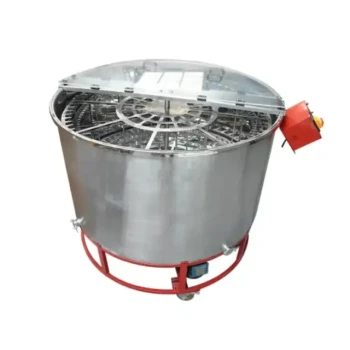
Preserving high-moisture honey at room temperature is fundamentally a battle against fermentation. Industrial dehydration equipment is necessary because specialized honeys, such as Yateí, naturally contain moisture levels exceeding 20%, creating an environment where microbes thrive. By mechanically reducing this water activity, the equipment eliminates the physical conditions required for microbial reproduction, preventing acidity spikes and spoilage without the need for refrigeration.
The Core Stability Principle High moisture content naturally destabilizes honey by inviting rapid fermentation. Industrial dehydration is the only scalable method to lower water activity enough to ensure long-term preservation and chemical stability outside of a cold chain environment.
The Biological Threat: Why Moisture Matters
The Risk of Osmophilic Yeasts
Honey is generally stable due to high sugar concentration, but this stability breaks down when water content rises.
When moisture levels exceed 20% (or 23% for specific varieties like Yateí), osmophilic yeasts become active. These microorganisms feed on the sugars in the honey, leading to fermentation.
The Consequence of Inaction
If left untreated at room temperature, high-moisture honey will rapidly degrade.
The fermentation process causes distinct acidity spikes and spoilage, rendering the product unfit for consumption or sale.
The Mechanism of Dehydration
Reducing Water Activity
Industrial equipment does not simply "dry" the honey; it precisely lowers water activity.
By removing excess water, the equipment deprives bacteria and yeast of the medium they need to reproduce. This essentially "locks" the honey in a stable state.
Preventing Granulation
Beyond biological spoilage, excess moisture affects the physical texture of honey.
Precise thermal processing and dehydration help regulate the honey's physical state, preventing excessive granulation (crystallization). This ensures the product maintains the consistent texture expected in commercial markets.
The Logistical Advantage
Eliminating the Cold Chain
Without dehydration, high-moisture honey must be stored in refrigerators or freezers to inhibit yeast growth.
Industrial dehydration removes this dependency. It allows producers to store and transport honey in non-cold chain environments, significantly reducing logistical costs and complexity.
Meeting International Standards
For producers looking to sell beyond local markets, stability is a regulatory requirement.
Processing honey to remove impurities and control moisture is often essential to meet international food safety regulations and export quality standards.
Understanding the Trade-offs
Precision vs. Quality
While dehydration is necessary for preservation, the process requires precise control.
Industrial-grade equipment uses thermal treatment to inhibit yeast, but this must be balanced carefully. Improperly calibrated heat or dehydration can alter the delicate flavor profiles or chemical properties of unique honey varieties.
Investment vs. Scalability
Implementing this equipment represents a capital investment compared to selling raw, short-shelf-life products.
However, the trade-off yields a product with extended shelf life and higher chemical stability, which is the only pathway to scaling commercial operations for high-moisture varieties.
Making the Right Choice for Your Goal
To determine how to integrate this equipment into your workflow, consider your primary objective:
- If your primary focus is Commercial Scalability: Prioritize dehydration to eliminate cold chain dependency and allow for ambient storage and shipping.
- If your primary focus is Export Compliance: Utilize dehydration and filtration to ensure moisture levels stay strictly below 20% to meet international safety standards.
- If your primary focus is Specialty Honey (e.g., Yateí): Use equipment specifically designed to handle naturally high moisture (>20%) to prevent fermentation while retaining unique characteristics.
Mastering moisture control is the single most critical step in transforming raw, perishable honey into a stable, globally viable product.
Summary Table:
| Feature | High-Moisture Honey (Raw) | Dehydrated Honey (Processed) |
|---|---|---|
| Moisture Content | Often >20% (High risk) | Controlled <20% (Stable) |
| Microbial Activity | High risk of osmophilic yeast | Inhibited / Dormant |
| Storage Needs | Cold chain (Refrigeration) | Room temperature (Ambient) |
| Shelf Life | Short / Unstable | Extended / Commercial-grade |
| Market Reach | Local / Immediate | Global / Export-ready |
Scale Your Honey Business with HONESTBEE
Transitioning from local raw honey sales to global commercial distribution requires precision technology. HONESTBEE specializes in supporting commercial apiaries and distributors with high-performance honey dehydration and filling machinery. Our equipment ensures your products meet international moisture standards while preserving the unique flavor profiles of specialty honeys.
From industrial-grade processing hardware to essential beekeeping consumables and honey-themed cultural merchandise, we provide the full spectrum of tools needed to grow your brand. Contact us today to optimize your honey production workflow.
References
- Ramón Alejandro Martínez, Amada Beatriz Pucciarelli ROMÁN. Influence of temperature and packaging type on quality parameters and antimicrobial properties during Yateí honey storage. DOI: 10.1590/1678-457x.17717
This article is also based on technical information from HonestBee Knowledge Base .
Related Products
- 0.5T Capacity Honey Dehumidifier Dryer with Vacuum Heating and Thickening Filtering Machine
- High Quality Honey Dehumidifier Dryer Thickening Machine for Beekeeping
- Honey Concentrating and Filtering Dehumidifier Machine 2T Capacity for Honey
- Economy Small Scale Honey Dryer Dehumidifier Thickening Machine
- Honey Concentrating Vacuum Heating Thickening Machine Dehumidifier for Honey
People Also Ask
- What is the primary function of professional dehumidification equipment in honey processing? Stability & Quality
- How to dry up honey? The Safe Guide to Stabilizing Honey and Preventing Fermentation
- What is the process for using a dehumidifier to lower honey's moisture content? Expert Drying Techniques
- How to decrease moisture in honey? Prevent Fermentation and Ensure Long-Term Quality
- How to remove humidity from honey? Protect Your Harvest from Fermentation