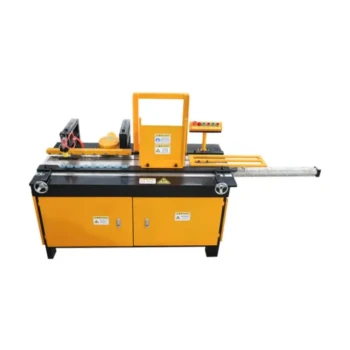
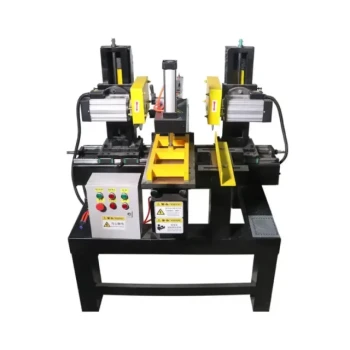
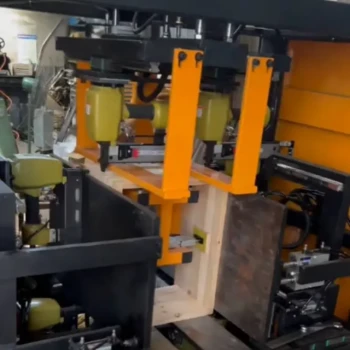
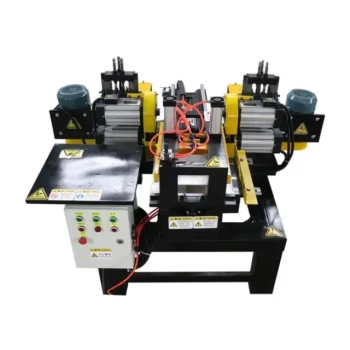
Industrial-grade hive-making machinery is the technological backbone of modern commercial beekeeping because it guarantees high-precision dimensional consistency and structural integrity across thousands of units. This standardization is the critical prerequisite for integrating automated honey extraction systems and ensuring the modular interchangeability of components, which drives labor efficiency and operational scalability.
Core Takeaway In commercial apiaries, a hive is not just a habitat; it is a standardized unit within a mechanized production line. Industrial machinery ensures every component adheres to strict specifications, unlocking the ability to automate extraction, streamline logistics, and maintain biological standards at scale.
The Role of Standardization in Scalability
Ensuring Modular Interchangeability
For a large-scale distributor, interchangeability is non-negotiable. Industrial machinery produces components—such as hive bodies, frames, and bottom boards—that are identical regardless of when they were manufactured.
This uniformity allows operators to swap parts between hives across different apiaries without friction. It significantly reduces management complexity and maintenance costs by eliminating the need to match specific parts to specific hives.
Enabling Automated Extraction
Modern honey production relies heavily on mechanized extraction and filtration equipment. These robots and processing lines require inputs with exact dimensions to function correctly.
If hive components vary even slightly, it causes jams, equipment damage, or inefficient extraction. Industrial-grade machinery provides the foundation for this automation by ensuring total compatibility between the biological housing (the hive) and the processing hardware.
Optimizing Labor Efficiency
When equipment fits perfectly, beekeepers spend less time struggling with stuck frames or mismatched boxes.
Standardized hardware lowers the technical barrier for entry and allows for standardized industrial workflows. This allows commercial operations to achieve economies of scale, increasing labor productivity while managing vastly larger numbers of colonies.
Biological Health and Logistical Efficiency
Maintaining Precise "Bee Space"
Beyond simple fit, machinery ensures adherence to specific scientific bee space standards.
If gaps are too wide, bees build burr comb; if too narrow, they seal them with propolis. Precision manufacturing guarantees the exact gap required for hive health, significantly reducing bee stress and minimizing disturbances during inspections.
Streamlining Transport and Logistics
Commercial operations often involve migratory beekeeping, moving thousands of hives for pollination services.
Standardized hives produced by industrial machines are designed for efficient stacking and large-scale transportation. This structural consistency ensures stability on trucks and maximizes the volume of hives that can be moved safely during honey flow periods.
Biosecurity and Disease Control
A standardized physical environment is fundamental for maintaining biosecurity.
Uniform components facilitate easier cleaning and part replacement, which helps minimize disease transmission between colonies. This consistency helps ensure consistent output and reduces the risks associated with managing biological assets.
Understanding the Trade-offs
High Initial Capital Investment
Implementing industrial-grade machinery requires significant upfront capital compared to manual or small-scale construction methods.
Operations must have sufficient volume to amortize these costs over time. Smaller apiaries may find the cost-to-benefit ratio effectively prohibits this level of internal manufacturing.
Flexibility and Adaptation Limits
Once an operation commits to a specific industrial standard or machine tooling, switching hive styles becomes difficult.
This creates a "lock-in" effect where the operation is tethered to specific dimensions. Innovation in hive design may be slower to implement because it requires re-tooling heavy machinery rather than simply adjusting a manual process.
Making the Right Choice for Your Goal
- If your primary focus is Mechanization: Prioritize machinery that guarantees tolerance levels compatible with your specific brand of automated extraction lines.
- If your primary focus is Logistics: Select equipment that produces high-strength, perfectly stackable components to maximize transport efficiency and durability during migration.
Precision machinery transforms hive construction from a variable craft into a predictable industrial process, securing the stability required for commercial growth.
Summary Table:
| Feature | Impact on Commercial Operations | Key Benefit |
|---|---|---|
| Dimensional Precision | Ensures modular interchangeability of all components | Reduced maintenance & complexity |
| Standardization | Enables compatibility with automated extraction lines | Higher throughput & lower labor costs |
| Scientific Bee Space | Guarantees exact gaps within the hive structure | Improved colony health & easier inspection |
| Structural Uniformity | Allows for stable stacking and migratory transport | Optimized logistics & safer hive movement |
| Industrial Durability | Built for high-volume, long-term production runs | Lower cost-per-unit over time |
Scale Your Beekeeping Enterprise with HONESTBEE
Transitioning from manual labor to industrial efficiency is the hallmark of a successful commercial apiary. At HONESTBEE, we specialize in empowering commercial apiaries and distributors with the tools needed for global competitiveness.
Our comprehensive wholesale portfolio includes:
- Advanced Machinery: High-precision hive-making and honey-filling machines.
- Beekeeping Hardware: A full spectrum of durable tools and equipment.
- Industry Consumables: Essential supplies to keep your operations running smoothly.
- Cultural Merchandise: Unique honey-themed products to diversify your brand.
Whether you are looking to automate your production line or source high-quality components for distribution, HONESTBEE provides the technical expertise and hardware reliability you need to grow.
Ready to optimize your production? Contact us today to discuss your wholesale requirements!
References
- Anatoly Vasilievich Gryazkin, Minh An Hoang. Dynamics of the species composition of honey plants on postagrogenic and forest lands. DOI: 10.28983/asj.y2022i8pp4-7
This article is also based on technical information from HonestBee Knowledge Base .
Related Products
- High-Efficiency Pneumatic Bee Hive Making Machine for Rapid Box Assembly
- Beehive Handle and Frame Rest Cutting Machine: Your Specialized Hive Machine
- Automatic Finger Joints Joint Making Machine for Bee Box and Hive Making
- Beehive Machine Double End Saw for Precision Hive Component Manufacturing
- Mini Desktop Bee Hive Frame Forming Making Machine
People Also Ask
- How does the introduction of professional beehive-making machinery benefit sustainable beekeeping? Scale Your Apiary
- Why is specialized beehive-making machinery critical for low-defense breeding? Enhance Selection with Precision Tools
- How does the introduction of specialized beehive making machinery contribute to increasing the scale of regional beekeeping industries?
- What is the importance of specialized beehive making machinery in a circular bio-economy? Build Local Sustainability
- Why is specialized beehive-making machinery essential? Scale Your Apiary with Precision Industrial Standards