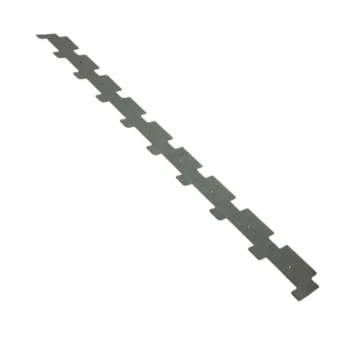
Adding honey supers is the primary mechanism for capacity management during peak honey flows. In migratory beekeeping, where colonies are moved specifically to target nectar-rich areas, adding one or two layers of supers provides the essential physical volume needed to store the incoming harvest. Without this vertical expansion, the colony faces immediate congestion, capping your potential yield and jeopardizing colony stability.
The Core Takeaway Adding supers serves a dual purpose: it creates the necessary "warehouse" space for a massive influx of nectar and effectively suppresses the colony's natural biological urge to swarm due to overcrowding.
The Mechanics of Maximizing Yield
Accommodating Rapid Resource Influx
Migratory beekeeping places colonies in environments with dense floral resources. During these peak flows, the foraging capacity of the colony spikes significantly as bees exploit the new area.
Vertical Expansion as Storage
The hive requires a dynamic method to adjust its internal volume to match this productivity. Adding supers creates vertical expansion, giving workers the immediate space required to offload and cure nectar.
Encouraging Foraging Behavior
The presence of available storage space directly influences bee behavior. Providing sufficient room encourages worker bees to continue collecting nectar, thereby significantly increasing the total honey yield per colony compared to static hive configurations.
Biological Stability and Swarm Control
Alleviating Brood Nest Congestion
A crowded hive triggers a biological alarm. When the brood nest becomes congested with bees and incoming resources, the colony instinctively prepares to reproduce by swarming.
Suppressing the Swarm Instinct
Adding supers functions as a pressure release valve. By relieving overcrowding within the nest, you inhibit the natural swarming instinct.
Maintaining Colony Focus
To achieve high-yield harvesting, the colony must remain intact. Supers ensure the population stays focused on honey production rather than splitting the colony and migrating, which would devastate your season's harvest.
Common Pitfalls to Avoid
The Risk of Late Expansion
Timing is critical in migratory operations. If supers are added too late, the colony may have already initiated swarm preparations or become "honey-bound," where the queen has no room to lay eggs.
Optimizing Migration Timing
For supers to be effective, they must be synchronized with the move. The optimal time to relocate colonies is when approximately 20 percent of target flowers have opened, ensuring immediate attraction to nectar sources and efficient utilization of the new supers.
Making the Right Choice for Your Goal
To maximize the effectiveness of your migratory operation, consider your specific objectives:
- If your primary focus is Maximum Yield: Prioritize adding multiple supers immediately upon arrival at the new site to capitalize on the colony's peak foraging capacity.
- If your primary focus is Colony Stability: Monitor internal congestion closely and add supers proactively to suppress swarming before the brood nest becomes crowded.
By treating space management as a proactive tool rather than a reactive fix, you transform a strong honey flow from a logistical challenge into a record-breaking harvest.
Summary Table:
| Benefit Category | Primary Function | Impact on Productivity |
|---|---|---|
| Capacity Management | Provides vertical storage for nectar | Prevents honey-bound hives and maximizes total yield |
| Biological Control | Alleviates brood nest congestion | Suppresses the swarm instinct to keep the colony intact |
| Behavioral Optimization | Creates space for foragers to offload | Encourages continuous collection during peak floral blooms |
| Risk Mitigation | Acts as a pressure release valve | Avoids colony loss and productivity drops due to late expansion |
Scale Your Apiary Operations with HONESTBEE
Maximize your honey production and operational efficiency with professional-grade solutions from HONESTBEE. As a dedicated partner to commercial apiaries and distributors, we provide a comprehensive wholesale range designed for high-performance beekeeping.
Whether you need to expand your capacity during peak flows or modernize your processing facility, we offer everything from durable honey supers and specialized beekeeping tools to advanced hive-making and honey-filling machinery. Beyond hardware, our portfolio includes a wide array of essential consumables and honey-themed cultural merchandise to help you grow your brand.
Ready to optimize your harvest? Contact us today to discuss our wholesale offerings and discover how HONESTBEE can streamline your beekeeping business.
References
- Tolera Kumsa, Admassu Addi. Migratory Beekeeping as Strategy to Harvest Multiseason Honey in Ethiopia. DOI: 10.1080/0005772x.2020.1812896
This article is also based on technical information from HonestBee Knowledge Base .
Related Products
- Heavy Duty Castellated Iron Frame Spacer for Honey Supers
- Durable 16 Way Circular Bee Escape for Efficient Honey Harvesting
- Double Wall Honey Heating Stirring Homogenizer Mixing Machine with Various Capacity
- Honey Concentrating Vacuum Heating Thickening Machine Dehumidifier for Honey
- Professional Honey Filter with Tripod Support Stand
People Also Ask
- What are honey super frames and what foundation options are available? Choose the Best Support for Your Bees
- What are the reasons and drawbacks of using nine frames in a ten-frame honey super? Boost Extraction Speed Today
- What are honey super frames and how many are needed per box? A Beekeeper's Essential Guide
- What are honey super frames and their foundation options? Choose the Best Support for Your Hive's Honey Production
- Why might a beekeeper use fewer than the standard number of frames in a honey super? Boost Extraction Efficiency