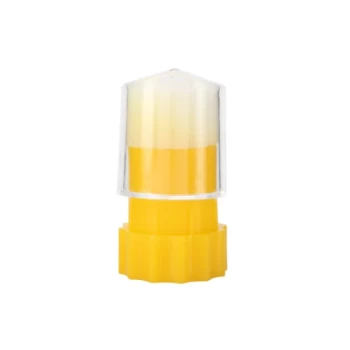
Protecting a queen cell is a critical defensive measure against colony rejection. When introducing a queen cell into a hive that currently has, or recently had, a queen, the resident bees often perceive the new cell as a rival rather than a replacement. Without a physical barrier, worker bees will aggressively dismantle the cell to kill the developing queen inside.
Even in a queenless state, residual pheromones can trick a colony into believing they are still queenright, triggering an instinctual drive to destroy any foreign queen cells.
The Biological Trigger for Rejection
The Role of Residual Pheromones
A colony's behavior is governed by chemical signals. If a hive was recently queenright (meaning it had a laying queen), the specific pheromones of that matriarch linger within the hive.
False Signals
These residual pheromones signal to the worker bees that a queen is still present. Consequently, they view a introduced queen cell not as a savior, but as an intruder or a surplus queen that must be eliminated to maintain colony stability.
The Mechanics of the Attack
Targeting the Weak Point
When worker bees decide to destroy a queen cell, they are highly efficient. They do not typically attack the bottom cap where the queen emerges. Instead, they chew into the side wall of the cell.
Why the Side Wall is Vulnerable
The construction of a queen cell varies in thickness. The cocoon surrounding the pupa is significantly thinner on the sides than it is at the bottom. Bees exploit this structural weakness to quickly access and remove the cell's contents.
How Protection Works
Physical Shielding
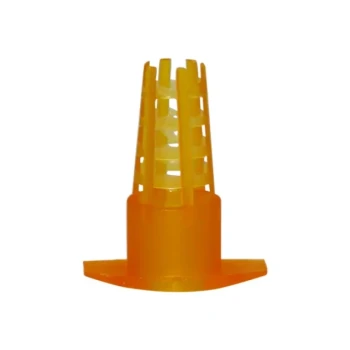
A queen cell protector is designed to cover the vulnerable side walls of the cell. By encasing the sides in a durable material (often plastic), it prevents the workers' mandibles from reaching the thin cocoon layer.
Allowing Emergence
While the sides are shielded, the protector leaves the bottom tip of the cell exposed. This ensures the developing queen can still chew her way out naturally when she is ready to emerge, while remaining safe from external attacks during incubation.
Understanding the Trade-offs
Necessity vs. Redundancy
In a colony that has been queenless for a long duration, pheromones have dissipated, and the bees are often desperate for a queen. in these specific cases, protection is less critical, though using it remains a safe "best practice."
Distinction from Adult Introduction
It is important not to confuse cell protectors with transport cages used for mated adult queens (such as JZ BZ or wooden cages). While both offer protection, adult cages rely on a candy release mechanism, whereas cell protectors rely solely on mechanical shielding of the pupa.
Making the Right Choice for Your Goal
When managing your hive's genetics, apply the following logic to your introduction strategy:
- If your primary focus is a recently split or de-queened hive: You must use a protector, as high pheromone levels make rejection and cell destruction highly probable.
- If your primary focus is a long-term queenless colony: You may introduce a cell without protection, but utilizing a protector acts as low-cost insurance against unexpected aggression.
By physically blocking access to the cell's vulnerable sidewalls, you force the colony to accept the new queen on your terms.
Summary Table:
| Factor | Without Protection | With Queen Cell Protector |
|---|---|---|
| Worker Bee Behavior | Likely to dismantle/chew side walls | Prevented from accessing side walls |
| Rejection Risk | High (especially in recently queenless hives) | Significantly reduced |
| Emergence Path | Unaffected (bottom cap) | Unaffected (bottom cap left exposed) |
| Structural Integrity | Vulnerable at thin side cocoon | Reinforced by durable shielding |
| Success Rate | Variable; depends on pheromone levels | Consistently higher; "Best Practice" insurance |
Maximize Your Apiary's Success with HONESTBEE
At HONESTBEE, we understand that every queen cell represents the future of your colony. As a premier partner for commercial apiaries and distributors, we provide the professional-grade tools you need to minimize risk and maximize productivity. From precision queen cell protectors and transport cages to advanced honey-filling machinery and complete hive-making systems, our comprehensive wholesale catalog is designed to scale your operations.
Don't leave your queen rearing to chance. Partner with HONESTBEE for reliable beekeeping equipment and essential industry consumables that drive results.
Contact Our Wholesale Team Today
Related Products
- JZBZ Style Shipping Cell Protector for Queen Rearing Kit
- JZBZ Style Push-In Cell Protector for Professional Queen Rearing Kits
- Premium Nicot Style Cell Bar Holder and Queen Cell Cup Holder System
- JZBZ Langstroth Queen Rearing Frame for Beekeeping
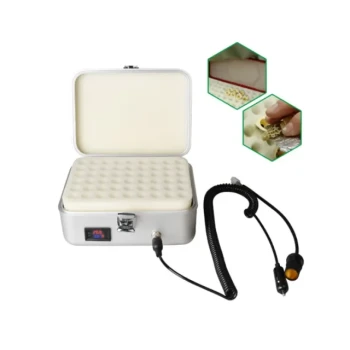
- Portable Queen Bee Incubator with 12V Car Adapter for Safe Transport
People Also Ask
- What is the purpose of queen cell protectors? Safeguard Your Queen Rearing Success
- How can aluminum foil be used to protect a queen cell? Low-Cost Shielding for Queen Introduction
- What are some methods and types of queen cell protectors? Safeguard Your Queen Introduction Process
- What is the primary reason for using queen cell protectors? Secure Your Yield with Proven Protection
- What is the role of queen cell protectors and emergence cages? Secure Your Genetic Stock and Hive Stability