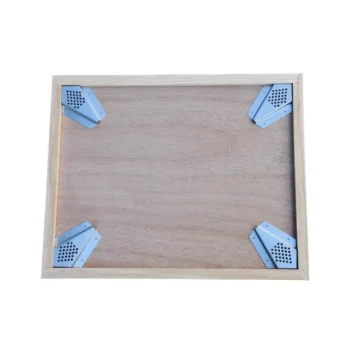
Placing the venom collection plate directly over the top frames is considered the most efficient method because it locates the device within the colony's core activity area. Unlike placement at the hive entrance, this internal position ensures a significantly higher percentage of worker bees come into contact with the electrical stimulation device. This maximizes the number of bees participating in venom deposition per unit of time, resulting in a superior yield of dry venom powder.
By positioning the collector horizontally above the brood nest, you align the device with natural guard bee concentrations and leverage alarm pheromones to continuously recruit more bees to the collection site.
The Mechanics of Hive Placement
Targeting the Core Activity Zone
The primary driver of efficiency is the density of the bee population. Placing the plate over the top internal frames puts the device right where the colony is most active.
This "core activity area" ensures that the electrical grid has the maximum possible exposure to the workforce. This contrasts sharply with external locations, where bee presence fluctuates based on foraging schedules.
Leveraging Guard Bee Concentration
Supplementary data indicates that the uppermost frames are a natural area for guard bees to congregate.
By placing the plate horizontally in this specific zone, you increase the effective surface area available for these defensive bees to contact the grid.
The Pheromone Recruitment Loop
Efficiency is further amplified by the colony's chemical communication. When bees contact the stimulus, they release alarm pheromones.
In the confined space above the top frames, these pheromones effectively signal and attract other individuals to the immediate area. This creates a positive feedback loop that significantly improves the volume of venom collected.
Comparing Placement Strategies
The Limitations of Entrance Placement
While placing a device at the entrance may seem convenient, it fails to capture the full potential of the colony.
Entrance placement relies heavily on traffic flow in and out of the hive. It often misses the dense population of house bees and guards who remain inside the hive structure.
Bottom vs. Top Configuration
Data suggests that bottom-mounted placement yields lower results compared to top-mounted configurations.
The top-mounted position capitalizes on the bees' tendency to move upward and cluster near the top bars, making it the definitive choice for maximum production.
Making the Right Choice for Your Goal
To achieve the best results with your collection equipment, consider the following operational priorities:
- If your primary focus is Maximum Yield: Mount the plate horizontally over the top frames to engage the highest density of guard bees.
- If your primary focus is Time Efficiency: Utilize top placement to exploit the pheromone reaction, which accelerates the recruitment of bees to the device.
By aligning your equipment with the natural behavior of the colony, you convert biological instinct into measurable production output.
Summary Table:
| Placement Location | Yield Efficiency | Bee Population Access | Pheromone Impact | Recommended Use |
|---|---|---|---|---|
| Top Internal Frames | Highest | Core Activity Zone (House & Guard Bees) | High (Positive Feedback Loop) | Commercial Production |
| Hive Entrance | Moderate | Foraging Traffic Only | Low (Open Air Dissipation) | Low-Density Sampling |
| Bottom Placement | Low | Lower Frame Cluster | Moderate | Not Recommended |
Maximize Your Apiary's Production with HONESTBEE
At HONESTBEE, we specialize in empowering commercial apiaries and global distributors with professional-grade beekeeping technology. Whether you are looking for high-efficiency bee venom collection devices, precision honey-filling machines, or durable hive-making machinery, we provide the full spectrum of equipment needed to scale your operations.
Our comprehensive wholesale offering includes everything from essential industry consumables to specialized hardware and unique honey-themed cultural merchandise. Let us help you convert biological instinct into measurable profit.
Ready to upgrade your equipment? Contact us today to learn how our tailored solutions can enhance your efficiency and yield.
References
- Mohamed M. Khodairy, Eslam M. O. Some Factors Affecting Venom Productivity by Electrical Impulses From Honey Bee Colonies. DOI: 10.21608/ajas.2010.267963
This article is also based on technical information from HonestBee Knowledge Base .
Related Products
- Full Set Beekeeping Electronic Bee Venom Collector Machine Device for Bee Venom Collecting
- Durable Plastic Hive Number Set for Beekeeping
- 8 Frame and 10 Frame Propolis Trap Collector Screen for Propolis Collection
- 30 cm Plastic Entrance Hole Bee Pollen Trap and Collector
- Plastic Bee Pollen Trap Strips Comb Catcher Collector
People Also Ask
- How does the glass plate integrated into a bee venom collector contribute to maintaining quality and purity?
- What is the function of specialized collection equipment in the production process of bee venom? Expert Guide
- What is the significance of using specialized bee venom collection devices in commercial beekeeping operations?
- Why are bee venom collection devices typically mounted on specialized wooden carrier boards? Maximize Yield & Purity.
- How does a dedicated bee venom collection device operate? Extract Pure Venom Safely Without Harming Your Bees