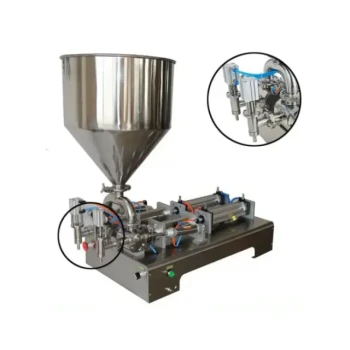
Professional filling and sealing equipment acts as the central defense system for honey quality, bridging the gap between raw production and international export standards. It serves a dual purpose: physically isolating the product to prevent moisture-induced spoilage and mechanically ensuring compliance with strict global labeling and metrology regulations.
Export-grade honey requires more than just distinct flavor; it demands chemical stability and regulatory precision. Professional equipment safeguards the product's low moisture content through hermetic sealing while simultaneously guaranteeing the precise dosage and traceability required for international trade.
Preserving Chemical Integrity and Shelf Life
The Critical Role of Airtight Sealing
Honey is naturally hygroscopic, meaning it readily absorbs moisture from the air. Professional sealing technology provides a superior airtight barrier that effectively isolates the honey from the external environment.
This isolation is the primary defense against microbial fermentation. If moisture levels rise due to a poor seal, dormant yeasts in the honey can activate, causing spoilage and rendering the product unfit for sale.
Managing Viscosity and Heat Sensitivity
Honey is a viscous, heat-sensitive product that degrades if handled improperly. Advanced filling machines utilize specialized valve designs and precision temperature control systems to manage flow without overheating.
This prevents the elevation of Hydroxymethylfurfural (HMF), a compound that indicates heat damage and reduces quality. Furthermore, these systems ensure that botanical markers, such as pollen grains, remain uniformly distributed, maintaining the product's natural consistency.
Ensuring Regulatory and Commercial Compliance
Precision Dosage and Metrology
For export markets, net weight accuracy is a legal requirement, not a suggestion. High-precision filling equipment uses volumetric measurement or weighing sensors to ensure dosage control stays within a minimal deviation range.
This precision meets legal metrology requirements, protecting the exporter from liability. It also minimizes material waste, ensuring that premium product is not given away due to overfilling.
Standardization of Labeling
Automated labeling processes serve as a technical guarantee for long-distance international transport. These systems ensure that every unit complies with international food labeling regulations, which is a prerequisite for passing customs inspections.
By automating this step, producers ensure clear identification and traceability. This minimizes human error and maintains a professional image that builds trust with international buyers.
Hygiene and Contamination Control
Eliminating Human Contact
Manual packaging introduces significant risks of biological contamination. Automated systems operate in a sterile environment, drastically reducing human contact with the open product.
The Anti-Drip Mechanism
Professional equipment integrates anti-drip mechanisms to maintain packaging cleanliness. This prevents sticky residues on the bottle exterior, which can attract contaminants or compromise the aesthetic quality of the finished product.
Understanding the Operational Trade-offs
Complexity and Maintenance
While automation ensures consistency, it introduces technical complexity. Operators must be trained to calibrate sensors and maintain mechanical components to prevent drift in accuracy over time.
Flexibility vs. Speed
High-speed automated lines are optimized for specific bottle sizes. Switching between different packaging formats (e.g., from 250g jars to bulk containers) often requires changeover time that can temporarily impact production throughput.
Making the Right Choice for Your Export Goals
To select the right equipment, you must identify your primary risk factor in the export chain.
- If your primary focus is Shelf Life Stability: Prioritize equipment with vacuum-sealing capabilities and temperature controls to minimize HMF growth and prevent fermentation.
- If your primary focus is Regulatory Compliance: Invest in machines with integrated check-weighing sensors and automated labeling systems to guarantee strict adherence to international metrology laws.
Ultimately, professional packaging equipment is not merely a production tool, but a risk management asset that secures the commercial viability of your honey in the global market.
Summary Table:
| Feature | Quality Control Benefit | Impact on Export |
|---|---|---|
| Airtight Sealing | Prevents moisture absorption & fermentation | Extends shelf life and preserves chemical integrity |
| Precision Dosage | Ensures net weight accuracy via sensors | Meets international metrology laws & reduces waste |
| HMF Control | Specialized valves prevent heat damage | Maintains natural flavor and botanical markers |
| Automated Labeling | Guarantees clear traceability | Ensures smooth customs clearance and professional branding |
| Anti-Drip Tech | Maintains exterior bottle hygiene | Improves aesthetic quality and prevents contamination |
Elevate Your Honey Export Business with HONESTBEE
Transitioning from local production to international trade requires equipment that guarantees precision and purity. At HONESTBEE, we specialize in empowering commercial apiaries and distributors with high-performance honey-filling machines, hive-making equipment, and industrial beekeeping tools.
Our comprehensive wholesale solutions are designed to help you:
- Guarantee Product Stability: Advanced sealing technology to prevent fermentation.
- Ensure Compliance: High-precision machinery that meets strict global metrology and labeling standards.
- Scale Efficiency: Automated systems that reduce human contact and increase throughput.
From specialized hardware to honey-themed cultural merchandise, HONESTBEE provides the full spectrum of tools you need to build a professional brand. Ready to optimize your packaging line? Contact us today to discover our custom wholesale offerings!
References
- Lelisa Gudisa. Assessment of Honey and Beeswax Production with Market Opportunities and Challenges in Ethiopia. DOI: 10.7176/jmcr/86-01
This article is also based on technical information from HonestBee Knowledge Base .
Related Products
- Precision Automated Packaging Turntable Honey Spoon Filling Sealing Packing Machine
- Small Honey Filling Machine Sachet Packing Equipment Single Nozzle
- Double Nozzle Small Honey Filling Machine Honey Sachet Packing Packaging Equipment
- Automatic Honey Filling and Filtering Machine for Beekeeping Bottle Filling
- Precision Durable Efficient HONESTBEE Rotary Honey Filling Machine
People Also Ask
- Why is the use of professional filling and sealing packaging machinery necessary for the production of high-value honey?
- What role do automated filling and packaging machines play in the honey supply chain? Scale Your Retail Distribution
- What are the benefits of automated honey filling and packaging? Scale Your Apiary with Industrial Precision
- What role do professional automated filling and packaging machines play in honey processing? Boost Efficiency & Value
- How do automated honey filling and packaging machines contribute to the market value of honey products? Maximize Your ROI