Specialized monitoring and security infrastructure is mandatory because it safeguards the physical integrity of remote bee colonies, which are the central fixed assets of any apiary operation. By installing remote surveillance and safety fencing, operators ensure the site remains accessible for daily health maintenance, preventing theft or vandalism that would otherwise disrupt the production cycle.
Core Takeaway While mathematical models can predict high honey yields based on location, these predictions are irrelevant without physical security. Infrastructure is the practical prerequisite that converts a location's theoretical potential into realized economic gain by protecting the assets from loss and interruption.
The Operational Necessity of Infrastructure
Protecting Central Fixed Assets
Beehives and colonies represent the financial core of a beekeeping enterprise. They are not merely tools; they are the primary biological and physical assets.
Theft or destruction of these assets results in immediate, significant economic loss. Security infrastructure serves as the essential barrier against these financial risks.
Overcoming Remote Location Risks
High-quality apiary sites are often located in remote plains or hilly regions to maximize forage access. However, isolation makes these sites vulnerable.
Remote surveillance systems bridge the gap between the operator and the site. They provide constant oversight in areas where continuous physical presence is impossible.
Ensuring Operational Continuity
Consolidated production depends on a stable, uninterrupted beekeeping cycle. Any interference creates gaps in production and health management.
Barriers and community patrol mechanisms deter human interference. This ensures that the biological cycle of the colony continues without disruption.
Facilitating Daily Maintenance
A secure site is an accessible site. If an apiary is not secure, technicians cannot safely or reliably perform daily maintenance.
Infrastructure ensures that health monitoring can occur on a predictable schedule. This consistency is vital for maintaining the colony strength required for high-volume production.
Understanding the Trade-offs
Capital Investment vs. Risk Mitigation
Implementing advanced security infrastructure requires an upfront capital expenditure. This increases the initial cost per hive before honey production begins.
However, omitting this cost introduces a "hidden" liability: the total loss of the operation. You are trading liquidity for asset longevity.
Complexity of Remote Systems
Remote surveillance adds a layer of technical complexity to an agricultural operation. These systems require their own power sources and connectivity.
Beekeepers must maintain the monitoring equipment just as they maintain the hives. A failure in the security tech leaves the site temporarily exposed.
Making the Right Choice for Your Goal
To maximize the potential of your selected site, align your infrastructure with your operational objectives:
- If your primary focus is high-volume commercial production: Prioritize physical barriers and fencing to secure the large number of fixed assets required to meet mathematical production models.
- If your primary focus is leveraging remote, high-yield forage zones: Prioritize remote surveillance technology to maintain constant visibility over assets that are difficult to physically patrol.
Security is not an overhead cost; it is the insurance policy that allows high-production beekeeping to exist.
Summary Table:
| Infrastructure Type | Primary Function | Operational Benefit |
|---|---|---|
| Physical Fencing | Deterrence & Exclusion | Prevents theft and vandalism of central fixed assets |
| Remote Surveillance | Real-time Monitoring | Overcomes isolation risks in remote, high-yield forage zones |
| Access Controls | Regulated Entry | Ensures technicians can perform scheduled health maintenance |
| Power/Connectivity | System Support | Maintains the integrity of electronic security & monitoring tools |
Secure Your Apiary Investment with HONESTBEE
Protecting your commercial apiary requires more than just a good location; it demands professional-grade infrastructure. HONESTBEE empowers commercial apiaries and distributors with the robust tools needed to safeguard and scale operations. From high-quality beehive components to specialized honey-filling machinery and industry-essential consumables, we provide a comprehensive wholesale portfolio designed for resilience and efficiency.
Ready to fortify your production? Contact our expert team today to discuss how our full spectrum of beekeeping hardware and specialized machinery can maximize your operational security and economic gain.
References
- Atanas Z. Atanasov, Plamen Hristov. Application of mathematical model for apiaries location evaluation. DOI: 10.22616/erdev.2022.21.tf055
This article is also based on technical information from HonestBee Knowledge Base .
Related Products
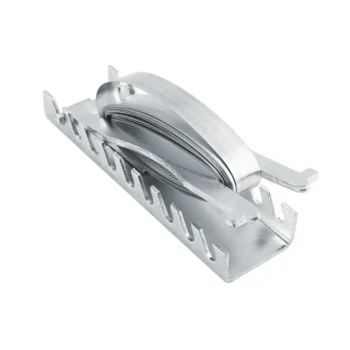
- High Security Emlock Strap System
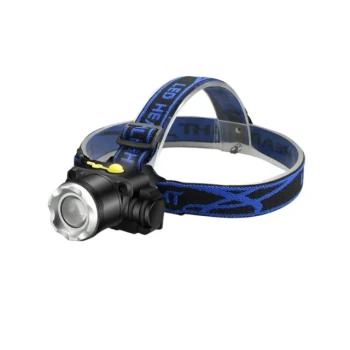
- Professional Rechargeable Beekeeping Headlamp Flashlight with Red Light Mode and Type-C Charging
People Also Ask
- What are the types of Emlocks available? Choose the Right Strap for Hive Security
- How does the performance of ratchet straps compare to cam buckle straps for securing beehives? Expert Comparison Guide
- What role do standardized beehive fastening and protective consumables play? Secure Colonies Against Natural Disasters
- What are the two styles of hive straps? Choose the Right Strap for Your Hive Security
- How should hive straps be stored? Prevent Tangles & Extend Strap Life