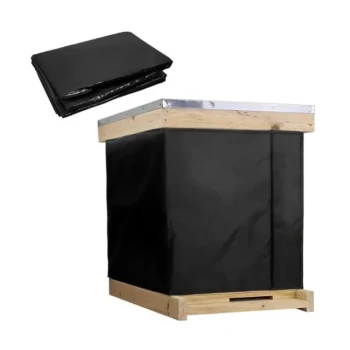
Standardized winter feeding is the critical biological bridge that allows honeybee colonies to survive the resource gap of cold climates. It involves providing precisely formulated professional feeds, such as sugar solutions or energy supplements, to replace scarce natural nectar and ensure colonies possess sufficient, easily digestible energy reserves.
Winter survival for honeybees is a function of energy management and digestive health. Standardized feeding provides a clean fuel source that minimizes metabolic stress, preventing starvation and ensuring the colony retains the vitality required for rapid spring regeneration.
The Biological Imperative for Standardized Feeding
Compensating for Resource Scarcity
In cold climates, natural foraging options disappear completely. Standardized feeding is not merely a supplement; it acts as a calculated substitute for natural nectar. By introducing professional feed before winter sets in, beekeepers ensure the hive has the caloric density required to generate heat without depleting their stores prematurely.
Improving Digestive Health
Winter is a period of confinement where bees cannot leave the hive to eliminate waste. Standardized feeds are formulated to be highly digestible, unlike some natural nectars which may contain high ash content or impurities. This reduces the accumulation of waste in the bees' gut, significantly lowering the risk of fatal digestive diseases like dysentery.
Preserving Energy for Heat Generation
Survival in cold climates depends on the colony's ability to maintain a warm core temperature. Digesting complex food requires energy; digestible professional feed acts as "clean fuel." It allows bees to convert calories into heat efficiently, reducing the physical strain on the cluster and lowering overall winter mortality rates.
Strategic Advantages for Colony Management
Ensuring Rapid Spring Recovery
The ultimate goal of wintering is not just survival, but readiness for the next season. Colonies with stable, standardized nutrition maintain better overall health and immunity. This ensures they possess the potential for rapid production recovery, allowing the queen to ramp up egg-laying immediately once spring conditions arrive.
Supporting High-Demand Colonies
Advanced setups, such as multi-queen colonies, face unique challenges because their hive cells are filled with larvae rather than food storage. These colonies require high-concentration sugar syrup delivered frequently. Standardized systems ensure these high-metabolism hives do not starve due to a lack of physical space for food storage.
Understanding the Trade-offs
The Reliance on Infrastructure
While standardized feeding stabilizes nutrition, it often functions best alongside other interventions. For example, environment-controlled wintering sheds are often needed to reduce the sheer energy consumption required to fight extreme cold. Feeding alone may not be enough if the thermal load on the hive is too extreme for the bees to manage.
Complexity of Implementation
Moving to standardized feeding, particularly with automatic systems, introduces operational complexity. While these systems can precisely deliver probiotics and supplements to reduce Colony Collapse Disorder (CCD), they require capital investment and maintenance. This contrasts with traditional, lower-cost methods that rely heavily on the bees' own fall preparations.
Making the Right Choice for Your Goals
To select the best wintering strategy for your apiary, consider your specific operational objectives:
- If your primary focus is maximizing survival rates: Prioritize high-quality, easily digestible sugar solutions to minimize digestive stress and dysentery risks during confinement.
- If your primary focus is large-scale commercial stability: Integrate automatic feeding systems with environment-controlled sheds to minimize energy consumption and labor while stabilizing colony immunity.
- If your primary focus is multi-queen or high-density hives: Implement a high-frequency feeding schedule using high-concentration syrup to compensate for the lack of internal food storage space.
By controlling the quality and consistency of winter feed, you transform winter from a season of survival into a period of strategic conservation for the spring harvest.
Summary Table:
| Key Factor | Benefit of Standardized Feeding | Impact on Survival |
|---|---|---|
| Energy Source | High-density caloric substitute | Prevents starvation and maintains hive heat |
| Digestive Health | Highly digestible "clean fuel" | Reduces gut waste and prevents winter dysentery |
| Spring Readiness | Preserved colony vitality | Enables rapid egg-laying and production recovery |
| Management | Precise nutrient/probiotic delivery | Minimizes risk of CCD and metabolic stress |
Secure Your Apiary's Future with HONESTBEE
As a commercial apiary or distributor, ensuring the survival of your colonies through harsh winters is the foundation of a profitable spring harvest. HONESTBEE is your strategic partner in this mission. We provide a comprehensive wholesale range of professional beekeeping machinery, specialized hardware—including automated honey-filling and hive-making machines—and high-quality industry consumables designed for large-scale stability.
Why partner with us?
- Scale Your Efficiency: Transition to standardized systems with our advanced equipment.
- Professional Reliability: From hive components to cultural merchandise, we supply every essential tool for commercial success.
- Tailored Solutions: We help you implement the infrastructure needed to protect high-demand colonies.
Contact HONESTBEE today to optimize your wintering strategy and browse our full spectrum of beekeeping machinery and tools.
References
- L.A. Burmistrova, L.V. Prokofieva. Problems of beekeeping in the Russian Federation. DOI: 10.30917/att-vk-1814-9588-2018-2-5
This article is also based on technical information from HonestBee Knowledge Base .
Related Products
- HONESTBEE Entrance Bee Feeder Efficient Hive Front Liquid Feeding Solution for Beekeeping
- Professional Insulated Winter Hive Wrap for Beekeeping
- 3.5L Plastic Beehive Frame Feeder Deep Frame Water Feeder for In Hive Use
- HONESTBEE Professional Hive Top Bee Feeder Feeding Solution
- Professional Hive Top Bee Feeder for Beekeeping
People Also Ask
- What types of bee feeders are available for beginners? Start with the Simple Entrance Feeder
- What are the advantages and disadvantages of using an entrance feeder for bees? Balance Convenience and Hive Security.
- What is a bee entrance feeder and what are its drawbacks? Essential Guide to Hive Security and Feeding Efficiency
- How does a bee entrance feeder work? A Simple Guide to Convenient Hive Feeding
- How to make an entrance feeder for bees? A DIY Guide for Safe & Effective Feeding