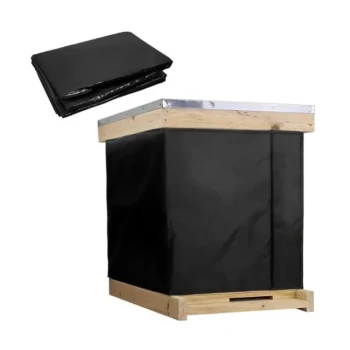
The application of thermal insulation is a fundamental necessity for protecting honeybee colonies because bees are biologically distinct in their sensitivity to environmental temperature fluctuations. By adding insulation layers to hive walls, you artificially stabilize the internal nest environment, which significantly reduces the metabolic energy the colony must expend to generate heat and allows them to preserve vital food stores during winter or periods of nectar scarcity.
By stabilizing the hive's internal climate, insulation transforms a colony's focus from desperate survival to sustainable maintenance. It acts as an energy shield, preserving food stores and protecting the reproductive cycle when the external environment is hostile.
The Physiology of Energy Conservation
Minimizing Metabolic Burn
Honeybees do not hibernate; they vibrate their wing muscles to generate heat. This process consumes vast amounts of energy derived from their honey stores.
When a hive is uninsulated, heat escapes rapidly through the walls. The bees must consume more food to compensate for this loss, risking starvation if stores run out before spring.
Stabilizing Internal Temperature
The primary function of insulation is to dampen the shock of external weather swings. It allows the colony to maintain a constant internal temperature with minimal effort.
This thermal regulation creates a steady environment. It prevents the cluster of bees from having to constantly contract and expand to fight off the cold.
Protecting the Colony's Future
Safeguarding the Queen
The queen's productivity is directly linked to the hive's thermal stability. If the internal temperature drops too low, the queen may cease egg-laying activity to conserve colony resources.
Insulation keeps the brood nest warm enough for the queen to continue laying. This ensures the population does not crash during prolonged cold snaps.
Ensuring Larval Survival
Developing bees are even more sensitive than adults. Larval development requires a precise temperature range to be successful.
Insulation prevents "chilled brood," a condition where larvae die due to cold exposure. By protecting the larvae, you ensure a healthy workforce is ready to emerge when the weather warms.
Maintaining Foraging Potential
A colony that emerges from winter strong and populous has immediate foraging potential. Weak colonies must spend the spring rebuilding numbers rather than gathering nectar.
Insulation ensures high colony survival rates. This directly translates to a more productive season as soon as the nectar flow begins.
Understanding the Trade-offs
The Moisture Variable
While insulation retains heat, it can also trap moisture generated by the bees' respiration. Wet insulation loses its effectiveness and condensation can kill bees if it drips onto the cluster.
Management Complexity
Adding insulation introduces an extra layer of equipment management. Beekeepers must ensure the materials used do not impede necessary ventilation or harbor pests between the hive walls and the insulation layer.
Making the Right Choice for Your Goal
To apply this effectively, consider your specific objective for the colony:
- If your primary focus is Overwintering Survival: Prioritize high R-value materials on the hive walls and top cover to minimize calorie consumption and prevent starvation.
- If your primary focus is Early Spring Production: Use insulation to maintain brood nest warmth, encouraging the queen to lay eggs earlier and ensuring a large foraging force is ready for the first bloom.
Ultimately, thermal insulation is not just about keeping bees warm; it is about resource management, allowing the colony to invest energy in growth rather than survival.
Summary Table:
| Benefit | Impact on Colony | Practical Goal |
|---|---|---|
| Energy Conservation | Reduces metabolic burn and honey consumption | Overwintering survival and starvation prevention |
| Thermal Stability | Maintains constant internal temperature | Minimizes stress on the bee cluster |
| Queen Support | Encourages consistent egg-laying activity | Early spring population growth |
| Brood Protection | Prevents "chilled brood" and larval death | Ensuring a healthy, emerging workforce |
| Resource Management | Shifts focus from survival to growth | Maximizing foraging potential for nectar flow |
Maximize Your Apiary's Productivity with HONESTBEE
At HONESTBEE, we understand that protecting your colony's thermal environment is critical for commercial success. Whether you are a professional beekeeper or a large-scale distributor, our comprehensive wholesale portfolio offers the specialized tools you need to thrive. From high-efficiency hive-making machinery and honey-filling systems to essential insulation-ready hardware and beekeeping consumables, we provide the equipment that turns survival into growth.
Ready to scale your beekeeping operations? Contact us today to explore our wholesale range and see how HONESTBEE can enhance your efficiency and yield.
References
- Prabin. K. Poudel, N.B Singh. STUDY OF FORAGING BEHAVIOR OF APIS CERANA DURING SUMMER IN SUNDARBAZAR, LAMJUNG, NEPAL. DOI: 10.26480/bda.02.2022.54.57
This article is also based on technical information from HonestBee Knowledge Base .
Related Products
- Professional Insulated Winter Hive Wrap for Beekeeping
- Professional Insulated Plastic Bee Hives
- Inner Beehive Cover for Beekeeping Bee Hive Inner Cover
- Stainless Steel Round Beehive Air Vents for Ventilation
- Styrofoam Mini Mating Nuc Box with Frames Feeder Styrofoam Bee Hives 3 Frame Nuc Box
People Also Ask
- What are the steps to properly wrap a beehive for winter? Ensure Your Colony Survives the Cold
- When is the best time to wrap a beehive for winter? A Guide to Perfect Winterization Timing
- How do professional insulation wraps provide protection for bee colonies? Optimize Winter Survival & Energy Efficiency
- What are the technical benefits of using winter wraps for beehive insulation? Boost Colony Survival & Hive Health
- What are the benefits of using insulated covers for hives? Ensure Colony Survival and Health