Scaling a beekeeping operation requires a fundamental shift from manual labor to automated systems to avoid diminishing returns. As colony numbers rise, manual management hits a hard labor bottleneck, where adding more employees becomes cost-prohibitive and inefficient. Specialized equipment solves this by automating the entire production cycle—from hive construction to honey filtration—allowing you to expand capacity and yield without a linear increase in overhead costs.
Specialized machinery transforms beekeeping from a labor-intensive craft into a scalable industrial operation. By enforcing standardization and automating repetitive tasks, equipment acts as the necessary lever to expand production capacity while stabilizing operational costs.
Overcoming the Labor Bottleneck
The Limits of Manual Management
In the early stages of beekeeping, manual oversight is manageable. However, as the number of colonies increases, the sheer volume of tasks reaches a critical threshold.
Relying solely on human labor at this stage restricts growth. The implementation of specialized equipment removes this dependency, allowing a business to manage a significantly larger number of colonies with the same or fewer personnel.
Comprehensive Process Automation
To effectively scale, automation must cover the entire production cycle. This is not limited to just honey extraction.
Effective industrialization includes machinery for hive maintenance, pollen collection, and honey filtration. By addressing every stage of production, you prevent bottlenecks from simply moving from one part of the process to another.
The Strategic Value of Standardization
High-Precision Hive Construction
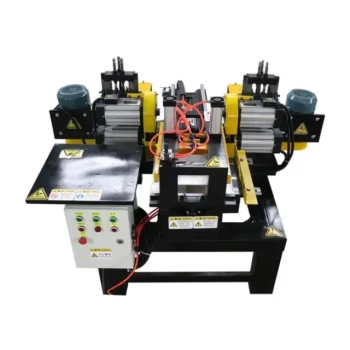
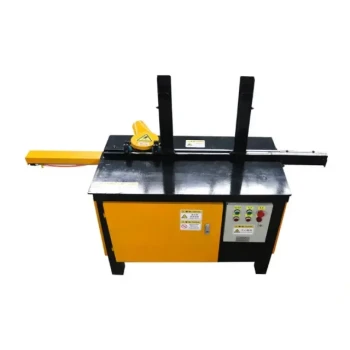
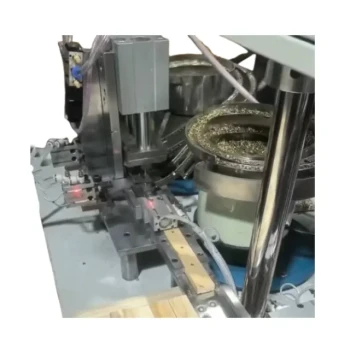
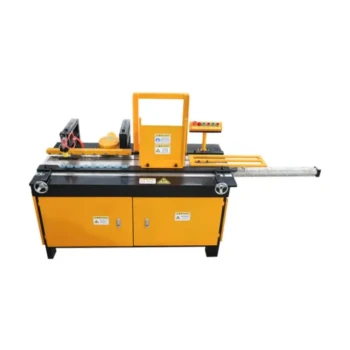
Scaling requires consistency that manual craftsmanship cannot provide. Industrial-grade hive-making machines utilize high-precision cutting and assembly processes to mass-produce hive components.
This machinery ensures that every hive component meets exact physical specifications. This uniformity is impossible to achieve with manual construction at scale.
Interchangeability and Efficiency
The primary benefit of this precision is equipment interchangeability. When all hive components are identical, maintenance becomes faster and less expensive.
Standardized parts allow for the implementation of scientific housing for bee colonies. This uniformity reduces the complexity of managing thousands of hives, as parts can be swapped instantly without customization or repair.
Economic and Operational Implications
Reducing Unit Costs
Mass production through automation directly impacts the bottom line. By using hive-making machines, you significantly reduce the manufacturing and maintenance costs of individual hives.
This reduction in per-unit cost is essential for transitioning from a small-scale operation to a professional, industrial-scale apiary.
Meeting Global Standards
For businesses aiming for international markets, consistency is mandatory. Standardized equipment serves as the hardware guarantee for consistent honey output.
Uniform hives facilitate mechanized honey collection, ensuring the product meets the rigorous quantity and quality requirements of international export markets.
Understanding the Trade-offs
The Necessity of Hardware Support
Transitioning to an industrial scale is not merely a change in mindset; it is a hardware-dependent shift. You cannot achieve "professional" status while retaining "amateur" equipment.
The trade-off involves a significant upfront investment in industrial-grade machinery. However, without this hardware support, attempting to scale leads to operational chaos and inconsistent product quality that fails to meet export standards.
Rigidity vs. Flexibility
While manual beekeeping allows for on-the-fly adjustments to individual hives, industrial beekeeping relies on rigid standardization.
Adopting this equipment means committing to a specific ecosystem of parts and processes. The system gains efficiency and speed, but it loses the bespoke flexibility of small-scale management. This is a necessary sacrifice for achieving high-volume production.
Making the Right Choice for Your Goal
To determine how to implement this equipment, assess your primary business objective:
- If your primary focus is Cost Reduction: Prioritize hive-making machinery to lower the manufacturing and maintenance costs of your physical infrastructure.
- If your primary focus is Global Export: Focus on end-to-end standardization equipment to ensure your honey output meets the strict consistency requirements of international markets.
- If your primary focus is Rapid Expansion: Invest in high-performance processing machinery (filtration and collection) to maximize total yield without needing to hire a massive workforce.
Standardization at the production front end is the only way to guarantee sustainable, industrial-scale output.
Summary Table:
| Aspect | Manual Beekeeping | Industrialized Beekeeping |
|---|---|---|
| Labor Efficiency | High dependency; limits growth | Automation removes bottlenecks |
| Consistency | Bespoke and variable | High-precision standardization |
| Maintenance | Custom repairs required | Rapid part interchangeability |
| Cost Structure | High per-unit labor costs | Lower manufacturing/overhead costs |
| Market Scope | Local/Amateur scale | International export ready |
Scale Your Apiary with HONESTBEE
Transitioning from a craft to an industrial operation requires more than just more bees—it requires the right hardware. HONESTBEE empowers commercial apiaries and distributors with the specialized machinery needed to eliminate labor bottlenecks and standardize production.
From high-precision hive-making machines to automated honey-filling systems and essential industry consumables, our comprehensive wholesale portfolio is designed to lower your unit costs and meet global export standards. Whether you are expanding your colony count or supplying the next generation of professional beekeepers, we provide the industrial-grade tools to ensure your success.
Ready to professionalize your production?
Contact HONESTBEE today for expert equipment solutions
References
- Kaltrinë Bislimi. Determinants of family entrepreneurship in the beekeeping sector. DOI: 10.1108/jfbm-07-2020-0070
This article is also based on technical information from HonestBee Knowledge Base .
Related Products
- Full Set Beekeeping Electronic Bee Venom Collector Machine Device for Bee Venom Collecting
- Stainless Steel J Hook Hive Tool for Beekeeping
- HONESTBEE 15-in-1 Beekeeper Multi-Tool with Hammer and Pliers for Beekeeping
- HONESTBEE Top Bar & Bottom Bar Forming Machine | Bee Frame Machine
- HONESTBEE Professional Mini J-Hook Hive Tool for Beekeeping
People Also Ask
- How does the glass plate integrated into a bee venom collector contribute to maintaining quality and purity?
- What is the function of specialized collection equipment in the production process of bee venom? Expert Guide
- What is the significance of using specialized bee venom collection devices in commercial beekeeping operations?
- Why are bee venom collection devices typically mounted on specialized wooden carrier boards? Maximize Yield & Purity.
- How does a dedicated bee venom collection device operate? Extract Pure Venom Safely Without Harming Your Bees