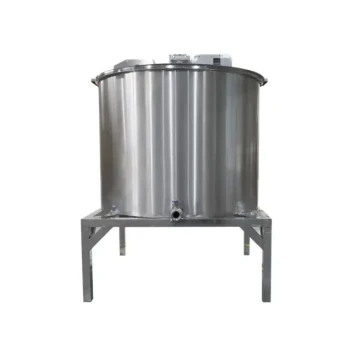
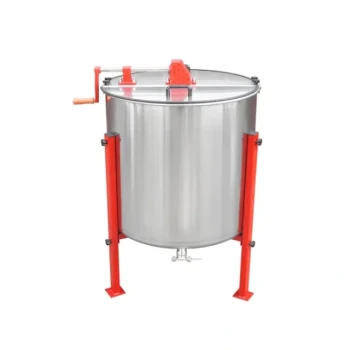
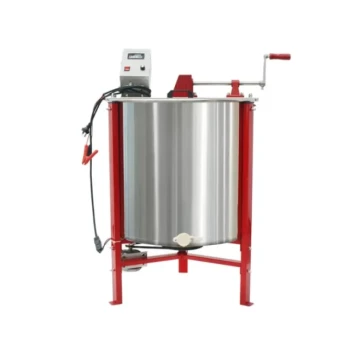
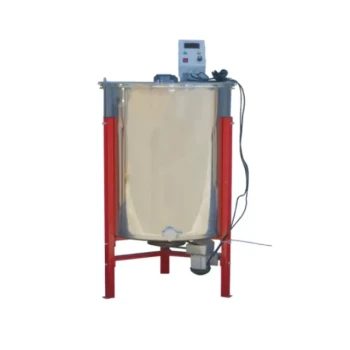
The use of professional food-grade extraction machinery is a non-negotiable standard for ensuring the safety and purity of commercial honey. Primarily, this equipment prevents secondary contamination by eliminating the introduction of heavy metals and chemical pollutants during the critical stages of collection, fumigation, and extraction.
Utilizing standardized processing equipment is the only reliable method to bridge the gap between raw apiary output and a safe, commercially viable product. It isolates honey from external environmental risks while strictly adhering to modern food safety protocols.
Protecting Chemical Purity and Safety
Preventing Heavy Metal Contamination
The most critical function of professional food-grade machinery is the prevention of secondary contamination. Unlike ad-hoc or manual tools, these machines are designed with materials that do not leach heavy metals or chemical pollutants into the honey.
Establishing a Hygienic Barrier
A professional extraction environment acts as a physical isolation zone. It shields the honey from external dust, pests, and environmental pollutants during the vulnerable transition from hive to bottle.
Managing Critical Control Points (HACCP)
Industrial extraction and bottling machinery are identified as "critical risk nodes" in food safety protocols. Using equipment capable of thorough sterilization ensures that no external impurities or microbial residues compromise the product's safety profile.
Preserving Bioactive Quality
Minimizing Oxidation and Air Exposure
Professional machinery utilizes centrifugal or high-efficiency pressing technologies to separate honey rapidly. This speed significantly reduces exposure to air, preserving the honey's physical quality and preventing the degradation that occurs with prolonged processing.
Retaining Natural Enzymes
Specialized equipment employs precise physical controls rather than aggressive heating or straining. This maximizes the retention of natural active ingredients and bioactive components, ensuring the honey maintains its nutritional integrity.
Protecting Flavor Profiles
Automated filling machines use sanitary-grade pumping systems designed for varying viscosities. These systems ensure sterile packaging without compromising the natural flavor profile or introducing "off-flavors" often associated with improper handling.
Commercial Viability and Efficiency
Maximizing Net Output
Modern extraction technology significantly reduces the waste associated with manual methods. By efficiently separating honey from wax, producers increase their net yield, directly impacting the profitability of the operation.
Standardized Packaging for Export
To enter international markets, honey must be packaged with precise measurements and tamper-evident seals. Standardized filling equipment ensures every unit meets these rigorous commercial specifications, unlocking distribution channels that are closed to manual operations.
Processing High-Value By-products
Professional machinery is not limited to liquid honey; it allows for the safe processing of sensitive by-products. This includes propolis, beeswax, royal jelly, and bee venom, all of which require specialized handling to remain commercially viable.
Understanding the Operational Trade-offs
Maintenance Rigor is Mandatory
While professional equipment reduces contamination risk, it introduces a requirement for strict maintenance. If these complex machines are not sterilized according to standardized workflows, they can become a vector for the very bacteria they are designed to eliminate.
Initial Capital vs. Long-term Yield
The shift to professional food-grade machinery represents a significant upfront capital investment. This cost must be weighed against the long-term gains in waste reduction, higher market pricing, and the ability to export, rather than viewed solely as an immediate expense.
Making the Right Choice for Your Goal
To determine the appropriate level of investment in processing equipment, consider your primary operational objectives:
- If your primary focus is Food Safety Compliance: Prioritize food-grade extraction machinery that eliminates heavy metal contact and supports rigorous sterilization protocols (HACCP).
- If your primary focus is Market Expansion: Invest in standardized filling and sealing equipment that ensures precise measurements and professional packaging suitable for retail and export.
- If your primary focus is Product Quality: Select centrifugal extraction technology that minimizes air exposure to preserve the bioactivity and flavor profile of the honey.
Professional processing equipment is not merely a tool for speed; it is the foundational infrastructure required to transform raw agricultural output into a safe, high-value consumer product.
Summary Table:
| Feature | Professional Food-Grade Machinery | Manual/Non-Standardized Methods |
|---|---|---|
| Contamination Control | Prevents heavy metal leaching; HACCP compliant | High risk of secondary pollutants and debris |
| Nutritional Integrity | Minimizes oxidation; retains bioactive enzymes | High risk of degradation and flavor loss |
| Yield & Efficiency | Maximizes net output; reduces honey waste | Significant product loss in wax/residue |
| Market Readiness | Standardized packaging for retail & export | Limited to local/unregulated distribution |
| By-product Utility | Processes propolis, beeswax, and royal jelly | Limited primarily to liquid honey extraction |
Elevate Your Apiary’s Commercial Potential with HONESTBEE
Transitioning to professional-grade equipment is the most critical step for any commercial apiary or distributor aiming for international market success. At HONESTBEE, we specialize in providing the foundational infrastructure you need to scale.
From food-grade extraction and honey-filling machines to specialized hive-making hardware and industrial consumables, our comprehensive wholesale offerings ensure your honey maintains its purity and nutritional integrity. Whether you are expanding a commercial operation or supplying the industry as a distributor, we deliver the precision machinery required to meet global food safety standards.
Ready to maximize your yield and protect your product quality?
Contact us today to explore our full spectrum of beekeeping solutions
References
- Milica Živkov Baloš, Sandra Jakšić. TOXIC ELEMENTS AS A RISK FACTOR FOR THE SURVIVAL OF THE HONEY BEES (Apis mellifera L.). DOI: 10.46784/eavm.v14i2.276
This article is also based on technical information from HonestBee Knowledge Base .
Related Products
- Stainless Steel Manual 8 Frame Radial Honey Extractor Machine for Beehives
- 32 Frame Commercial Electric Honey Extractor for Beekeeping and Honey Production
- HONESTBEE 3-Frame Manual Acrylic Honey Extractor
- 6 Frame Manual Stainless Steel Honey Extractor Beekeeping Equipment
- 10L Stainless Steel Electric Honey Press Machine
People Also Ask
- What types of beehive frames are compatible with honey extractor machines? Find the Perfect Match for Your Apiary
- Which type of honey extractor is generally more durable? Focus on Material & Build Quality for Longevity
- What are the key features and benefits of a stainless steel honey extractor? Upgrade to Professional Purity
- What are the disadvantages of a manual honey extractor? Overcome Efficiency Bottlenecks in Your Apiary
- What is a manual honey extractor? The Essential Guide to Cost-Effective Beekeeping for Beginners