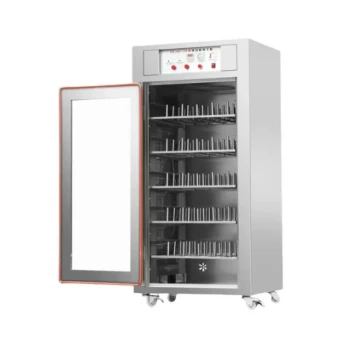
Vacuum freeze-drying equipment is strictly required because it preserves the integrity of heat-sensitive biological compounds by removing moisture through sublimation rather than evaporation. By bypassing the liquid state entirely, this technology dehydrates bee products like royal jelly and bee venom without exposing them to the destructive temperatures associated with traditional drying methods.
Core Takeaway Bee products derive their commercial and therapeutic value from complex proteins and enzymes that decompose rapidly under heat. Vacuum freeze-drying utilizes a low-temperature vacuum environment to stabilize these bioactive components, extending shelf life and ensuring the final product retains its full potency for pharmaceutical or nutritional use.
The Critical Need for Temperature Control
Preventing Protein Denaturation
Bee venom and royal jelly are rich in active proteins, polypeptides, and enzymes. These components are chemically fragile; exposure to heat causes them to decompose or denature, rendering them biologically inert.
Preserving Key Bioactive Markers
Specific high-value indicators define the quality of these products, such as Melittin in bee venom and 10-hydroxy-2-decenoic acid (10-HDA) in royal jelly. Freeze-drying maximizes the retention of these specific compounds, ensuring the product meets pharmaceutical and cosmetic grade standards.
How the Technology Works
The Mechanics of Sublimation
Vacuum freeze-drying, or lyophilization, operates on the principle of sublimation. The equipment creates an environment where frozen water transitions directly from a solid ice phase to gas, bypassing the liquid phase completely.
Operating Parameters
Industrial lyophilizers typically operate at extremely low temperatures ranging from -10°C to -50°C. Simultaneously, the system maintains high vacuum pressures (approximately -0.8 bar) to facilitate the efficient removal of moisture.
Achieving Optimal Moisture Content
This process effectively reduces the moisture content of the raw material to below 5%. This low moisture level is critical for preventing microbial growth and chemical reactions that occur in the presence of water.
Enhancing Chemical Stability
Stopping Autolysis
Biological materials contain internal proteases (enzymes) that can digest the product from within, a process known as autolysis. By removing moisture at low temperatures, freeze-drying effectively halts these internal reactions.
Preventing Oxidation
The vacuum environment removes air from the processing chamber. This lack of oxygen prevents oxidative stress, which can otherwise degrade the potency and alter the chemical structure of sensitive ingredients.
Commercial and Logistical Advantages
Improved Shelf Life and Transportability
Raw royal jelly and bee venom are unstable at room temperature. Freeze-drying converts these volatile substances into stable powders or crystalline forms that can be stored and transported at room temperature without degradation.
Solubility and Rehydration
Unlike heat-dried products, which may harden or lose solubility, freeze-dried bee products retain a porous physical structure. This ensures they possess superior rehydration properties, making them easier to formulate into end-products.
Common Pitfalls to Avoid
The Risk of Thermal Drying
It is a critical mistake to attempt processing these materials with standard thermal drying methods. Heat drying does not merely reduce quality; it can completely destroy the enzymes and volatile fatty acids that give the product its value.
Necessity of Process Precision
Effective preservation requires strict adherence to the sublimation curve. Failing to maintain the specific vacuum and temperature parameters (e.g., rising above -10°C too early) can lead to partial melting, which reactivates degradation pathways.
Making the Right Choice for Your Goal
If your primary focus is Pharmaceutical Potency: Prioritize equipment that guarantees precise temperature control below -50°C to protect fragile peptides like Melittin from denaturation.
If your primary focus is Global Logistics: Focus on the equipment's ability to consistently reduce moisture content below 5%, as this allows for cost-effective, non-refrigerated transportation of the raw materials.
If your primary focus is Product Formulation: Value the lyophilization process for its ability to create a highly soluble powder, which simplifies the manufacturing of standardized tablets, creams, or serums.
Investing in vacuum freeze-drying is not a luxury for bee products; it is the only method that bridges the gap between raw biological potential and a stable, marketable commodity.
Summary Table:
| Feature | Vacuum Freeze-Drying (Lyophilization) | Traditional Thermal Drying |
|---|---|---|
| Processing Temp | -10°C to -50°C (Ultra-low) | High Heat (Destructive) |
| Mechanism | Sublimation (Ice directly to Gas) | Evaporation (Liquid state) |
| Bioactive Retention | Preserves proteins, enzymes, & 10-HDA | High risk of denaturation |
| Final Moisture | < 5% (Stops microbial growth) | Variable/Inconsistent |
| Shelf Life | Long-term stability at room temp | Requires constant refrigeration |
| Rehydration | Superior; porous structure | Poor; hardened texture |
Maximize the Value of Your Apiary’s Yield
Preserving the delicate biological integrity of royal jelly and bee venom requires more than just standard equipment—it requires precision engineering. At HONESTBEE, we specialize in empowering commercial apiaries and distributors with the professional-grade tools needed to transform raw biological materials into high-value, stable commodities.
Our value to your business includes:
- Comprehensive Wholesale Solutions: From advanced vacuum freeze-drying machinery to honey-filling and hive-making equipment.
- Industry Expertise: We supply the full spectrum of beekeeping tools and essential consumables designed for pharmaceutical and nutritional grade standards.
- Commercial Growth: Our machinery ensures your products retain maximum potency (like Melittin and 10-HDA), making them ready for global export and premium markets.
Ready to upgrade your processing capabilities? Contact HONESTBEE today for a consultation and explore our full range of professional beekeeping machinery and cultural merchandise.
References
- Savica Dimitrieska, Tanja Efremova. PROBLEMS IN THE PROMOTION OF HONEY AND BEE PRODUCTS. DOI: 10.37708//ep.swu.v10i1.2
This article is also based on technical information from HonestBee Knowledge Base .
Related Products
- 0.5T Capacity Honey Dehumidifier Dryer with Vacuum Heating and Thickening Filtering Machine
- HONESTBEE Professional Cabinet Bottle Dryer
- Economy Small Scale Honey Dryer Dehumidifier Thickening Machine
- High Quality Honey Dehumidifier Dryer Thickening Machine for Beekeeping
- Honey Concentrating Vacuum Heating Thickening Machine Dehumidifier for Honey
People Also Ask
- What is the primary function of professional dehumidification equipment in honey processing? Stability & Quality
- How to dry up honey? The Safe Guide to Stabilizing Honey and Preventing Fermentation
- What is the process for using a dehumidifier to lower honey's moisture content? Expert Drying Techniques
- How to decrease moisture in honey? Prevent Fermentation and Ensure Long-Term Quality
- How to remove humidity from honey? Protect Your Harvest from Fermentation