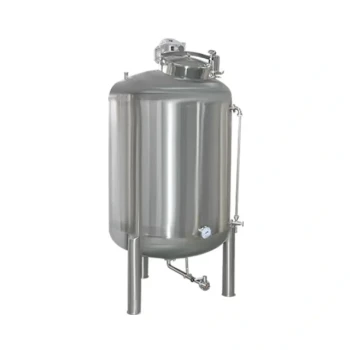
Immediate thermal stabilization is critical for royal jelly integrity. Because royal jelly contains unstable monosaccharides, disaccharides, and active proteins, it undergoes rapid oxidation, fermentation, and degradation at room temperature. Storing samples in industrial-grade ultra-low temperature equipment (typically -16°C or lower) immediately after collection is the only effective way to arrest these processes and preserve the sample's chemical composition for accurate analysis.
The biological complexity of royal jelly makes it inherently volatile. Without immediate deep freezing to halt enzymatic activity, the sample's chemical profile shifts, rendering subsequent testing for sugar levels and bioactive potency scientifically invalid.
The Chemistry of Instability
To understand the necessity of ultra-low temperature storage, one must first understand the fragile molecular structure of royal jelly. It is not merely a foodstuff; it is a complex bioactive matrix.
Vulnerability of Sugars and Proteins
According to the primary technical data, the monosaccharides and disaccharides in royal jelly are highly prone to fermentation. Simultaneously, its active proteins face immediate risks of oxidation.
If left at ambient temperatures, these components degrade, altering the fundamental chemical profile of the substance. This degradation happens quickly, necessitating immediate intervention.
Protecting Bioactive Markers
Beyond sugars, royal jelly contains unique, heat-sensitive components like 10-hydroxy-2-decenoic acid (10-HDA) and the protein royalisin.
These compounds are the primary markers for the jelly's quality and biological potency. Deep freezing prevents the breakdown of these specific fatty acids and amino acids, ensuring the sample remains representative of its state at harvest.
Why Industrial-Grade Equipment is Required
Standard refrigeration is insufficient for scientific or high-quality commercial preservation. The requirement for industrial-grade and ultra-low temperature equipment stems from the need to fully inhibit, rather than just slow down, biological activity.
Rapid Inhibition of Enzymatic Activity
Enzymes within royal jelly remain active until temperatures drop significantly. Industrial-grade equipment is designed to lower temperatures rapidly to -16°C to -22°C.
This speed is essential to "freeze" the biological clock of the sample. A slow decline in temperature allows enzymatic reactions to continue, compromising the data integrity regarding sugar levels and nutrient composition.
halting Microbial Metabolism
Royal jelly is susceptible to microbial growth, which can spoil the sample and skew analytical results.
Ultra-low temperatures effectively stop microbial metabolism. This maintains the natural antibacterial potency of the jelly—specifically against pathogens like Paenibacillus larvae—and ensures the material remains sterile and stable.
Ensuring Data Accuracy
For researchers and quality control specialists, the ultimate goal is analytical representativeness.
If a sample oxidizes or ferments before analysis, the resulting data on sugar levels and protein content will be false. Deep freezing ensures that the laboratory results accurately reflect the original composition of the royal jelly as it existed in the hive.
Understanding the Trade-offs: Refrigeration vs. Deep Freezing
It is a common misconception that standard refrigeration (approx. 5°C) is adequate for long-term storage or analytical samples.
The Limitations of Standard Refrigeration
While keeping royal jelly at 5°C can delay increases in viscosity and slow down spoilage, it does not completely halt chemical decomposition.
At these "merely cold" temperatures, slow oxidation and enzymatic breakdown continue. This is acceptable for short-term consumption but unacceptable for analytical samples requiring precise chemical profiling.
The Necessity of Darkness
While temperature is the primary factor, light exposure also triggers photolytic reactions that degrade 10-HDA.
Therefore, ultra-low temperature storage is often combined with light-shielding opaque containers. Relying on freezing alone without light protection can still lead to the degradation of photosensitive lipid components.
Making the Right Choice for Your Goal
The rigor of your storage method should match the intent of your usage.
- If your primary focus is Analytical Accuracy: You must use industrial freezers at -16°C or lower immediately upon collection to validate sugar levels and protein structures.
- If your primary focus is Commercial Potency: You should prioritize rapid deep freezing to preserve the 10-HDA content and antibacterial properties that define market value.
Preserving royal jelly is not about keeping it fresh; it is about suspending its biological activity to ensure the data you extract is true.
Summary Table:
| Storage Factor | Impact on Royal Jelly | Recommended Condition |
|---|---|---|
| Temperature | -16°C to -22°C (Industrial Grade) | Halts enzymatic activity & fermentation |
| Timing | Immediate after collection | Prevents rapid oxidation of active proteins |
| Light | Opaque/Light-shielding containers | Prevents photolytic degradation of 10-HDA |
| Microbial Control | Ultra-low temperature | Stops metabolism of spoilage microorganisms |
Maximize Your Royal Jelly Quality with HONESTBEE
At HONESTBEE, we understand that for commercial apiaries and distributors, the difference between premium grade and spoiled product lies in the equipment. As a leading provider of comprehensive beekeeping solutions, we offer everything from hive-making machinery to specialized honey-filling and processing equipment designed to maintain product purity.
Whether you are a large-scale distributor or an industrial apiary, our wholesale tools and consumables ensure your bioactive products—from honey to royal jelly—reach the market with maximum potency.
Ready to upgrade your production and storage standards? Contact HONESTBEE Today for a Wholesale Quote
References
- MAHMOUD E. ZAKARIA, E. Nafea. EFFECT OF HONEY BEE THERAPEUTIC TREATMENTS ON THE ROYAL JELLY SUGAR LEVELS. DOI: 10.21608/ejar.2012.161895
This article is also based on technical information from HonestBee Knowledge Base .
Related Products
- No Grafting Queen Rearing Kit: System for Royal Jelly Production and Queen Rearing
- Plastic Chinese Queen Grafting Tool for Bee Queen Rearing
- Professional Honey Storage Tank with Agitation System
People Also Ask
- What is the primary function of a queen rearing kit? Eliminate Manual Grafting for Superior Bee Breeding
- How do specialized queen rearing kits and queen management tools improve the success rate of bee colony expansion?
- What are some alternative methods to grafting for queen cell production? Discover Graft-Free Queen Rearing Systems
- Are queen rearing systems generally suitable for all honeybee species? Master Efficient Breeding Methods
- Are queen rearing systems suitable for all beekeepers? Modern Tools for Every Experience Level