The alignment of machinery design with the honeybee maturation period is a critical factor in preventing colony collapse. Because the biological process for a larva to become an adult takes approximately 21 days, any mechanical design that introduces excessive vibration or stress during this window disrupts the colony's population renewal, leading to unstable population oscillations.
Core Takeaway: Colony stability relies on the predictable 21-day delay between egg-laying and adulthood. Machinery must be engineered to minimize physical interference in the brood area, as disrupting this maturation period creates chaotic population fluctuations that mathematical models predict will lead to colony failure.
The Biological Imperative in Design
Understanding the Maturation Lag
The stability of a bee colony is governed by time. The approximately 21-day maturation period serves as a natural time lag in the population system.
This delay dictates how quickly the colony can replace its workforce. Machinery design must respect this biological constant rather than attempting to force productivity at the expense of the brood.
The Risk of Population Oscillation
When external factors interfere with the maturation process, the colony does not simply shrink; it destabilizes.
Models predict that disrupting the maturation period alters the oscillation characteristics of the population. Instead of a steady renewal of workers, the colony experiences erratic swings in population numbers, increasing the risk of sudden collapse.
The Role of Low-Stress Engineering
Minimizing Mechanical Interference
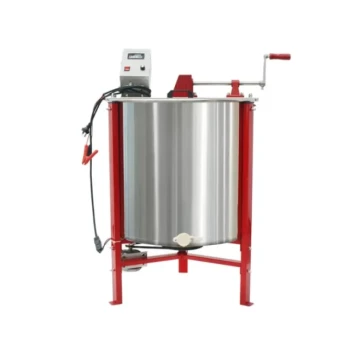
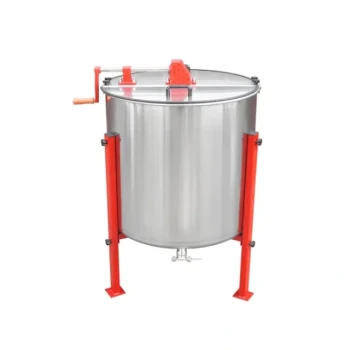
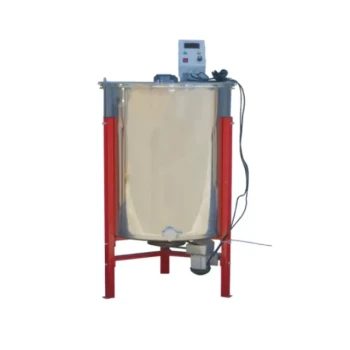
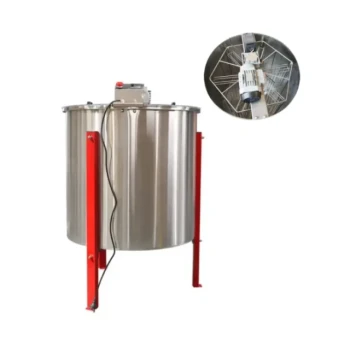
To protect the maturation cycle, extraction and collection machinery must utilize low-vibration designs.
High-vibration equipment can transmit physical stress into the brood area of the hive. Reducing this interference ensures that larvae can complete their development without interruption.
Ensuring Steady Renewal
The ultimate goal of bio-sensitive design is maintaining a consistent flow of new adults.
By removing stress factors during the larval stage, the machinery helps maintain the steady population renewal required for long-term production. This prevents the "boom and bust" cycles that threaten the viability of the production unit.
Understanding the Trade-offs: Capacity vs. Care
The Necessity of High Capacity
From a production standpoint, machinery must process large volumes of raw honey quickly.
High-capacity extraction prevents yield loss and protects the honey's physical and chemical properties by minimizing environmental exposure. Speed is also essential for reducing labor costs during tight harvest windows.
The Engineering Challenge
The trade-off lies in balancing this processing speed with biological sensitivity.
Aggressive machinery may increase extraction throughput, but if it generates excessive vibration, it jeopardizes the colony's future workforce. True technical advancement is defined not just by volume, but by stabilizing output while protecting the bees' developmental timeline.
Making the Right Choice for Your Operation
For sustainable beekeeping, your equipment choice must balance immediate yield with long-term colony health.
- If your primary focus is Colony Sustainability: Prioritize equipment with active vibration dampening and low-stress mechanics to ensure the 21-day brood cycle remains undisturbed.
- If your primary focus is Harvest Efficiency: Select machinery with high-volume capacity to protect honey quality, but verify that its operation does not transmit significant interference to the hive structure.
Effective machinery design treats the biological requirements of the bee as a non-negotiable engineering constraint.
Summary Table:
| Feature | Biological Impact | Engineering Solution |
|---|---|---|
| Maturation Cycle | 21-day lag from egg to adult | Design respects biological time constants |
| Vibration Control | Prevents larval stress/death | Low-vibration & dampening technology |
| Population Stability | Avoids erratic population swings | Steady-state mechanical interference |
| Production Speed | Maintains honey quality/purity | High-capacity extraction with bio-sensitivity |
Secure Your Colony's Future with HONESTBEE
At HONESTBEE, we understand that commercial beekeeping success hinges on the delicate balance between high-capacity output and biological preservation. We provide commercial apiaries and distributors with a comprehensive range of professional tools—from specialized hive-making and honey-filling machines to advanced extraction equipment designed to protect the 21-day maturation cycle.
Don't let mechanical stress compromise your population renewal. Partner with us to access professional-grade machinery and industry consumables that prioritize both efficiency and colony health.
Contact HONESTBEE today for wholesale solutions and expert guidance.
References
- Jun Chen, Yun Kang. How to model honeybee population dynamics: stage structure and seasonality. DOI: 10.5206/mase/10559
This article is also based on technical information from HonestBee Knowledge Base .
Related Products
- Stainless Steel Manual 8 Frame Radial Honey Extractor Machine for Beehives
- HONESTBEE 6 Frame Three Use Electric Honey Extractor for Beekeeping
- Manual Hand Crank 4 Frame Honey Extractor Centrifuge for Beekeeping
- Stainless Steel Jack Type Honey Comb Press Machine Wax and Honey Separator
- HONESTBEE 3-Frame Manual Acrylic Honey Extractor
People Also Ask
- What types of beehive frames are compatible with honey extractor machines? Find the Perfect Match for Your Apiary
- Which type of honey extractor is generally more durable? Focus on Material & Build Quality for Longevity
- What are the key features and benefits of a stainless steel honey extractor? Upgrade to Professional Purity
- What is a manual honey extractor? The Essential Guide to Cost-Effective Beekeeping for Beginners
- Why are manual extractors popular among beginner beekeepers? A Guide to Starting Simple & Saving Money