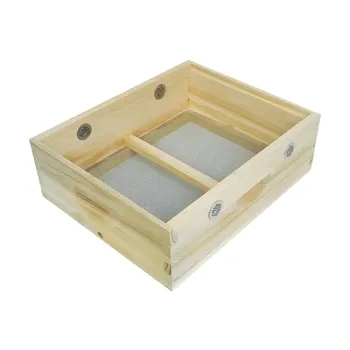
Stainless-steel mesh floors give apiaries better ventilation, moisture control, and passive varroa management than solid wooden bottoms. Their open structure helps colonies release heat in warm weather, allows moisture to drain instead of accumulating inside the hive, and lets fallen mites pass below the colony where they are less likely to return. For distributors and beekeepers, the added durability and corrosion resistance also support a longer-lasting, lower-maintenance product offering.
The central advantage is controlled airflow and drainage without sacrificing service life. Stainless-steel mesh floors can improve colony conditions while reducing replacement and maintenance demands compared with conventional solid wooden bottoms.
Why Mesh Floors Improve Hive Management
Better ventilation in hot weather
A mesh floor allows air to move through the lower part of the hive. This supports the bees’ natural cooling efforts during hot conditions and can reduce the buildup of stagnant, overheated air.
This is particularly valuable in warm climates, during transport, and in apiaries with limited shade. It gives beekeepers another passive management tool without requiring mechanical ventilation.
Faster moisture drainage
Condensation and excess moisture can accumulate inside a hive, especially during cold periods when warm colony air meets cooler surfaces. An open mesh floor allows water to drain or escape rather than remain trapped beneath the colony.
Reducing dampness helps create a more stable hive environment. It also addresses a major contributor to winter stress and colony losses: moisture that cannot leave the hive efficiently.
Passive support for varroa management
When varroa mites fall from bees, an open mesh floor allows them to pass below the colony. Because they are no longer on the hive floor, they have fewer opportunities to return to adult bees.
This is a supporting control measure, not a replacement for an integrated varroa management program. Beekeepers should still monitor mite levels and apply appropriate treatments when necessary.
Why Stainless Steel Is Valuable for Apiaries and Suppliers
Corrosion resistance supports long service life
Stainless steel withstands exposure to humidity, rain, hive debris, and routine cleaning better than many untreated metal alternatives. Its resistance to corrosion helps preserve the floor’s structural integrity over repeated seasons.
For wholesalers and resellers, this durability strengthens the value proposition. A longer-lasting component can reduce replacement frequency and provide customers with a more reliable total cost of ownership.
Easier cleaning and maintenance
Mesh floors can be removed and cleaned as part of routine hive maintenance. Stainless steel is well suited to repeated handling and cleaning, helping limit the accumulation of debris, organic material, and potential pest residues.
Cleanable equipment also supports more consistent apiary hygiene. The exact cleaning method should still match the manufacturer’s instructions and the beekeeper’s sanitation protocol.
Better product consistency for commercial supply
A well-made stainless-steel mesh floor offers a repeatable specification across multiple hive units. For distributors, consistent mesh dimensions, frame fit, weld quality, and finish are essential to efficient fulfillment and fewer customer complaints.
This makes supplier capability important. Product quality should be evaluated alongside stock availability, response speed, technical support, and the ability to deliver complete hive configurations rather than isolated components.
How Mesh Floors Compare With Solid Wooden Bottoms
Solid bottoms retain more debris and moisture
A solid wooden floor creates a closed lower surface where moisture, dead mites, and hive debris can collect. Without careful inspection and cleaning, that material remains in close proximity to the colony.
A mesh floor changes this dynamic by allowing drainage and debris separation. This can simplify inspection and reduce the need to manage material trapped directly beneath the bees.
Wooden bottoms remain useful in specific conditions
Solid wooden bottoms can provide a sturdy, enclosed base and may be preferred where physical protection is a priority. In areas with active wildlife or birds, robust wooden construction can offer greater resistance to external impact or attack.
The choice is therefore not purely about material quality. Apiary climate, predator exposure, hive mobility, seasonal temperatures, and the beekeeper’s management system all matter.
Mesh floors require compatible hive design
An open floor should be properly fitted to the hive body and supported by a strong frame. Poorly manufactured mesh, inaccurate dimensions, sharp edges, or weak joints can undermine the benefits and create handling or bee-safety concerns.
For commercial buyers, product inspection should include fit, rigidity, smooth finishing, mesh uniformity, and compatibility with the intended hive model.
Understanding the Trade-offs
Higher initial cost
Stainless-steel mesh floors generally cost more initially than basic wooden bottoms. However, their corrosion resistance, cleanability, and long service life can make them cost-effective over repeated seasons.
Buyers should compare total ownership cost, not just purchase price. Replacement rates, maintenance labor, cleaning requirements, and customer returns are relevant to distributors and apiary operators.
Ventilation must be appropriate for the climate
More airflow is not automatically better in every situation. In cold or windy environments, excessive exposure may increase the need for careful hive placement, insulation, wind protection, or seasonal adjustments.
The floor should be treated as part of a complete hive-management system. Beekeepers must balance drainage and ventilation with protection from severe weather.
Mesh is not a complete pest-control system
A mesh floor can help separate fallen varroa mites from the colony, but mites may remain on bees or reproduce within capped brood. Monitoring and an integrated pest-management plan remain necessary.
The most accurate product claim is that mesh flooring supports passive varroa management, rather than eliminating the problem.
Wildlife protection may require additional measures
An open floor does not provide the same enclosed physical barrier as a heavy wooden base. Where wildlife, birds, or other external hazards are common, apiaries may need stronger hive stands, protective screens, secure placement, or reinforced components.
This is an important consideration for permanent installations in forested or exposed areas.
How to Evaluate a Commercial Mesh-Floor Supplier
Check construction quality
Review the stainless-steel grade, mesh stability, weld or joint quality, edge finishing, and overall resistance to deformation. These details determine whether the floor will remain safe and functional after repeated use.
Ask for product specifications and samples when ordering at wholesale volume. Consistent manufacturing is especially important when supplying multiple apiaries or resale channels.
Confirm compatibility and fulfillment
A mesh floor must match the hive body, entrance configuration, inspection tray, stand, and other accessories. Incomplete compatibility can create installation problems and increase after-sales workload.
For distributors, one-stop sourcing is a practical advantage. A supplier that can provide coordinated hive components, responsive technical assistance, and fast order fulfillment can reduce procurement complexity.
Assess service beyond the product
Reliable supply includes clear communication, rapid quotations, accurate documentation, and dependable delivery. Dedicated customer service is valuable when specifications, packaging, or shipment schedules change.
Professional expertise also helps resellers position the product accurately—emphasizing ventilation, drainage, durability, and passive mite support without making unrealistic performance claims.
Making the Right Choice for Your Goal
A stainless-steel mesh floor is usually the stronger choice when long-term hive hygiene, ventilation, drainage, and maintenance efficiency are priorities.
- If your primary focus is hot-weather colony management: Select a properly fitted mesh floor to improve passive airflow and help bees regulate internal hive temperature.
- If your primary focus is winter moisture control: Choose an open floor that allows condensation and excess water to drain, while using appropriate weather protection and seasonal management.
- If your primary focus is varroa management: Use the mesh floor as one part of an integrated monitoring and treatment program, not as a standalone solution.
- If your primary focus is resale value and supply reliability: Source corrosion-resistant floors with consistent specifications, complete hive compatibility, responsive service, and efficient delivery.
- If your primary focus is wildlife protection: Consider a reinforced wooden or hybrid base, or add protective measures where the apiary is exposed to animals or birds.
Choosing the right floor means matching mesh-floor benefits with the apiary’s climate, pest pressures, operating practices, and long-term supply requirements.
Summary Table:
| Aspect | Stainless-Steel Mesh Floor | Solid Wooden Bottom |
|---|---|---|
| Ventilation | Excellent airflow | Limited airflow |
| Moisture Drainage | Effective drainage | Poor drainage |
| Varroa Mite Control | Passive support | No support |
| Corrosion Resistance | High | Low |
| Cleaning & Maintenance | Easy to clean | Harder to clean |
| Initial Cost | Higher | Lower |
| Wildlife Protection | Needs additional measures | Provides sturdy barrier |
Upgrade Your Hive Efficiency with HONESTBEE's Premium Stainless-Steel Mesh Floors
As a leading wholesaler to commercial apiaries and distributors, HONESTBEE offers a complete range of beekeeping equipment, including durable stainless-steel mesh floors designed to enhance ventilation, moisture control, and mite management. Our one-stop sourcing, rapid response, and dedicated service ensure you get high-quality products with reliable supply.
Boost your product offerings with competitive margins, OEM/ODM support, and certifications. Contact us today to discuss your bulk needs and experience ultra-fast delivery with efficient order fulfillment.
Related Products
- Stainless Steel Bee Hive Frame Wire for Beekeeping
- Precision Stainless Steel Frame Cleaner for Hive Grooves and Corners
- Stainless Steel Round Beehive Air Vents for Ventilation
- Langstroth Solid Bottom Board for Beekeeping
- Solid Bottom Board Australian Pine Wood Langstroth Bottom Board for Wholesale
People Also Ask
- What are the arguments for and against wiring beehive frames? Balance Durability and Management Flexibility
- What are the drawbacks of wiring beehive frames? Key Limitations and Structural Trade-offs Revealed
- How is the wire secured at the top of the frame? A Guide to Locking in Tension for Strong Honeycomb
- What factors determine the amount of wiring needed in beehive frames? Tailor Your Strategy for Your Climate
- What tools are needed to wire a beehive frame? Essential Equipment for Durable Frame Construction