The primary reason for mixing large containers of honey is to eliminate moisture stratification. In bulk vessels, water content is rarely uniform; significant disparities often exist between the honey at the top and the honey at the bottom. Thorough mixing homogenizes the batch, ensuring that the small sample applied to the refractometer accurately represents the entire container.
Honey is not a static fluid; moisture levels can vary drastically depending on depth within a large vessel. Without thorough mixing, your reading will only tell you the condition of a specific layer, potentially hiding the risk of fermentation in the rest of the batch.
The Mechanics of Moisture Stratification
The Top vs. Bottom Disparity
When honey sits in large buckets or tanks, it does not maintain a consistent density throughout.
The primary reference confirms that moisture content differs significantly between the top and bottom layers of the vessel.
Taking a sample from the surface may yield a "dry" reading, while the bottom layer remains dangerously high in moisture (or vice versa).
The Risk of False Confidence
A refractometer relies on a tiny sample to judge gallons of product.
If you test unmixed honey, you are essentially gambling that the specific drop you pulled matches the rest of the bucket.
This can lead to bottling honey that you believe is safe, only to have it ferment later because the bulk average moisture was higher than your sample indicated.
Ensuring Sample Purity
Avoiding Contaminants
While mixing is crucial for moisture equilibrium, it can circulate debris.
For accurate refraction, the sample placed on the prism must be absolutely free of wax, propolis, or other debris.
These impurities disrupt the path of light through the sample, leading to false values regardless of moisture content.
Equipment Hygiene
Reliable data requires a clean testing surface.
Between every sample, the prism panel must be wiped down with a lint-free cloth.
Residue from a previous test can blend with the new sample, skewing the results and rendering the mixing process moot.
Common Pitfalls to Avoid
The "Single Sample" Mistake
It is easy to treat a large bucket the same way you treat a single honeycomb frame.
While a single sample is sufficient for one frame, it is statistically inadequate for a large container unless that container has been aggressively mixed.
Reliance on one data point for a bulk container is a leading cause of quality control failure.
Incomplete Homogenization
Stirring the top few inches of a bucket does not solve the stratification issue.
To get a valid reading, the mixing must disturb the bottom layers and integrate them fully with the top.
If thorough mixing is impossible, you must resort to taking multiple samples from different depths and averaging the results.
Securing Accurate Measurements for Bulk Honey
To ensure your honey is shelf-stable and properly graded, apply the following protocols based on your specific situation:
- If your primary focus is determining overall batch quality: Thoroughly mix the entire container to homogenize the moisture content before drawing a single sample.
- If your primary focus is verification without heavy equipment: Take samples from the top, middle, and bottom, then average the results to account for stratification.
- If your primary focus is testing speed: Ensure the sample is strictly liquid honey, as checking for and removing debris takes less time than re-testing a contaminated sample.
Precision in sampling is the only barrier between a stable product and a spoiled harvest.
Summary Table:
| Factor | Impact on Measurement | Recommended Action |
|---|---|---|
| Moisture Stratification | Top and bottom layers have different water content. | Thoroughly mix the container before sampling. |
| Sample Purity | Wax, propolis, or debris disrupt light path. | Use only clear liquid honey on the prism. |
| Equipment Hygiene | Residue from previous tests skews data. | Clean prism with a lint-free cloth between tests. |
| Depth Disparity | Single surface samples lead to false confidence. | Sample from multiple depths if mixing isn't possible. |
Secure Your Honey Quality with HONESTBEE Professional Solutions
Precise moisture control is the difference between a premium product and a spoiled harvest. At HONESTBEE, we specialize in supporting commercial apiaries and distributors with the tools needed for excellence. Whether you are looking for advanced honey-filling machines to streamline your production or high-quality beekeeping tools and machinery to manage your bulk yield, our comprehensive wholesale offering has you covered.
From industrial-grade processing hardware to essential consumables and honey-themed cultural merchandise, we provide everything you need to scale your honey business. Contact us today to discover how our specialized equipment and expertise can optimize your apiary’s efficiency and product stability.
Related Products
- Digital Honey Refractometer for Precision Measurement of Optimal Honey Quality
- Precision Honey Refractometer Instrument for Quality Assessment
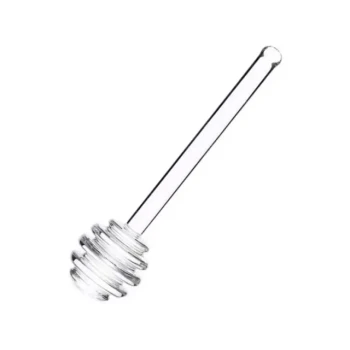
- Premium Heat-Resistant Glass Honey Dipper
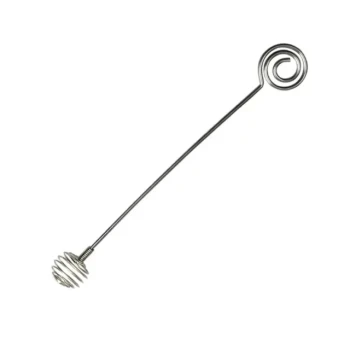
- Modern Stainless Steel Honey Dipper Stirrer
- Heavy Duty 304 Stainless Steel Honey Dipper
People Also Ask
- What role do high-precision refractometers play in determining the maturity and quality of honey? Ensure Honey Purity.
- Do the color and viscosity of honey affect its refractometer reading? Mastering Moisture Measurement Accuracy
- Why is a honey refractometer considered essential for commercial beekeepers? Ensure Honey Quality and Profitability
- What is a honey refractometer? The Essential Tool for Perfect Honey Quality
- How is the reading taken from a honey refractometer? A Guide to Accurate Moisture Measurement