No, spacing your frames out will not force honeybees to restrict drone comb to the outer edges or specific "extra" spaces. This is a persistent misconception in hive management; the bees follow their own biological drive rather than the architectural constraints you attempt to impose.
The colony does not adhere to a beekeeper’s desired layout for drone production. Instead of isolating drones to the outer frames, bees typically construct drone comb along the perimeter of each individual frame throughout the box.
The Reality of Comb Construction
The "Outer Frame" Myth
Many beekeepers believe that by running a nine-frame setup in a ten-frame brood box, they can manipulate the colony into building drone comb only in the wide gaps at the edge of the hive.
The theory suggests this keeps the center frames exclusively for worker brood. However, this is factually incorrect. The bees do not recognize the outer frames as a designated "drone zone" simply because of the spacing.
Where Bees Actually Build
Honeybees build according to their own agenda and instincts. The primary reference indicates that drone comb is typically constructed at the perimeter of individual combs.
This means you will likely find patches of larger drone cells along the bottom or side edges of frames right in the middle of the brood nest.
The Colony's Agenda
The colony prioritizes its reproductive needs over your geometric layout. If the colony requires drones for mating or genetic diversity, they will modify cells or build new drone comb wherever it is most efficient for them at that moment.
They treat the brood nest as a cohesive unit, not a segmented factory floor.
Understanding the Trade-offs
The Illusion of Control
The primary pitfall of the nine-frame brood box strategy is the illusion of control.
Beekeepers often attempt this spacing to streamline hive inspections or manage populations. However, because the bees build drone comb on the perimeters of many frames, you may still end up with irregular comb surfaces.
Unpredictable Complications
When you deviate from standard spacing in the brood box to create "extra space," you are inviting the bees to fill that void.
Because their instinct is to build drone comb on perimeters, increasing the space between frames can lead to inconsistent comb depth. This often frustrates the beekeeper's goal of having perfectly uniform, interchangeable frames.
Making the Right Choice for Your Goal
Whether you use nine or ten frames, understanding bee biology is more effective than relying on spacing tricks.
- If your primary focus is restricting drone production: Do not rely on frame spacing; instead, realize that bees will build drone cells on frame perimeters regardless of the layout.
- If your primary focus is uniform comb: Stick to standard spacing, as wider spacing in the brood nest often fails to segregate drone comb and may lead to irregular building patterns.
You cannot engineer the instinct out of the insect; you must work with their natural tendency to build drone cells on the edges of the brood nest.
Summary Table:
| Aspect | Common Misconception | Reality of Bee Behavior |
|---|---|---|
| Drone Comb Location | Only in wide gaps/outer frames | Perimeter of individual frames throughout the box |
| Spacing Effect | Forces drones to specific zones | Leads to irregular comb depth and uneven surfaces |
| Colony Priority | Follows beekeeper's geometric layout | Prioritizes reproductive needs and biological drive |
| Management Outcome | Streamlined inspections | Unpredictable comb patterns and lack of control |
Elevate Your Beekeeping Operation with HONESTBEE
Struggling with inconsistent comb patterns or looking to optimize your apiary's efficiency? At HONESTBEE, we specialize in supporting commercial apiaries and distributors with high-performance tools and machinery. From specialized hive-making equipment to precision honey-filling machines, we provide the industrial-grade solutions you need to scale your production.
Whether you are managing thousands of colonies or supplying the next generation of beekeepers, our comprehensive wholesale portfolio of beekeeping hardware and essential consumables ensures you have the competitive edge.
Ready to professionalize your workflow? Contact us today to discuss how our wholesale offerings and industry expertise can drive your success.
Related Products
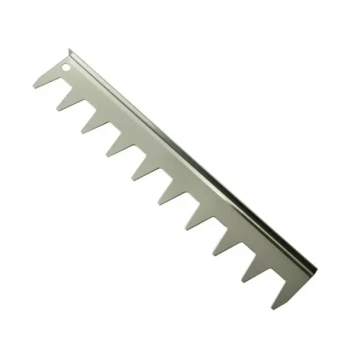
- Stainless Steel 9 Frame Hive Spacer Durable Precise for Commercial Beekeeping
- Langstroth Honey Bee Box Hive Boxes for Different Depths
- Australian Langstroth Beehive Boxes for Beekeeping Wholesales
- Portable Bee Mating Hive Boxes Mini Mating Nucs 8 Frames for Queen Rearing
- Assembled Wooden Bee Frames with Plastic Foundation for Durability and Convenience by HONESTBEE
People Also Ask
- What is the function of Langstroth frames in comb foundation construction? Optimize Your Apiary's Structural Integrity
- What are the specific dimensions for the wooden parts of Langstroth beehive frames? Precision Guide for All Sizes
- How are Langstroth beehive frames assembled? A Step-by-Step Guide for a Durable Hive
- What is the purpose of Langstroth beehive frames in beekeeping? Key to Professional Hive Management & Scaling
- What is the purpose of Langstroth beehive frames? Unlock the Key to Modern Beekeeping