It's a dishearteningly common story for beekeepers. You open a hive in the spring, one that seemed perfectly healthy last fall, only to find it silent and lifeless. You might blame a harsh winter, a weak queen, or Varroa mites. So you invest in a new package of bees, place them in the same box you meticulously scraped clean, and hope for the best.
But a few months later, the new colony is struggling, and you're caught in a frustrating and expensive cycle of loss. If this sounds familiar, you're not alone. And the reason might not be what you think.
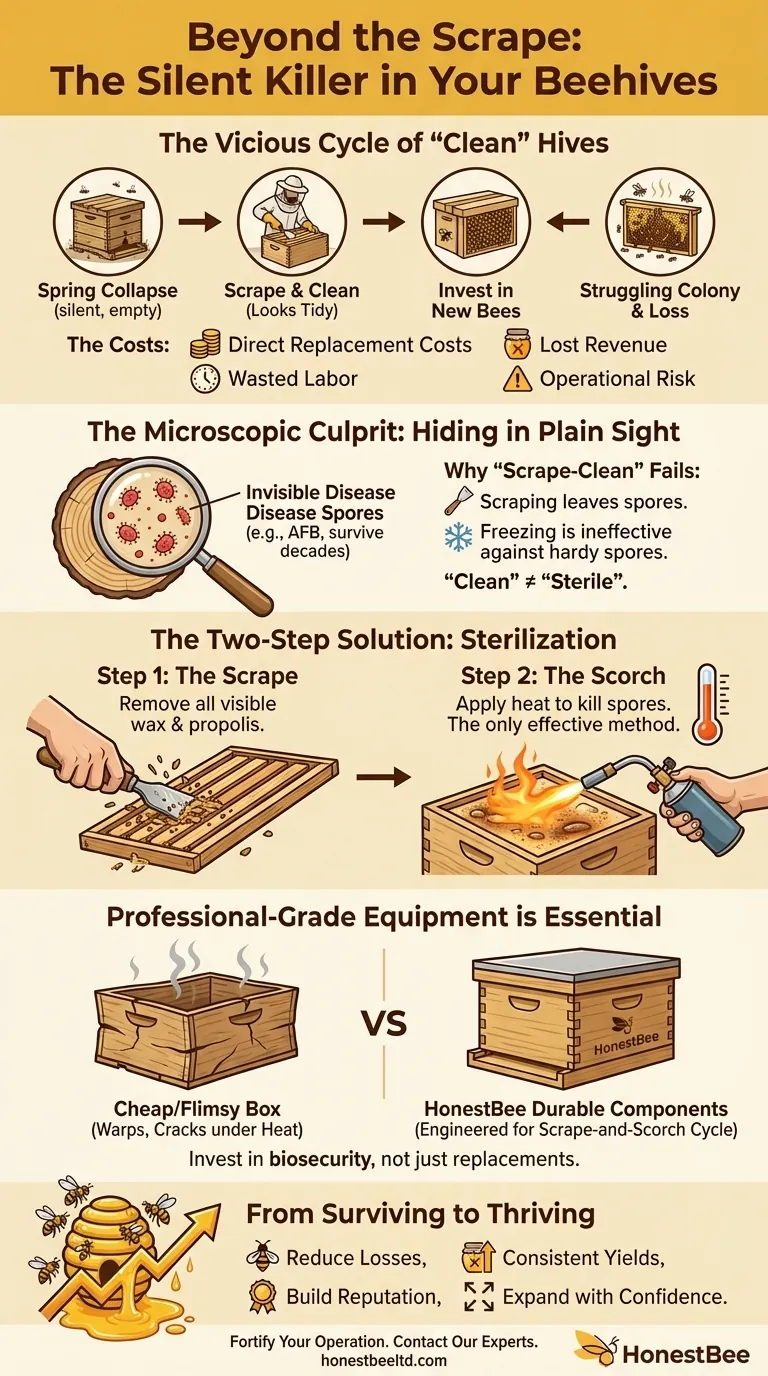
The Vicious Cycle: Why 'Clean' Hives Still Fail
Many commercial beekeepers find themselves battling the same problems season after season: unexplained colony collapses, dwindling honey production, and a constant need to reinvest in new bees. They follow the standard advice: after the honey harvest, scrape the boxes and frames free of burr comb and propolis. They fight visible pests like wax moths and assume their equipment is ready.
Yet, the problems persist. This isn't just a minor setback; it's a direct blow to your bottom line. Every failed colony represents:
- Direct Replacement Costs: The expense of purchasing new nucs or packages.
- Lost Revenue: A dead-out produces zero honey, impacting your projected yield.
- Wasted Labor: The hours spent managing a colony that ultimately doesn't survive.
- Operational Risk: A hidden issue in one hive can easily spread, jeopardizing your entire apiary.
The reason this cycle continues is that the most common cleaning method—scraping—only addresses the visible symptoms. It mistakes a tidy-looking box for a safe one, leaving the true culprit untouched.
The Real Culprit: A Microscopic Threat Hiding in Plain Sight
The core conflict isn't between a clean hive and a messy one. It's between a hive that looks clean and one that is truly sterile. The most devastating threats to your colonies are invisible.
The Problem with "Scrape-Clean"
When you scrape a hive box, you remove wax and propolis. This is an important first step, as it eliminates hiding places for pests. However, it does nothing to neutralize microscopic disease spores.
Think of it like this: You can wipe down a kitchen counter to remove crumbs, but you need a disinfectant to kill bacteria. In beekeeping, the most dangerous "bacteria" are spores from diseases like American Foulbrood (AFB). These spores are incredibly resilient. They can survive for decades in a wooden box, waiting for a new colony to infect.
This is why the common "solutions" fail:
- Scraping Alone: Removes the bulk material but leaves a film of propolis and microscopic spores on the wood's surface.
- Freezing Equipment: Kills wax moths and some pathogens, but is completely ineffective against hardy AFB spores.
You aren't just fighting last season's pests; you're potentially fighting a disease from a decade ago. To break the cycle, you must eliminate the threat at its source.
The Two-Step Solution: From Clean to Sterile
If the root cause is a microscopic, heat-sensitive spore, then the solution must involve targeted heat. A truly biosecure cleaning process isn't one step, but two.
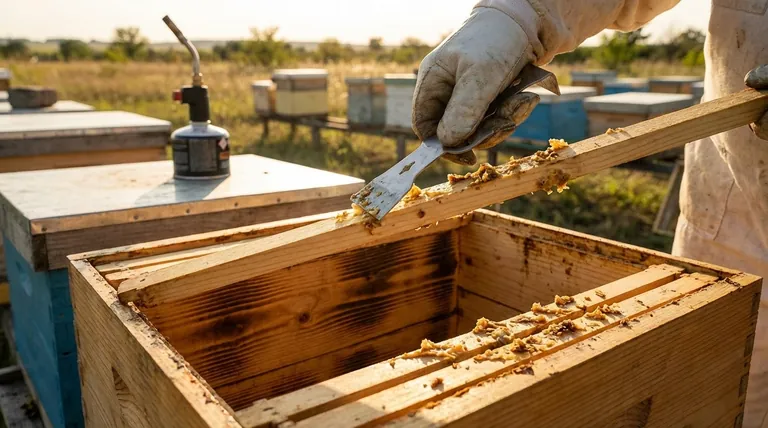
- The Scrape: First, vigorously scrape all interior surfaces to remove all visible debris. This is your site preparation.
- The Sterilization: Next, use a propane torch to apply a "scorching" heat to the interior wood. The goal isn't to burn the box, but to heat the surface until the residual propolis and wood grain just begin to bubble and lightly toast. This temperature is lethal to disease spores, effectively sterilizing the equipment and resetting it for the next colony.
Why Professional-Grade Equipment is Non-Negotiable
This two-step process is the gold standard for commercial apiary biosecurity. However, it places significant demands on your equipment. Cheap, flimsy hive boxes made from soft pine or with poor joinery may warp, crack, or even catch fire under the repeated stress of scorching.
This is where your choice of equipment becomes a critical part of your disease management strategy. HONESTBEE's wholesale hive components are engineered for the rigors of commercial use. Built from durable, high-quality wood, our boxes are designed to withstand the essential scrape-and-scorch cycle, season after season. Investing in professional-grade equipment isn't an expense; it's an investment in a system that can actually be kept sterile, protecting your bees and your business.
Beyond the Fix: From Surviving to Thriving
When you shift your mindset from "tidying up" to "sterilizing," you fundamentally change your operation. By effectively breaking the chain of reinfection, you move from reactive crisis management to proactive, predictable growth.
With truly sterile equipment as your foundation, you can:
- Dramatically reduce annual colony losses, lowering replacement costs.
- Achieve more consistent and predictable honey yields year after year.
- Build a reputation for strong, healthy bees, increasing the value of your operation.
- Expand your apiary with confidence, knowing you aren't scaling a hidden disease problem.
You stop wasting resources fighting old battles and start investing in a more profitable and sustainable future.
A sterile hive is the foundation of a healthy colony, but it's just one part of a successful commercial beekeeping strategy. Our team understands the unique pressures of managing a large-scale apiary, from biosecurity to operational efficiency. Let's talk about how a sound equipment strategy can fortify your entire operation for the long term. To discuss your apiary's specific challenges and goals, Contact Our Experts.
Visual Guide