The Misunderstood Mandate
Imagine standing before an open hive. Tens of thousands of individuals move as one, a superorganism humming with purpose. Every action you take, every tool you wield, is a message sent directly into this complex society. A clumsy move is a threat. A harsh tool is an attack.
Many tools in beekeeping are for construction, prying, or containment. But the bee brush has a different, more subtle mandate. Its purpose is not to force bees to move.
Its purpose is to persuade them.
This distinction is everything. The brush is a tool of communication, and using it correctly is the difference between a peaceful inspection and a defensive uproar. It's a simple instrument that solves the profound challenge of working inside a living system without triggering its defenses.
The Psychology of a Calm Colony
A beehive operates on a delicate chemical balance. When a bee is crushed, it releases alarm pheromones—a chemical signal that screams "danger!" to the rest of the colony. This single event can cascade, putting the entire hive on high alert. Agitated bees are defensive bees, and defensive bees sting.
The primary function of a bee brush is to prevent this first domino from falling.
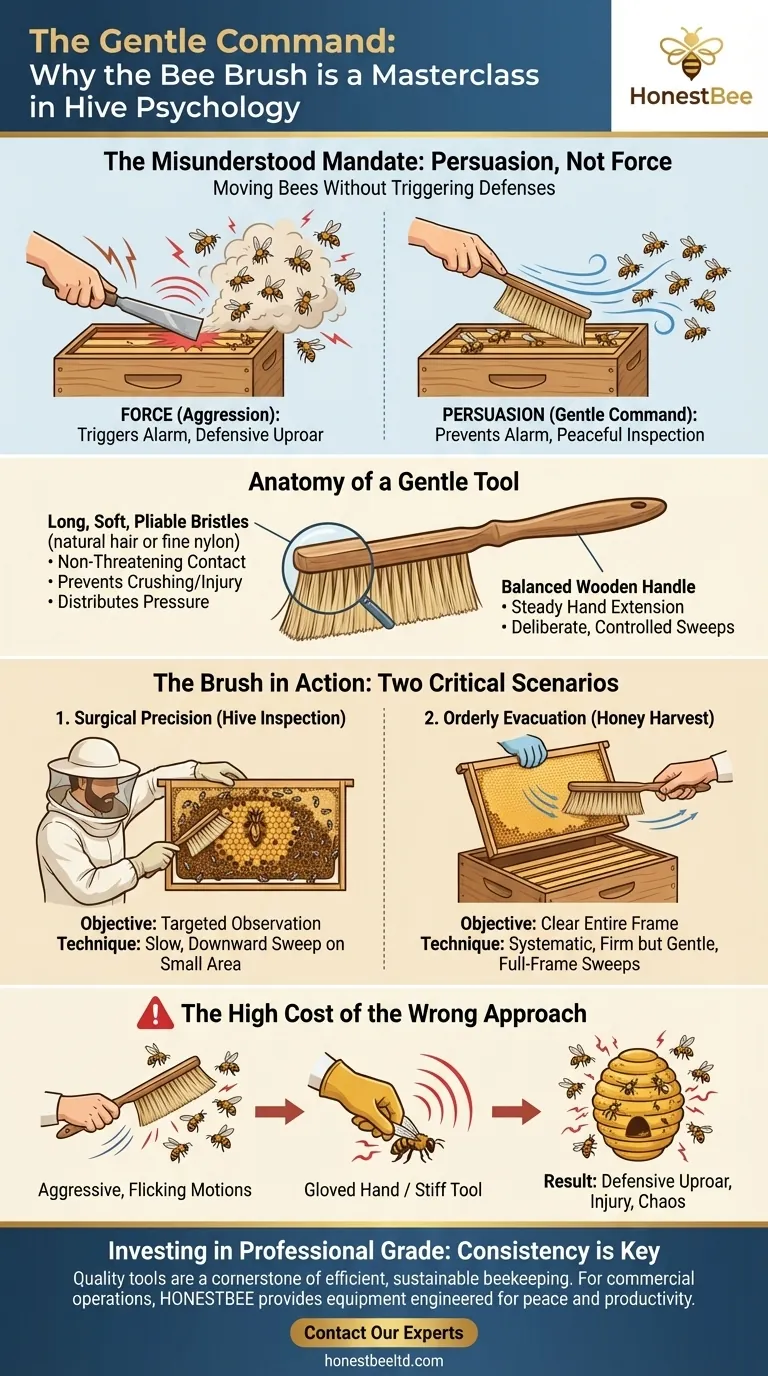
Its design is a deliberate exercise in non-aggression. By using long, soft bristles to gently usher bees aside, a beekeeper can access frames without causing injury or panic. It’s a physical expression of a core beekeeping principle: you are a steward, not an intruder. You are working with the colony’s nature, not against it.
Engineered for Peace: The Anatomy of a Gentle Tool
The bee brush appears simple, but its effectiveness comes from a design that is perfectly matched to its purpose. It's a piece of quiet engineering for a complex biological system.
The Bristles: A Study in Non-Threatening Contact
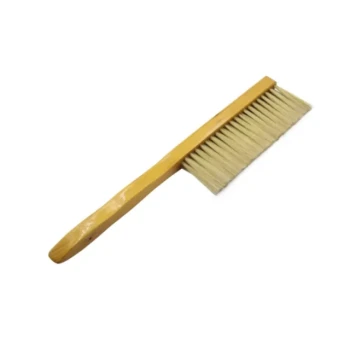
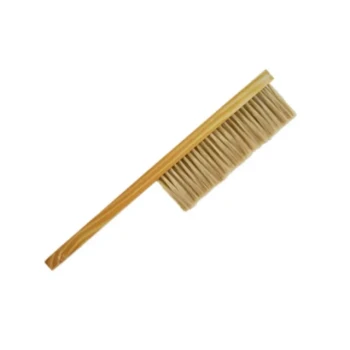
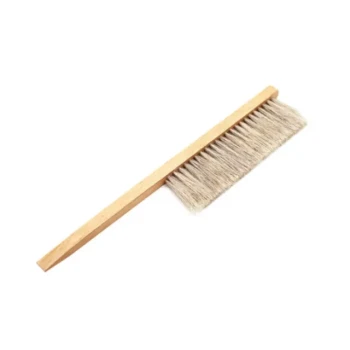
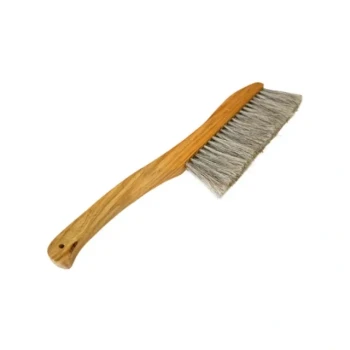
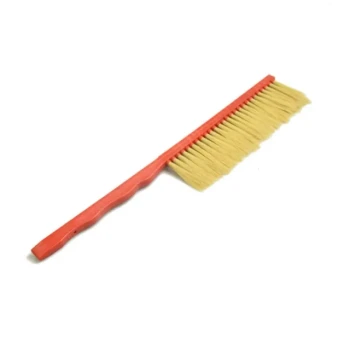
The most critical component. The bristles are long, soft, and pliable, typically made of natural hair or fine nylon.
- Length: Allows you to move a large group of bees with a single, slow stroke, minimizing repetitive, irritating contact.
- Softness: Ensures that you are not damaging delicate wings or crushing bodies. The pressure is distributed, signaling movement rather than attack.
The Handle: An Extension of a Steady Hand
Usually made of wood, the handle is designed for balance and control. It allows the beekeeper to make deliberate, gentle sweeping motions from a stable position, reaching across the hive body without jerky, threatening movements. A quality brush feels like a natural extension of your intent.
The Brush in Action: Two Critical Scenarios
The way you use the brush changes with your objective. The tool is the same, but the technique is tailored to the mission.
1. The Surgical Precision of a Hive Inspection
During an inspection, your goal is targeted observation—checking the brood pattern, looking for the queen, or spotting signs of disease. You don't need to clear the entire frame.
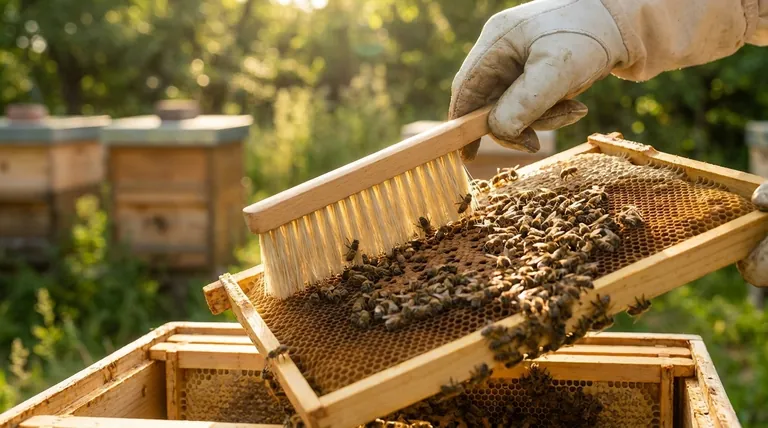
The correct technique is a slow, downward sweep, clearing only the small window you need to see. Think of it as a surgeon's retractor, gently holding tissue aside to get a clear view of the work area, then allowing it to return with minimal disturbance.
2. The Orderly Evacuation for a Honey Harvest
When harvesting honey, the objective is the opposite: you must clear the entire frame of bees before moving it. The work must be efficient yet calm.
Here, the technique is more systematic. You use firm but gentle strokes to sweep the bees from one side of the frame, directing them back down into the hive. You repeat on the other side. The motion is less like a peek and more like gently herding a flock, ensuring no bee is left behind on the journey to the extractor.
The High Cost of the Wrong Approach
A tool is only as good as the technique behind it. When misused, even a bee brush can become a source of agitation.
- Aggressive Brushing: A fast, flicking motion is interpreted as an attack. It negates the brush's design and will provoke the very defensive reaction you're trying to avoid.
- Improper Substitutes: Never use a stiff paintbrush or a gloved hand. These tools are blunt instruments. They are more likely to injure bees, triggering alarm pheromones and turning a calm hive into chaos.
For professional apiaries, where time is money and colony health is paramount, consistency is key. The right tool, used correctly every time, is not a luxury—it’s a cornerstone of efficient and sustainable beekeeping. That's why equipment designed for durability and proper function, like the washable, well-balanced brushes used in commercial operations, is a critical investment.
| Use Case | Objective | Recommended Technique |
|---|---|---|
| Hive Inspection | Clear a small area for observation | Slow, gentle, localized sweep |
| Honey Harvest | Clear an entire frame of bees | Systematic, full-frame sweeps |
| General Handling | Move bees from lids or boxes | Light, ushering motions |
Ultimately, the bee brush is more than just an item in a beekeeper's toolbox. It's a symbol of understanding. It represents the knowledge that true control comes not from force, but from respecting the intricate psychology of the hive.
For commercial apiaries and distributors who understand that professional-grade tools are a direct investment in colony health and operational efficiency, HONESTBEE provides equipment built to the highest standards.
If you're ready to equip your operation with tools engineered for peace and productivity, Contact Our Experts.
Visual Guide
Related Products
- Wooden Bee Brush with Triple Row Artificial Fiber for Beekeeping
- Classic Wooden Bee Brush with Double-Row Boar Bristles
- Double Row Artificial Fiber Bee Brush for Beekeeping
- Wooden Bee Brush with Double-Row Horsehair Bristles
- Premium Triple-Row Horsehair Bee Brush
Related Articles
- Your Bee Brush Is Slowing You Down. Here’s What Commercial Apiaries Use Instead.
- The Silent Profit Killer: Why a Simple Bee Brush Can Make or Break Your Harvest
- Gentleness Has a Price: The Engineering Trade-off in Bee Brushes
- A Beekeeper's Oath: The Biosecurity and Ethics Engineered into a Bee Brush
- How to Master Bee Brush Techniques for Stress-Free Hive Inspections